Riding the Shoulder of a Mountain Road
There's a common misconception among off-highway vehicle (OHV) riders in Colorado that if you're "just on the shoulder" of a paved or even a graded county road, you're somehow exempt from the rules that apply to operating an ATV or UTV on a public roadway. This often stems from a desire to connect trails, reach a trailhead, or simply avoid heavy traffic, but it can lead to confusion, frustration, and even hefty fines. This guide aims to clear up that confusion, diving deep into the realities of riding the shoulder of a mountain road in our beautiful state, ensuring you stay safe, legal, and truly enjoy your Colorado adventures.
Understanding Colorado's "Shoulder Riding" Landscape
Colorado's diverse terrain means that what constitutes a "shoulder" can vary wildly, from a narrow strip of gravel next to a paved highway to a barely discernible edge along a high-country dirt road that drops precipitously into a canyon. This ambiguity is precisely why many riders find themselves scratching their heads, wondering where the line is drawn. It’s not just about what feels safe; it’s about what the law actually permits.
The Tricky Definition of a "Shoulder" on Mountain Roads
When we talk about the "shoulder" of a road, most people picture the paved or gravel strip adjacent to the main travel lane on a highway, designed for emergencies or temporary stops. In Colorado's mountains, this traditional definition often melts away. On many of our beloved county roads, especially those leading to trailheads or cutting through remote areas, a true, maintained shoulder simply doesn't exist. You might find a ditch, a rock wall, a steep embankment, or immediately, the edge of private property. Even on paved roads, the shoulder might be so narrow or uneven that riding an OHV on it is inherently unsafe, let alone legally dubious.
The critical takeaway here is that an OHV is generally considered to be operating "on the roadway" if it's anywhere within the right-of-way, including the shoulder, unless specifically exempted by a local ordinance. There's no blanket "shoulder exemption" for OHVs in Colorado that magically makes riding beside a public road legal everywhere. In fact, many municipal and county ordinances that do allow OHV access on specific roads often stipulate that OHVs must ride as far to the right as practicable, which might include a shoulder if one exists and is safe to use. But this doesn't mean you can just pick any shoulder. It has to be a designated route. [Colorado County Roads Open to OHVs] explains how these designations work.
Legal Framework: When Can You Legally Be on a Road's Edge?
The core principle for OHV operation on Colorado roads, including shoulders, is that unless a specific road is designated by a county or municipality for OHV use, it's generally off-limits. This designation process is rigorous and involves local government passing an ordinance. These ordinances will clearly define which roads, or sections of roads, are open to OHVs, what times of day, and under what conditions. When such a road is opened, riding on the shoulder (if it's part of the designated right-of-way and safe) would typically fall under the same rules as riding in the travel lane, meaning you must adhere to all applicable traffic laws, speed limits, and equipment requirements.
For instance, if a county road has been opened for OHV use, and it happens to have a passable shoulder, riding there might be permitted as part of the legal operation on that specific road. However, trying to "shoulder ride" on a busy state highway or a county road not designated for OHVs is almost certainly illegal and will likely result in a citation. It’s crucial to remember that Colorado state highways are almost universally off-limits to OHVs, except for brief crossings or very specific, signed corridors like a short stretch of Highway 149 near Lake City. Even then, you're typically expected to operate on the travel lane, not just the shoulder, and only for the designated distance. For more on this, check out [Colorado Rules for an Out-of-State Street-Legal Machine].
Essential Safety Practices for Mountain Road Shoulders
Safety is paramount, especially when operating an OHV anywhere near public roads in Colorado. Our mountain roads are often narrow, winding, and present unique hazards that demand a high level of vigilance and preparation. Just because a shoulder might technically be part of a designated route doesn't mean it's without its own set of dangers.
Maximizing Visibility and Anticipating Hazards
When you're riding an OHV, you're smaller and often slower than other vehicles on the road, making visibility your absolute best friend. This is even more critical when you're tucked away on a shoulder, where drivers might not expect to see you. Always ensure your OHV is equipped with proper lighting – headlights, taillights, and brake lights – and that they are all fully functional. For machines that are frequently on road sections, upgrading to brighter LED lights or adding auxiliary lighting, perhaps from a brand like SuperATV, can significantly improve your presence, especially during dawn, dusk, or in inclement weather. [Lighting Requirements for a Colorado Road Ride] details what you need.
Beyond lighting, consider wearing bright, reflective clothing. Your machine should have a whip flag, especially in areas with limited sightlines or heavy dust. When cresting hills or navigating blind corners, assume there's oncoming traffic, and be prepared to react. The shoulder itself can present hazards: loose gravel, potholes, washouts, and debris from the main road. Riding too close to the edge can lead to loss of control, especially if the shoulder is soft or drops off unexpectedly. Always scan ahead, anticipate changes in the road surface, and maintain a safe speed that allows you to react to both vehicle traffic and changes in the shoulder's condition.
Navigating Traffic, Terrain, and Unexpected Obstacles
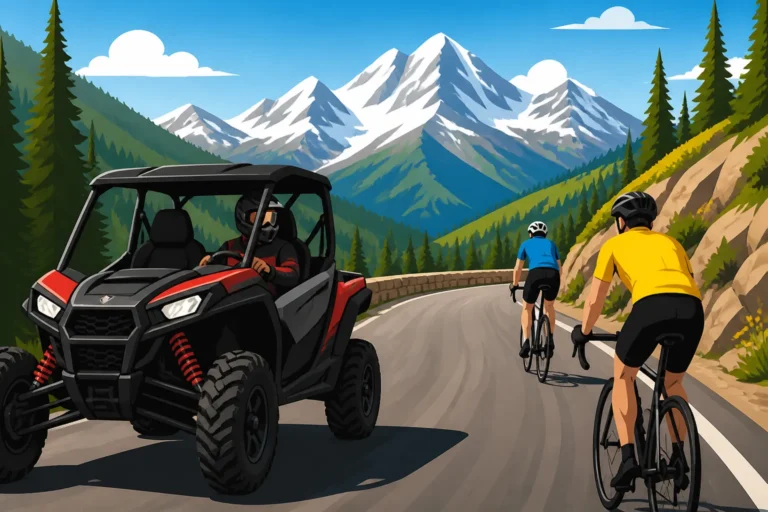
Sharing the road, even the shoulder, with other vehicles requires constant awareness. Cars and trucks are often moving at higher speeds, and their drivers might not be looking for an OHV on the edge of the road. Be mindful of their blind spots, especially large trucks or RVs navigating mountain passes. If a shoulder is wide and stable enough for you to ride safely, always ride with the flow of traffic, staying as far to the right as you can without putting yourself in danger. Signal your turns clearly and in advance. If you need to stop, pull completely off the shoulder if possible, or choose a spot with good visibility for other motorists.
Mountain terrain itself is an obstacle course. You might encounter cattle guards, where the shoulder might abruptly disappear or become impassable, forcing you onto the main road momentarily. Wildlife is another major concern; deer, elk, and even smaller critters can dart out unexpectedly, especially at higher altitudes or near wooded areas. Always keep your speed in check, particularly when the shoulder is narrow, uneven, or has poor sightlines. A sudden swerve to avoid a pothole or an animal could put you in the path of an oncoming vehicle. Even when operating on a legal OHV route, exercising extreme caution on the shoulder is a non-negotiable part of responsible riding.
Prepping Your Machine and Yourself for Mountain Shoulder Rides
Just like preparing for a rugged trail, getting your machine and yourself ready for any road-adjacent riding in Colorado is critical. It's not just about staying legal; it's about making sure your ride is safe, reliable, and equipped for the conditions you might encounter, even if you're just trying to connect two trails.
Equipping Your OHV for Road Sections and Shoulders
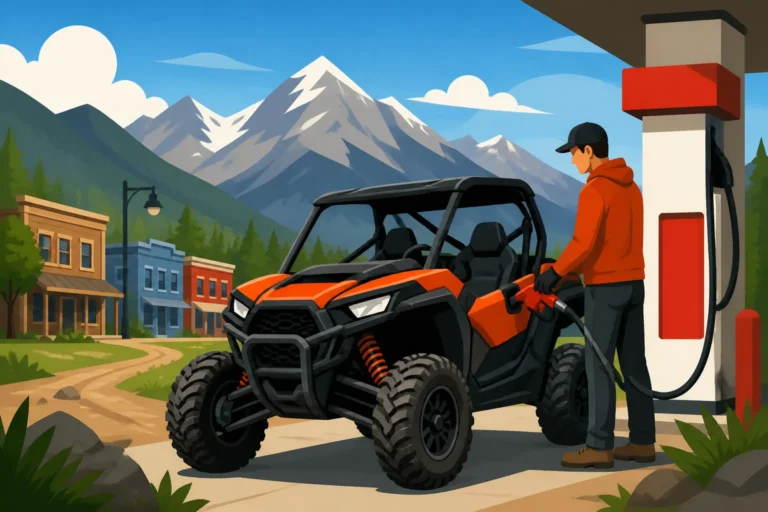
First and foremost, your OHV needs to meet the basic requirements for road use in Colorado, even if it's a short stretch or just the shoulder. This usually includes working headlights, taillights, brake lights, a horn, and appropriate mirrors. Many aftermarket accessories, such as mirrors from SuperATV, offer wider fields of vision, which is a huge advantage when you're concerned about vehicles approaching from behind on a narrow shoulder. Additionally, ensure your tires are in good condition and properly inflated for the terrain. While knobby tires are great for dirt, they can be a bit squirmy on pavement or packed gravel shoulders, so adjust your riding style accordingly.
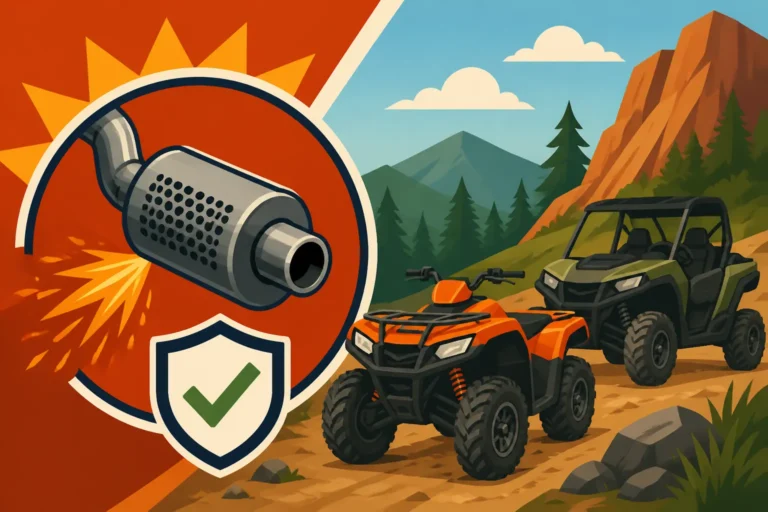
Beyond the basics, consider other practical additions. A robust skid plate and A-arm guards, again, something a brand like SuperATV excels in, can protect your machine from unexpected debris or deep ruts that might appear on unmaintained shoulders. A spark arrestor on your exhaust is not just a trail requirement, it's also a smart piece of equipment to prevent wildfires, a constant concern in our dry climate, regardless of whether you are technically "on" or "off" the designated trail. [Muffler Noise Limits in Colorado] also covers crucial aspects of your exhaust system. If you're riding a UTV, ensure seatbelts are in good working order and always worn. For riders under 18, helmets are often a requirement on public roads, and honestly, a good helmet is always recommended for everyone.
Rider Awareness and What to Carry for Emergencies
Beyond the machine, your own preparedness is vital. Always carry your Colorado OHV registration sticker, or a non-resident permit if you're visiting, and any required driver's license. [Do You Carry Paperwork on the Trail?] is a great reminder about this. Understand that even on a shoulder, you are subject to the same traffic laws as other vehicles. This includes speed limits, which might be lower for OHVs in designated areas. Be aware of your surroundings, stay sober, and be ready to adapt to changing conditions. Mountain weather can turn on a dime, so dress in layers and pack rain gear, even on a sunny morning.
For emergencies, a basic toolkit, tire repair kit, and a first-aid kit are indispensable. Cell service can be spotty in the mountains, so consider a satellite messenger or a paper map as a backup. Carrying extra water, snacks, and perhaps a small shovel can also be lifesaavers. Knowing how to properly read a Motor Vehicle Use Map (MVUM) is also crucial, as these maps delineate exactly where OHVs are permitted, including any road segments. If you find yourself in a situation where the shoulder disappears or becomes too dangerous, knowing a safe alternative route or how to signal for help is paramount.
Avoiding Common Mistakes and Understanding Enforcement
One of the biggest sources of fines and frustrations for OHV riders in Colorado is misunderstanding where they can and cannot ride, especially concerning roads and their edges. The rules aren't always intuitive, and enforcement can be strict, particularly in popular riding areas or near sensitive environments.
The Misconception of "Just the Shoulder" Exemption
The idea that "it's okay if I'm just on the shoulder" is a widespread misconception that has led many riders into trouble. As discussed, Colorado law generally considers the shoulder part of the public right-of-way, meaning any OHV operating there is still "on the road." This means if the road itself is not designated for OHV use, then riding on its shoulder is equally prohibited. The shoulder is not a magic buffer zone that exempts you from the rules. It's simply a part of the road that often has distinct safety concerns.
Many counties and towns have gone to great lengths to create specific OHV routes precisely to connect trails or allow access to services, and these routes are always clearly marked. If you don't see specific signage indicating OHV access, assume it's not allowed on that road or its shoulder. Don't rely on anecdotal advice or what you "think" might be okay. Always check current county ordinances, MVUMs, or local signage. Ignoring this can not only lead to fines but also contributes to negative perceptions of OHV riders, which can jeopardize future access for everyone. Remember, public land managers and local law enforcement officers are actively patrolling popular areas to ensure compliance.
Consequences of Riding Illegally on Colorado Roadways
The penalties for operating an OHV illegally on a non-designated road or its shoulder in Colorado can be significant. Fines for operating an unregistered OHV or one on an unauthorized roadway can range from moderate to quite substantial, depending on the specific violation and location. In some areas, fines for simple trespass or riding on closed roads can start at hundreds of dollars. Beyond monetary penalties, repeat offenses or egregious violations could lead to further legal consequences or even impoundment of your machine. [Colorado Fines for Illegal Road Riding] delves into this in more detail.
Furthermore, illegal riding can lead to the loss of future access. Local communities and land managers closely monitor compliance. When riders disregard rules, even seemingly minor ones like shoulder riding on a prohibited road, it erodes trust and makes it harder to advocate for expanded OHV access. It is always better to plan your route carefully, know the rules, and if in doubt, choose an alternative legal trail or transport your machine by trailer. Respecting the rules not only keeps you safe and legal but also helps preserve the amazing riding opportunities we have in Colorado for everyone.
| Aspect of Shoulder Riding | Legal/Designated OHV Route | Non-Designated Public Road |
|---|---|---|
| OHV Registration | Required (CO or Non-Res) | Required (CO or Non-Res) |
| Road Use Permit | Required | N/A (as use is prohibited) |
| Equipment (Lights, etc.) | Required per ordinance | Required (but use prohibited) |
| Speed Limits | Must adhere to posted limits | Must adhere to posted limits (but use prohibited) |
| Law Enforcement View | Permitted use if compliant | Illegal use, subject to citation |
| Risk of Fine | Low if compliant | High, potential for significant fines |
| Visibility Needs | High, due to mixed traffic | Critical, but still illegal |
| Terrain Hazards | Present, be aware | Present, be aware (and use is prohibited) |
| Recommendation | Ride cautiously, be visible | Avoid entirely, trailer your machine |
[Colorado OHV Registration for Machines Kept on Private Land]
[Penalties for an Unregistered OHV in Colorado]
[Colorado Rules for Agricultural Road Use]
[Crossing a Colorado Highway on an OHV]
[Speed Limits for OHVs on Colorado County Roads]
[Riding an OHV on the Road in Colorado]
[Colorado Rangers Checks at a Trailhead]
[Riding While You Wait for Your Colorado Sticker]
[Colorado Penalties for a Missing OHV Permit]
[Where Colorado Rangers Ask For at a Stop]
[What Colorado Requires on an OHV Road Ride]
Disclaimer
This article is for general informational purposes only and does not constitute professional advice. Laws, prices and regulations vary by location and change over time. Consult a qualified professional for guidance on your specific situation.