Crossing a Colorado Highway on an OHV
The open roads of Colorado are a call to adventure, but if you're like many ATV and UTV enthusiasts, you've probably faced that frustrating moment: you're on a fantastic trail, and suddenly, a paved highway stands between you and the next leg of your journey. It feels like a roadblock, and the rules around crossing these state thoroughfares can be incredibly confusing, making you wonder if you're risking a ticket just to get to the other side. This guide is here to untangle the complexities of legally and safely crossing a Colorado highway on your off-highway vehicle, ensuring your rides stay on track and out of trouble.
The Basics: Why Crossing is Different from Riding
It's a common misconception that if you can ride on certain county roads, you can just as easily cruise across a state highway. The reality in Colorado is far more nuanced, and understanding this distinction is crucial for every OHV owner. The state meticulously differentiates between operating an OHV on a public roadway and merely crossing one, with dramatically different rules governing each scenario.
The Legal Distinction: Crossing Versus Operating on Roads
Colorado state law draws a very sharp line between what constitutes permissible use of a public road by an OHV. Operating an OHV on a paved state highway is generally prohibited. This means no driving down the shoulder for a mile, no treating it like an extension of the trail, and certainly no joyrides on asphalt. The highway system is designed for different types of vehicles, and OHVs, with their differing speed capabilities, tire types, and safety features, simply aren't suited for prolonged highway travel. This prohibition is rooted deeply in safety concerns for both OHV operators and other motorists.
However, the law often makes an exception for crossing. This isn't an invitation to casually cross wherever you please, but rather a recognition that sometimes, a trail system requires connecting segments that are bisected by a paved road. The key here is intent and duration: a crossing is meant to be the shortest, most direct route from one side to the other, minimizing the time your machine spends in highway traffic. It’s about bridging a gap, not extending your ride onto a forbidden surface. This distinction helps maintain the integrity of our highway system while still allowing responsible access to our incredible trail networks.
General State-Level Rules for OHV Crossings
When it comes to state highways, Colorado’s general rule is that you can cross them, but only under very specific conditions. Imagine you’re at a trail head, and the next section of trail is directly across a busy state road. You cannot just dart across. State law typically requires that you make your crossing at as close to a ninety-degree angle as practicable to the paved surface. This isn't just a suggestion; it's a safety measure to ensure you have the best visibility of oncoming traffic and that other drivers can clearly see your intention to cross.
Furthermore, the crossing must be the "shortest distance" from one designated off-highway route to another. This means you can't drive down the highway for a hundred yards to find a "better" crossing point. The intention is to get you off the highway as quickly and directly as possible. Speed limits for OHVs during a crossing are often explicitly low, recognizing the inherent danger and the need for caution. It’s imperative to always yield to highway traffic, as you are the one entering their right-of-way. These rules are in place to mitigate the significant risks involved when vehicles with such different operational characteristics briefly share space. Ignoring them isn't just illegal; it's genuinely dangerous.
Specific Requirements for a Colorado Highway Crossing
So, you've grasped the fundamental difference between riding on a highway and crossing one. Now, let's dive into the nitty-gritty of what your OHV needs and what you, as the operator, must have to make that crossing legally and safely. It's not just about having the right machine; it's about being prepared and compliant.
Equipment You Absolutely Need for a Legal Crossing
Before you even think about putting a tire on that asphalt, your OHV must be equipped to handle the brief stint on a paved road. This isn't just about avoiding a ticket; it's about making yourself visible and capable of safe operation in a high-speed environment. First and foremost, you need functioning headlights and taillights. These aren't just for night riding; they are critical for visibility in all conditions, especially when sharing space with cars and trucks. Even a quick crossing can be dangerous if other drivers can't see you coming or going. Ensure your brake lights are also in perfect working order, signaling your intentions clearly to anyone behind you.
Reflectors are another often-overlooked but essential piece of equipment. These passive safety devices can catch the light from other vehicles, making your OHV visible even if your active lighting fails or in low-light conditions. While not always strictly mandated for brief crossings, adding side mirrors can significantly enhance your situational awareness, allowing you to see traffic approaching from behind without twisting your body. And, of course, your machine must have a properly functioning muffler and spark arrester. Excessive noise is not just a nuisance; it's regulated, and a spark arrester is a critical fire prevention measure, especially in our dry Colorado landscapes. Beyond the machine itself, for your own safety, remember that even for a short crossing, appropriate safety gear like a DOT-approved helmet and eye protection should always be worn. There’s no such thing as "just a short crossing" when it comes to potential hazards. You can find more detail on your machine's requirements in [Lighting Requirements for a Colorado Road Ride] and [Mufflers and Spark Arresters in Colorado].
Driver and Passenger Rules for a Highway Crossing
It’s not just your machine that needs to be up to snuff; you, the operator, also have responsibilities. Even for a momentary highway crossing, Colorado law generally requires the OHV operator to possess a valid driver's license. This isn't unique to highway crossings; it applies whenever an OHV is operated on any public road open to other traffic, which a highway, even for a crossing, certainly is. This ensures a basic level of driving competence and familiarity with traffic laws. Don't assume that because you're "just crossing" that the rules for public road use don't apply. They absolutely do.
When it comes to age restrictions for drivers and passengers, these mirror the rules for general OHV operation on public lands and roads. Generally, riders must be at least 10 years old to operate an OHV on roads open to the public, and if they are between 10 and 16, they must be under the immediate supervision of an adult. Passengers also have age guidelines, and specific machine types (like ATVs designed for a single rider) prohibit carrying passengers. It’s crucial to know these rules beforehand. If you’re riding with a younger member of your family or group, ensure they meet the age requirements and that you adhere to all supervision rules. A quick check of [Driver's License Rules for Colorado Road Riding] and [Who May Supervise a Young Colorado Rider] can help clarify these important details. These rules are in place for everyone's safety, particularly in the high-risk environment of a highway intersection.
The Role of Local Ordinances and Highway Types
Colorado is a diverse state, and what's permissible in one county or town might be strictly forbidden just a few miles down the road. This local variability is especially true when it comes to OHV access on public ways, making research before your ride an absolute necessity. Understanding the type of road you're encountering—be it a state highway or a county road—is key to navigating these regulations.
State Highways Versus County Roads: A Critical Difference
The vast majority of Colorado’s OHV access on public roads occurs on county roads. These are typically unpaved, gravel, or dirt roads maintained by the county, and many counties across the state have passed ordinances to allow OHV use on specific segments of their road networks. This is where most of the "street legal" discussions happen. On a designated county road, you might be able to ride your OHV for several miles to connect trails or access a trailhead.
However, state highways, which include U.S. Routes and Colorado State Highways (often denoted by numbers like US-550 or CO-149), fall under a different jurisdiction and typically have much stricter rules. These are higher-speed, higher-traffic arteries crucial for statewide transportation, and the state generally prohibits OHV operation on them. For these roads, "crossing" is usually the only permitted interaction. Local county ordinances granting OHV access do not supersede state law regarding state highways. This means that even if you're in a county that is very OHV-friendly, you generally can't just ride your UTV down US-50 unless there is a very specific, limited exception for a designated corridor. It's a critical difference that catches many riders off guard. For more on state highway rules, see [Colorado OHV Rules on State Highways] and for county road specifics, check out [Colorado County Roads Open to OHVs].
Crossing in Designated OHV-Friendly Towns
Certain mountain towns in Colorado have embraced OHV tourism, and as a result, have passed local ordinances that permit OHVs on some of their town streets. This can make navigating an otherwise tricky situation a bit easier, but it’s still not a free-for-all. For example, in towns like Lake City, you might find specific streets designated for OHV use, allowing you to ride your machine from your lodging to a trailhead or to cross a highway that bisects the town. These towns often post clear signage indicating which streets are open to OHVs and what local rules apply.
However, other towns, such as Silverton, have chosen to heavily restrict or ban OHV use within their town limits, often requiring you to trailer your machine to the edge of town before unloading. This can create a significant point of frustration for riders who arrive expecting seamless access. Even in OHV-friendly towns, crossing a state highway within town limits will still be subject to state law for the actual highway segment, even if the approach and departure streets are locally approved. Always look for town-specific signage and check current ordinances, as they can change. It’s a good idea to research [Lake City and Hinsdale County Road Access] to understand how some areas manage this, and [Silverton's Ban on OHVs in Town] to see the opposite approach. Knowing these local variations beforehand can save you a lot of grief and ensure your trip goes smoothly.
Practical Advice and Safety Considerations
Navigating Colorado's highways on your OHV, even for a brief crossing, demands careful planning and execution. It's not just about knowing the law; it's about exercising common sense and prioritizing safety for yourself, your passengers, and other motorists.
Planning Your Crossing: Maps, Visibility, and Timing
Before you even leave your staging area, the best tool you have is information. Always check a current Motor Vehicle Use Map (MVUM) for the area you're riding. These maps, provided by the Forest Service, clearly delineate which roads and trails are open to which types of vehicles and will show where trail systems intersect with paved roads. While MVUMs focus on forest roads, they are invaluable for understanding the overall access. Additionally, research local county and town ordinances specific to your riding area. What might be allowed in Gunnison County could be completely different in San Juan County. You can dive deeper into understanding these maps by reading [Reading a Colorado Motor Vehicle Use Map].
Once you know where you can cross, scout your chosen crossing point if possible. Look for areas with excellent visibility in both directions for a long distance. Avoid crossing on blind curves, at the crest of a hill, or immediately after a dip in the road where oncoming traffic might appear suddenly. Timing is also critical. If you can, avoid crossing during peak traffic hours, such as early morning commutes, late afternoon rush hour, or busy weekend times, especially near popular tourist destinations. A few extra minutes of patience can make all the difference in safety. Equip your machine with bright, easily visible accessories. Many riders opt for flags or highly reflective decals, perhaps from a brand like SuperATV, to boost their presence on the road.
Execution: Crossing Safely and Legally
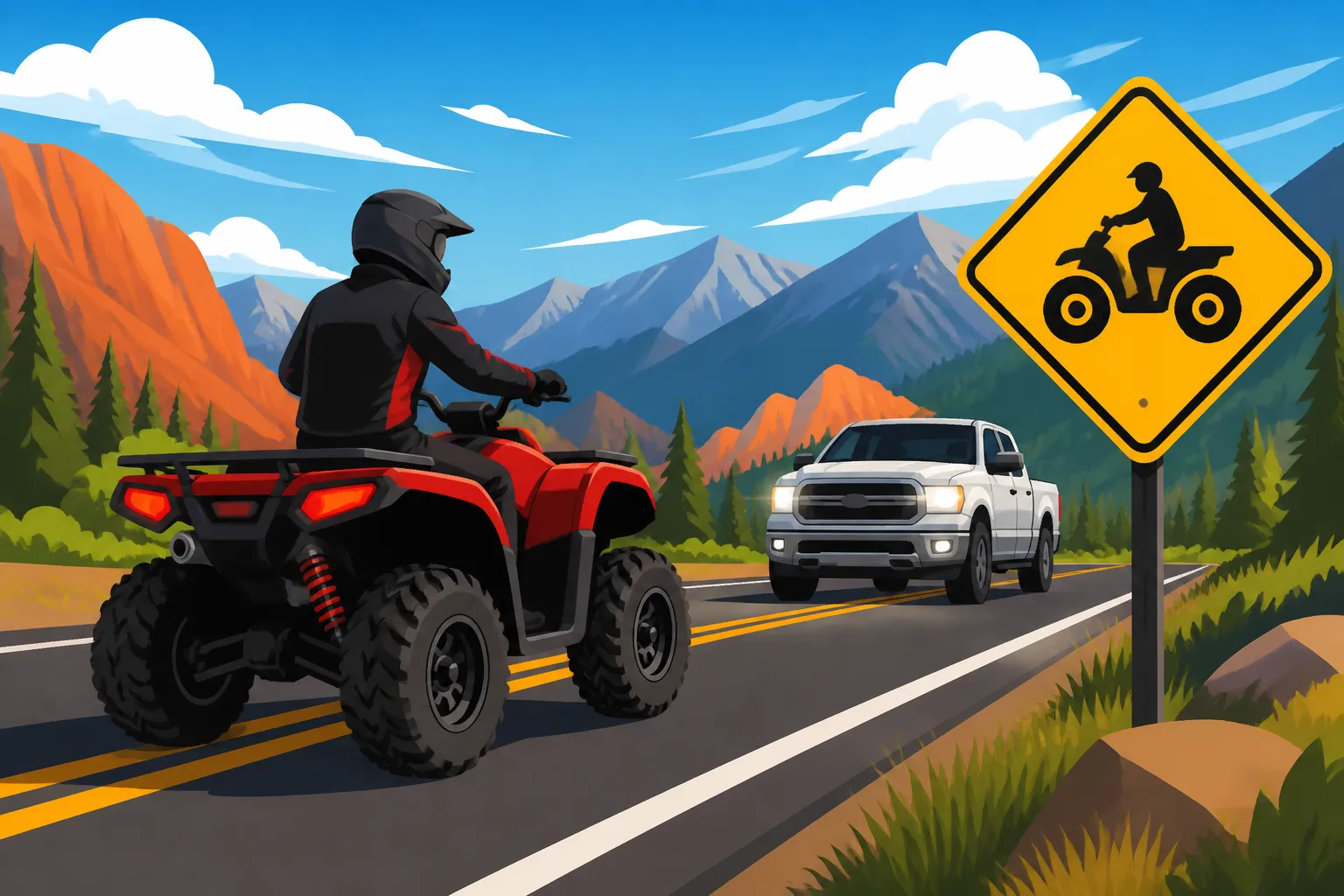
When it's time to actually make the crossing, precision and caution are paramount. Remember the "shortest distance" rule: aim for a crossing that takes you perpendicular to the highway, getting your OHV off the paved surface as quickly as possible. Before you proceed, come to a complete stop, look left, right, then left again, just as you would in a car. Wait for a clear break in traffic, ensuring you have ample time to cross safely without forcing any oncoming vehicles to brake or swerve.
Yield to all traffic on the highway; you are entering their right-of-way. Use clear hand signals or your machine's turn signals (if equipped and visible) to indicate your intentions. Accelerate smoothly and directly across the highway. Be prepared for potentially different road surfaces; gravel from the shoulder can make traction tricky on the asphalt, especially if your OHV tires aren't designed for pavement. Ensure your machine is in good working order – brakes are especially important. If you’re riding in a group, cross one machine at a time, ensuring each rider has a clear window of opportunity. Never assume another driver sees you; make eye contact if possible, and be ready for the unexpected. For more detailed advice, check out [Rules at a Paved Highway Crossing].
Penalties and Risks of Illegal Highway Crossings
It's easy to think that bending the rules for "just a minute" won't hurt anyone, but the consequences of illegally crossing or operating your OHV on a Colorado highway can be severe, impacting both your wallet and your safety. Understanding these risks is crucial for making responsible decisions on the trail.
Fines and Legal Consequences
The state of Colorado takes its road safety seriously, and that includes the regulations surrounding off-highway vehicles. Operating an OHV illegally on a state highway, even for a quick crossing outside of the permitted conditions, can result in significant fines and legal consequences. These penalties can vary depending on the specific violation—whether it's operating an unregistered OHV, lacking required safety equipment, or simply being in a prohibited area. It's not uncommon for fines to range from hundreds of dollars, and they can escalate quickly if other infractions are cited, such as reckless driving or failure to yield. You can learn more about general penalties in [Colorado Fines for Illegal Road Riding] and [Penalties for an Unregistered OHV in Colorado].
Beyond immediate fines, repeated offenses or more serious violations could lead to points on your driver's license, temporary suspension of your driving privileges, or even impoundment of your OHV. Many riders are shocked to learn that ignorance of the law is never an excuse. State and local law enforcement officers patrol these areas, especially during peak riding seasons, and they are well-versed in OHV regulations. Getting a ticket for an illegal crossing can put a serious damper on your adventure and your wallet.
Safety Risks and Liabilities
While the legal repercussions are certainly a deterrent, the most critical concern is the inherent safety risks involved in mixing OHVs with highway traffic. OHVs are simply not designed for the speeds, braking distances, and handling characteristics required on paved highways. A side-by-side or ATV, even a powerful one, struggles to keep pace with cars and trucks, making it a vulnerable target. The speed differential between an OHV making a crossing and highway traffic creates a dangerous scenario where accidents can happen in mere seconds. Limited visibility, blind spots for larger vehicles, and the potential for a driver to be distracted further amplify these dangers.
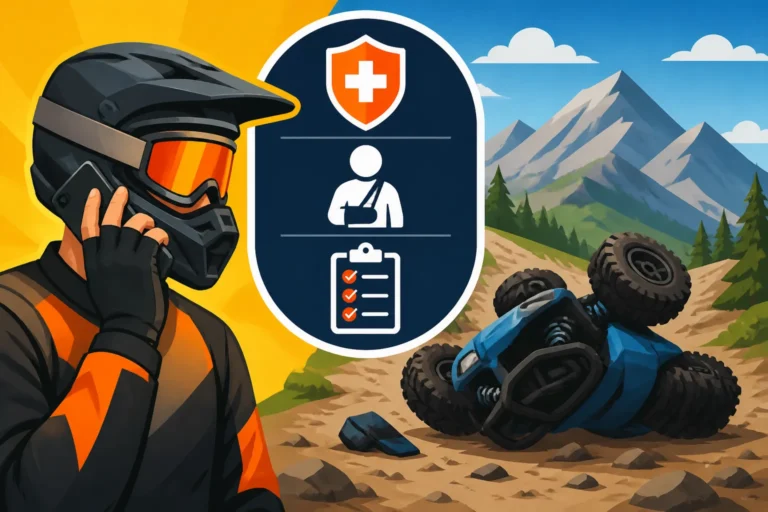
If an accident occurs during an illegal crossing, the liability implications can be devastating. Your personal insurance policy for your OHV, if you have one, might explicitly exclude coverage for incidents that occur during illegal operation. This means you could be personally responsible for property damage to other vehicles, medical expenses for injured parties, and even legal defense costs. These costs can easily run into hundreds of thousands of dollars, far outweighing any perceived convenience of an illegal crossing. Nobody wants to face that kind of financial ruin simply because they tried to save a few minutes. Always err on the side of caution. For guidance on reporting and claims after an incident, check [Colorado OHV Crash Reporting Rules] and [OHV Injury Claims After a Crash]. It's a risk simply not worth taking.
Crossing versus Operating: Key Differences
To help clarify the often-confusing nuances, here's a quick comparison of what separates a legal crossing from illegal operation on a Colorado highway.
| Feature | Legal Highway Crossing (Permitted) | Illegal Highway Operation (Prohibited) |
|---|---|---|
| Purpose | Connecting two designated OHV routes. | Traveling along the highway as an extended part of your ride. |
| Duration | Shortest possible distance, immediate and direct. | Any prolonged travel on the paved surface or shoulder. |
| Angle | As close to 90 degrees to the highway as practicable. | Driving parallel to traffic flow. |
| Required Equipment | Headlights, taillights, brake lights, reflectors, muffler, spark arrester. | Same, but presence doesn't legitimize illegal operation. |
| Driver Requirements | Valid driver's license, adherence to age/supervision rules. | Same, but violation occurs due to illegal use of the highway. |
| Yielding | Must yield to all highway traffic. | Dangerously merging with or impeding highway traffic. |
| Local Ordinances | May allow specific access on county roads leading to a crossing point. | Cannot override state law prohibiting OHV operation on state highways. |
| Visibility | Critical to ensure clear sightlines and be seen by others. | Often compromised due to speed differentials and OHV characteristics. |
| Risk/Penalty | Minimal risk if done legally; potentially high if conditions are unmet. | High risk of severe accident, significant fines, and legal liability. |
Disclaimer
This article is for general informational purposes only and does not constitute professional advice. Laws, prices and regulations vary by location and change over time. Consult a qualified professional for guidance on your specific situation.