Colorado OHV Road Rules for Young Riders
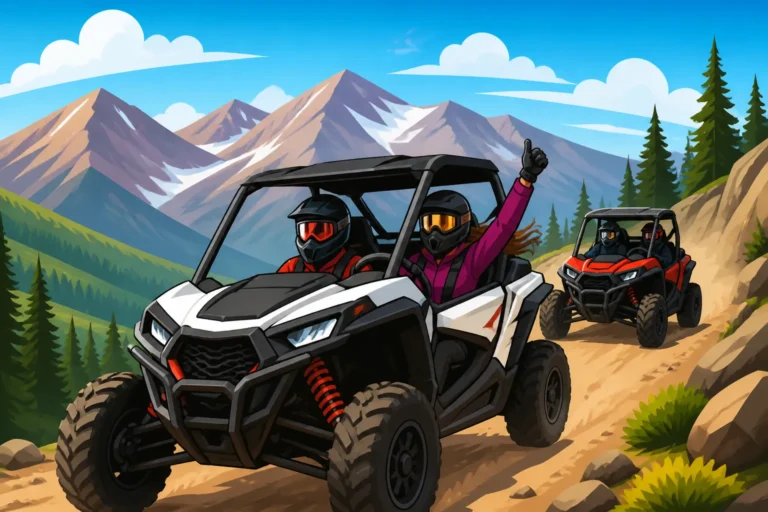
There’s nothing quite like sharing the thrill of the trail with the younger generation, watching them master a new skill, and seeing their faces light up as they navigate Colorado’s stunning backcountry. But for parents and guardians, the excitement often comes with a hefty dose of anxiety, especially when thinking about legal road access. Trying to figure out Colorado's specific rules for young riders on county roads can feel like deciphering ancient scrolls, leaving many of us frustrated and worried about doing something wrong. This comprehensive guide is here to cut through the confusion, meticulously breaking down Colorado's age limits, supervision requirements, essential safety gear, and the nuances of various road types so you can hit the trails and open roads safely and legally with your young adventurers.
The Core Age Restrictions for Young OHV Riders on Colorado Roads
Let's face it, the laws surrounding OHV use for minors can feel like a tangled web. You want your kids to experience the joy of the ride, but you also want to make sure they're safe and that you're not inadvertently breaking any rules. Colorado tries to strike a balance, but understanding the specifics is key.
Minimum Age for Operating on Public Roads
The foundational rule in Colorado for youth operation of OHVs on designated public roads (we're talking county roads opened to OHV use, not just any road) is that a rider must generally be at least 10 years old. This isn't just an arbitrary number; it's a recognition of the cognitive and physical development needed to safely operate a motorized vehicle, especially one sharing space with other traffic. Children need a certain level of coordination, reaction time, and judgment to handle an OHV effectively, anticipate hazards, and understand basic traffic principles.
However, this 10-year-old rule often comes with significant caveats. It typically applies when the child is under direct adult supervision and riding on roads specifically identified and posted for OHV use. For instance, if you're on a county road that a local ordinance has opened to OHVs, and your 10-year-old is confidently and capably operating their machine, they might be allowed. But don't mistake this for a free pass to any road. Factors like the child's skill level, the size of their machine, and the specific road conditions all play a role in safe and legal operation. It's about more than just hitting a birthday milestone; it’s about maturity and capability. For a deeper dive, check out [Colorado's Minimum Age to Ride an Opened Road].
Understanding "Immediate Supervision" for Minors
Even when a young rider meets the minimum age requirement for certain roads, Colorado law often mandates "immediate supervision." This isn't just about having an adult somewhere in the vicinity; it’s a specific legal standard designed to ensure safety. "Immediate supervision" generally means the supervising adult must be within direct visual sight of the young rider, close enough to intervene physically or verbally if an unsafe situation arises. This usually means riding either directly ahead of, or immediately behind, the youth operator, not a quarter-mile down the trail or back at the trailhead.
Who qualifies as a supervisor? Typically, it must be an adult (18 years or older) who holds a valid driver's license. This ensures the supervisor themselves understands the rules of the road and can take appropriate action if needed. This rule is crucial on shared county roads where you might encounter passenger vehicles, livestock, or other recreational users. It puts the responsibility squarely on the adult to monitor, guide, and protect the younger rider. Imagine your 12-year-old rounding a blind corner on a gravel road; as the supervisor, you need to be right there, ready to signal them or react to oncoming traffic. This is a topic that comes up often, and for good reason—it’s about protecting our kids. You can find more detail on this in [Who May Supervise a Young Colorado Rider].
When a Driver's License Becomes Necessary
The progression from supervised riding to independent operation on Colorado's roads often hinges on acquiring a standard driver's license. While younger riders can operate OHVs under supervision on designated roads, once a rider turns 16, the rules shift considerably. At 16, if they possess a valid Colorado driver's license, they can generally operate an OHV on legally opened county roads without immediate adult supervision, provided the OHV itself complies with all applicable regulations (e.g., proper registration, lighting, etc.).
It's vital to understand the distinction: the OHV permit ([Colorado OHV Permit Rules on Public Land]) registers the machine for public land use, but a driver's license relates to the operator's legal ability to drive on public roads. Even if a 16-year-old has a driver's license, the OHV still needs its current Colorado registration sticker displayed. For those under 16 without a driver's license, they remain subject to the supervision requirements on county roads, even if they meet the minimum age for riding. This means a 15-year-old, even if they're a highly experienced rider, must still be accompanied and directly supervised by a licensed adult when operating on an opened county road. This distinction ensures that operators on public roads have at least a baseline understanding of general traffic laws and responsible driving behavior.
Essential Gear and Safety Requirements for Young Riders
When it comes to riding, safety gear isn't just a suggestion; it's a non-negotiable, especially for young riders whose bodies are more vulnerable in a fall or collision. Colorado has clear expectations, and savvy riders know that investing in quality protection is just part of the adventure.
Helmet and Eye Protection: Non-Negotiables for All Ages
Let's be absolutely clear: a properly fitting helmet and eye protection are paramount for any OHV rider in Colorado, and for minors, it's a strict legal requirement. This isn't just about avoiding a ticket; it's about protecting fragile heads and eyes. Helmets should be DOT (Department of Transportation) approved, which means they've met stringent safety standards. A helmet that's too big can shift and offer inadequate protection, while one that's too small will be uncomfortable and might not even go on correctly. Always opt for a full-face helmet for the best protection against impacts and debris, or a robust open-face helmet combined with goggles that offer full eye coverage. Regular sunglasses are simply not enough; they can shatter and cause more harm.
Imagine your child navigating a dusty trail, following your UTV. Dust, small rocks, and even low-hanging branches can become serious hazards. A good pair of goggles will keep their vision clear and protected. Many parents invest in helmets specifically designed for youth, which often come in lighter weights and smaller sizes but still meet critical safety standards. Don't skimp here; a brain injury can change a life forever. This rule is absolute, regardless of age or road type when riding an OHV. More details on these specific requirements can be found in [Colorado Helmet and Eye Protection: What Is Actually Required].
Appropriate Clothing and Footwear for Road Riding
While Colorado law doesn't specify every piece of clothing for OHV riding, common sense and a strong commitment to safety dictate certain attire, particularly for young riders. Think of it as a second layer of skin. Long sleeves and long pants (jeans or riding pants are ideal) are crucial for protecting against scrapes, cuts, and abrasions from unexpected falls, brush, or debris thrown up by tires. Bare skin is simply too vulnerable.
Footwear is another critical component. Sturdy, over-the-ankle boots provide essential support for ankles and protect feet from engine heat, shifting rocks, and potential impacts. Sneakers or open-toed shoes offer virtually no protection and are completely unsuitable for OHV operation. Gloves are also highly recommended. They improve grip, reduce fatigue, and protect hands from blisters, abrasions, and impact. While your child might complain about being hot or feeling restricted, reminding them that this gear is for their safety is paramount. It’s all part of the responsible riding mindset, ensuring that a minor fall doesn't turn into a serious injury.
Machine Readiness and Modifications for Safety
Before any ride, especially one involving young operators on public roads, the OHV itself must be in peak condition and, if modified, those modifications must enhance safety or comply with regulations. For youth machines, this means checking brakes, tires, throttle response, and steering for proper function. Are the tires inflated to the correct pressure? Do the brakes engage firmly? Is the throttle sticky? Are the lights working? These basic pre-ride checks are even more critical when a less experienced rider is at the controls.
For younger, smaller riders, ensuring the machine fits them is crucial. Can they comfortably reach and operate the throttle, brakes, and steering? If a machine is too large, they won't have the necessary control. While the law doesn't always specify engine size limits for all age groups on roads (it does on trails), choosing an appropriately sized machine is a parent's responsibility. When considering aftermarket parts, like those offered by SuperATV, remember that while enhancements like improved lighting, stronger suspension components, or even a robust winch can add to the utility and safety for more challenging terrain, they must not compromise the machine's street legality where applicable. Always ensure any modifications, even simple ones, do not negatively impact the machine's safety features or compliance with Colorado's OHV rules for road use. A well-maintained and appropriately fitted machine is a safer machine for a young rider.
Navigating Different Road Types with Young OHV Operators
One of the biggest sources of confusion for OHV riders in Colorado, especially those with young family members, is understanding where you can actually ride. Not all roads are created equal, and the rules change dramatically depending on the specific designation of the pavement or gravel under your tires.
County Roads and Designated OHV Routes
Colorado has made significant strides in opening up certain county roads to OHV use, creating expansive networks that connect trails and towns. These are the roads where, under strict supervision, your 10-year-old might be legally allowed to operate an OHV. The key here is "designated." These aren't just any dirt roads; they are specific county roads that local governing bodies (county commissioners) have formally opened to OHV traffic through an ordinance. You'll often see specific signage indicating OHV access, and you can always consult county sheriff websites or Forest Service/BLM Motor Vehicle Use Maps (MVUMs) to confirm access.
On these designated routes, young riders, under immediate adult supervision, must adhere to all traffic laws applicable to motor vehicles. This includes speed limits (which are often lower for OHVs than for passenger cars, even on the same road), yielding to oncoming traffic, and staying to the right. The experience on these roads can be exhilarating, connecting scenic byways and access points to trails. But riders, especially young ones, must always be acutely aware of their surroundings, other vehicles, and the potential for unexpected hazards like wildlife or pedestrians. Ignoring these rules can lead to serious incidents and citations, as outlined in [Fines for an Unregistered OHV in Colorado]. It's crucial to understand that even on an opened county road, you're sharing the space.
Crossing State Highways and Main Arteries
This is where many riders, young and old, get into trouble. Colorado's state highways (like US-550 or CO-149) and other primary paved arteries are generally not open to OHV travel. There are very limited exceptions, such as specific short stretches of highway that have been officially designated as OHV corridors (e.g., a specific section of Highway 149 near Lake City), but these are rare and always clearly marked.
The most common interaction OHVs have with state highways is crossing them. If a designated OHV route or county road requires you to cross a state highway to continue, you must follow very strict rules:
- Stop: Come to a complete stop before entering the highway.
- Yield: Yield to all oncoming traffic, just like a car at a stop sign.
- Cross Perpendicularly: Cross the highway at a 90-degree angle, making the shortest possible transit. You cannot travel down the shoulder, even for a short distance.
- No Stopping: Do not stop on the highway.
For a young rider, crossing a busy state highway can be intimidating and dangerous. The supervising adult must take extra precautions, perhaps stopping and scouting the crossing, giving very clear instructions, and ensuring the child is confident and capable of executing the crossing quickly and safely. This is a moment where even a seasoned rider needs to be exceptionally vigilant, let alone a 12-year-old.
Prohibited Areas: State Highways, Interstates, and Town Main Streets
To reiterate, with the rare, clearly signed exceptions mentioned above, state highways and interstates are off-limits for OHVs. This means you cannot ride them, even on the shoulder, even for a short distance to get to the next county road. This is a common violation and one that law enforcement takes very seriously due to the significant safety risks posed by slow-moving OHVs on high-speed roads.
Furthermore, many Colorado mountain towns have strict ordinances regarding OHV use on their main streets or within town limits. While some towns have embraced OHVs and opened certain streets to connect riders to trails, others have maintained strict bans or severe restrictions. [Silverton's Ban on OHVs in Town] is a well-known example where riding within town limits is heavily restricted, leading to significant fines if violated. Other towns like Ouray and Telluride also have specific no-OHV zones or limited access rules.
It's critical, especially when traveling with young riders, to research the specific town ordinances of any community you plan to enter. Don't assume that because a county road leads into a town, you can ride your OHV on that town's streets. Fines can be substantial, and violating these rules contributes to negative public perception, potentially jeopardizing future OHV access. Always plan your route carefully and have a "street-legal" alternative (like a pickup truck and trailer) for entering towns if your OHV is not permitted.
Colorado's OHV Permit and Registration for Young Riders
Understanding the distinction between vehicle registration and operator requirements can be a stumbling block for many. When it comes to OHVs in Colorado, the permit system is designed primarily for the machine, not the rider.
Do Young Riders Need Their Own Permit?
This is a common question, and the answer is usually no, not directly. In Colorado, the OHV registration permit is tied to the machine itself, not the individual operating it. Any OHV, regardless of who is driving it, that is operated on public lands or designated OHV routes in Colorado (including those legally opened county roads) must have a current Colorado OHV registration sticker displayed. This sticker indicates that the machine has been registered with Colorado Parks and Wildlife (CPW) and that its owner has paid the annual fee that supports trail maintenance and other OHV programs.
So, if your family owns one side-by-side that both you and your 12-year-old take turns riding (under supervision, of course), that one machine only needs one valid OHV permit sticker. You don't need a separate permit for each rider. However, if your family has multiple machines – say, a quad for you and a smaller ATV for your child – then each machine will need its own separate OHV registration. This applies whether the machine is new or used, whether it's kept on private land but occasionally ridden on public trails, or whether it's just used for recreational purposes. It's a fundamental requirement for legal OHV use on public land in Colorado, including those county roads.
When is a Permit NOT Required?
While the permit is largely universal for public land use, there are specific scenarios where a Colorado OHV permit is not required. The most significant exemption is when an OHV is operated exclusively on private land. If you own a large ranch, for example, and your kids ride their ATVs solely within the boundaries of your property, no Colorado OHV registration is needed. This applies to any private property where you have explicit permission to ride. The moment that machine touches a public trail, a Forest Service road, or a county road that has been opened for OHV use, the permit becomes mandatory.
There are also some agricultural or utility exemptions for machines used strictly for work purposes on private land or within a specific operational context, but these generally do not apply to recreational youth riding. It's important not to confuse a work exemption with a recreational one. If you're riding for fun, even if it's a utility-style UTV, you'll need that permit if you hit public ground. It's also worth noting that some street-legal, plated vehicles (like certain Jeeps or full-size vehicles) might also be exempt from the OHV permit requirement if they are using designated OHV routes, but they still need to adhere to all their standard vehicle registration and road-legal requirements. However, this article is focused on non-plated OHVs. Always err on the side of caution: if you’re leaving private property for recreational riding, make sure the machine has its current [Colorado OHV Registration Explained].
Supervision and Responsibility: More Than Just "Following Behind"
Supervising a young rider on Colorado's roads is a serious responsibility. It's not a passive role where you simply let them ride ahead while you follow. It's an active, engaged role that demands constant vigilance and communication.
The Legal Implications of Supervising a Minor
As the supervising adult, you are legally responsible for the actions of the minor operating the OHV. This means that if the young rider commits a violation – for instance, riding in a prohibited area, speeding on a county road, or failing to yield – you, the supervisor, could be held accountable. Law enforcement can issue citations directly to the adult for offenses committed by the minor under their supervision. These penalties can range from significant fines to potential community service or even more severe consequences depending on the nature of the infraction. You can imagine the headache and financial hit of receiving [Fines for an Unregistered OHV in Colorado] when your child was the one operating it.
Beyond the legal aspect, there's a profound moral responsibility. You are the safety net. You are teaching them not just how to operate a machine, but how to be a responsible and respectful user of public lands. This isn't a task to be taken lightly, especially given the inherent risks of OHV riding, exacerbated on shared roads. Ensure you are sober, alert, and fully capable of guiding and intervening. Colorado has strict [Colorado Alcohol Limits for OHV Operators], and these apply just as much to the supervising adult as to any other operator.
Teaching Road Etiquette and Rules of the Road
True supervision goes beyond simply ensuring legal compliance; it involves actively teaching proper road etiquette and the rules of the road. This means more than just saying, "Stay to the right." It involves demonstrating and explaining:
- Hand Signals: How to signal turns, stops, and hazards, even if the OHV has lights.
- Yielding: Explaining when and how to yield to passenger vehicles, bicyclists, hikers, and even horses.
- Safe Distances: Emphasizing maintaining a safe following distance from other vehicles to allow for reaction time and to reduce dust for those behind.
- Respect for Private Property: Pointing out private land boundaries along a county road and explaining why it's critical never to trespass.
- Speed Management: Teaching them to adjust speed not just for conditions, but out of respect for homes and other users.
- Environmental Responsibility: Explaining the importance of staying on designated routes to prevent trail damage and resource impact.
Tools like enhanced mirrors from SuperATV can help young riders develop better situational awareness, teaching them to check their surroundings before changing position or making turns. The goal is to instill a deep understanding of responsible riding that will serve them for a lifetime, whether they're on a trail or a county road.
Preparing for Unforeseen Circumstances on the Road
Even the most careful planning can't account for every eventuality. Supervising a young rider on a public road means being prepared for the unexpected. What if a tire goes flat? What if the machine breaks down far from the trailhead? What if you encounter an aggressive driver, or worse, someone who isn't paying attention?
- Basic Tools: Carry a small toolkit, tire repair kit, and air compressor. Teach your child how to identify a flat and what to do.
- First Aid: A well-stocked first aid kit is non-negotiable, especially when far from immediate medical help.
- Communication: Cell service is notoriously spotty in Colorado's mountains. Consider carrying a satellite messenger (like a Garmin inReach or Zoleo) for emergency communication.
- Water and Snacks: Dehydration and low blood sugar can impair judgment, especially in children.
- Situational Awareness: Constantly scan for potential hazards, not just on the road itself, but along the shoulders, in the sky (weather changes quickly!), and around blind corners. Teach your child to do the same.
Practicing these scenarios at home or on private land can build confidence and reduce panic if a real-life situation arises. Remember, your calm and preparedness will be their biggest comfort and guide in a stressful situation. It’s not just about riding the road; it’s about conquering the challenges it might throw at you.
Local Ordinances and Their Impact on Youth Riding
Colorado is a diverse state, and what's permissible in one county or town might be strictly forbidden in another. This patchwork of rules can be incredibly frustrating for OHV enthusiasts, especially when trying to plan a family trip that includes young riders.
How Towns and Counties Set Their Own Rules
Unlike statewide OHV trail regulations, the rules governing OHV access on county roads and within town limits are often set at the local level. County commissions can vote to open certain county roads to OHV traffic, and individual municipalities (towns and cities) can pass their own ordinances regarding OHV operation on their streets. This means that you can ride legally on a county road in Hinsdale County, only to discover that the moment you cross into the town limits of Lake City, a different set of rules applies.
This decentralized approach means there's no single, definitive map that covers all OHV road access in Colorado. Riders are expected to know and abide by the local rules wherever they are operating. The best way to stay informed is to check the specific county sheriff's office website, the town's official website, or contact their administrative offices directly before your trip. Organizations like the Forest Service and BLM also produce Motor Vehicle Use Maps (MVUMs) which depict designated routes, but these primarily cover federal lands and don't always reflect local town ordinances. It's a bit of a scavenger hunt, but it's essential for a smooth and legal ride. For help with this, you can refer to [Colorado Counties With OHV Road Ordinances].
Common Local Restrictions Affecting Young Riders
Local ordinances can introduce additional restrictions that specifically impact young riders or the overall OHV experience. These might include:
- Curfews: Some towns might restrict OHV operation to specific hours of the day, particularly impacting evening or early morning rides.
- Specific Street Closures: While some streets may be open, others (like main commercial strips or residential areas) might remain closed to OHVs.
- Noise Ordinances: Many mountain towns are sensitive to noise, and OHVs with loud exhausts, even if stock, might draw attention or complaints. Some towns enforce strict noise limits.
- Parking Rules: Where can you legally park your OHV in town? Is there designated parking, or is it treated like any other vehicle?
- Age-Specific Bans: Very rarely, a town might impose even stricter age limits for OHV operation on its streets than the county or state.
Perhaps the most famous example of a strict local ban is [Silverton's Ban on OHVs in Town], which prohibits OHVs from riding on most town streets, funneling all OHV traffic to a specific bypass route. Similarly, Ouray and Telluride have specific restrictions to manage OHV traffic. Ignoring these local rules, especially with a young rider in tow, can not only result in citations but also erode the goodwill that OHV recreationists have worked hard to build with local communities. Always have a plan B, which usually involves trailering your OHV into or through towns where access is restricted.
The Evolving Landscape of Colorado OHV Access
The legal landscape for OHV access in Colorado, particularly concerning road use, is not static. It's a dynamic environment, constantly shaped by local politics, community feedback, and legislative efforts. What was open last year might be closed this year, and new routes are always being considered. This means that staying informed is an ongoing responsibility for all riders, especially those introducing the sport to the next generation.
Organizations like Colorado Parks and Wildlife (CPW), the US Forest Service, and the Bureau of Land Management (BLM) are excellent resources for current trail and road status. Many local OHV clubs also actively track changes and advocate for rider access, and their websites or social media groups can be invaluable. Even companies like SuperATV, while primarily focused on parts and accessories, often share news and updates relevant to the OHV community. Regularly checking these sources before each trip is the best way to avoid surprises and ensure your family's ride is both enjoyable and legal. By understanding and respecting these evolving rules, we contribute to a positive future for OHV recreation in Colorado, safeguarding access for our children and generations to come.
Colorado OHV Road Rules for Young Riders: Quick Reference
This table provides a simplified overview. Always check specific local ordinances and official CPW guidelines for the most current and detailed information.
| Age of Rider | Road Type | Supervision Required? | Driver's License Required? | Helmet & Eye Protection | Key Considerations |
|---|---|---|---|---|---|
| Under 10 | Designated OHV trails (not roads) | Yes, immediate and direct | No | Yes | May not operate on roads open to OHVs, even with supervision. Private land use is generally unrestricted. |
| 10-15 | County roads (where legal) | Yes, immediate & within sight by licensed adult (18+) | No | Yes | Rider must be able to properly operate the OHV. Local ordinances determine which county roads are open. |
| 16+ | County roads (where legal) | No, if rider holds a valid driver's license | Yes (standard driver's license) | Yes | If no driver's license, supervision rules for 10-15 year olds apply. Machine must be registered. |
| All Ages | State Highways, Interstates | No OHV use permitted | N/A | N/A | Except for perpendicular crossings where explicitly permitted by law. |
Disclaimer
This article is for general informational purposes only and does not constitute professional advice. Laws, prices and regulations vary by location and change over time. Consult a qualified professional for guidance on your specific situation.