Strapping a Machine Down for a Mountain Pass
There's nothing quite like the knot in your stomach as you start climbing the long grades of a Colorado mountain pass, glancing in your rearview mirror, and praying that the expensive off-highway vehicle (OHV) you worked so hard to get is still securely fastened to your trailer. The truth is, hauling an ATV or UTV over our state's rugged, winding, and often steep mountain roads presents a unique set of challenges. This isn't just about getting from point A to point B; it's about safeguarding your investment, ensuring the safety of everyone on the road, and arriving at the trailhead ready for adventure, not an insurance claim. This guide will walk you through the essential steps, gear, and considerations for strapping down your machine securely, giving you the peace of mind you deserve when tackling Colorado's magnificent but demanding terrain.
The Unique Challenges of Hauling Over Colorado Mountain Passes
Hauling an ATV or UTV across Colorado isn't like towing a boat to the lake or moving a lawnmower across town. Our mountain passes throw specific curveballs that can quickly turn a peaceful drive into a white-knuckle experience if you're not properly prepared. The forces at play are far greater and more dynamic than what you typically encounter on flat highways.
Why Mountain Roads Are Different
When you're driving up and down the steep inclines and declines of a pass like Wolf Creek, Monarch, or even a smaller, less imposing pass, your entire rig is subject to incredible stresses. Gravity is your biggest adversary. On a steep uphill climb, the weight of your OHV wants to shift backward, potentially reducing the tongue weight on your tow vehicle and making steering feel light and unstable. Conversely, on a long descent, the weight wants to surge forward, putting immense strain on your braking system and forward tie-downs. It’s not just the straight sections either; the relentless switchbacks and sharp turns on these mountain roads create lateral forces that try to shift your machine side-to-side on the trailer deck. A strap that holds perfectly fine on a flat, straight interstate might stretch, loosen, or even fail under these intense, multi-directional pressures. You might also encounter sudden gusts of wind, changes in road surface, or unexpected bumps that add to the dynamic forces at play.
The Dangers of Inadequate Securing
The consequences of an inadequately secured OHV on a mountain pass are dire, to say the least. At best, you might arrive at your destination with a shifted machine, damaged fenders, or a bent axle from it banging against the trailer rails. At worst, an improperly secured ATV or UTV can break free from its tie-downs, causing it to tumble off the trailer and onto the roadway. Imagine a several-hundred-pound ATV or a thousand-plus-pound UTV becoming a projectile on a winding mountain road with oncoming traffic or a steep drop-off just inches away. This isn't just a hypothetical scenario; it's a real and terrifying risk that can lead to catastrophic accidents, severe injuries, or even fatalities for you, your passengers, or innocent motorists. Beyond the immediate danger, there's the financial fallout: extensive damage to your machine and trailer, potential liability for accidents, and the sheer heartbreak of losing your beloved off-road vehicle. This is why investing time, proper gear, and diligence in securing your machine is non-negotiable for safe mountain travel. You'll want to make sure your [Trailer Registration for Hauling ATVs in Colorado] is current and correct, just in case.
Essential Gear for Safe Transport
When it comes to strapping down your valuable ATV or UTV, you absolutely cannot skimp on quality. This isn't the place for bargain-bin tie-downs or old frayed ropes. The gear you choose is the only thing standing between your machine and the road, especially when navigating the challenging grades and curves of Colorado's high country.
Types of Straps and Tie-Downs
The foundation of secure transport lies in choosing the right straps. Here’s what you need to consider:
- Ratchet Straps: These are the gold standard for securing OHVs. They provide a mechanical advantage that allows you to achieve significant tension, ensuring your machine is snug and doesn't budge. Look for straps with a high working load limit (WLL), which is the maximum weight a strap is designed to safely hold in daily use. Don't confuse WLL with break strength; the WLL is what truly matters. Straps typically come in widths from 1 to 2 inches, with wider straps generally offering higher WLLs. For ATVs, 1.5-inch straps with a WLL of at least 1,000 lbs per strap are a good starting point. For heavier UTVs, you should be looking at 2-inch straps with a WLL of 3,333 lbs or more per strap. The hook ends are also important: S-hooks work for many applications, but flat hooks or J-hooks can offer a more secure connection to trailer D-rings or stake pockets.
- Wheel Nets/Basket Straps: For the ultimate in secure transport, especially for UTVs, wheel nets are highly recommended. These are essentially straps that go over and around your machine's tires, cinching them directly to the trailer deck. By securing the wheels, you prevent the suspension from compressing and rebounding, which can lead to strap loosening. This method truly "locks" the machine to the trailer, virtually eliminating any movement. They distribute the force across the entire tire, reducing stress points that can occur with traditional frame-only strapping. Many riders who frequently haul over passes won't use anything else for their UTVs.
- Soft Ties/Axle Straps: These are incredibly useful for protecting your machine's finish. Instead of hooking a metal ratchet strap directly to painted or delicate parts of your ATV/UTV frame, you can loop a soft tie around an axle, A-arm, or sturdy frame member. Then, you attach your ratchet strap to the soft tie. This prevents scratching, rubbing, and wear on your machine's components, which is a common complaint when straps are hooked directly. They're a small investment that pays off in maintaining your OHV's appearance.
Critical Accessories You Can't Forget
Beyond the straps themselves, a few other items are essential for a safe and trouble-free haul:
- Quality Trailer: It might seem obvious, but your trailer must be up to the task. Ensure it has a sufficiently high gross vehicle weight rating (GVWR) to safely carry your OHV, plus any other gear. Check that the tires are properly inflated and in good condition, and that all lights are working. Your trailer's tie-down points—whether D-rings, stake pockets, or integrated rails—must be robust and securely welded or bolted to the frame. A flimsy tie-down point is a single point of failure waiting to happen.
- Chocks: Wheel chocks placed under the tires (both front and rear) provide an extra layer of security, especially during loading and unloading, but also help prevent any forward or backward creep during transit, even with proper strapping.
- Gloves: Handling dirty, greasy, or tightly tensioned straps can be tough on your hands. A good pair of work gloves will protect them from pinches, scrapes, and grime.
- Extra Straps/Bungees: It's always a good idea to carry a few extra straps in case one fails or you discover a piece of loose gear. Bungee cords are useful for securing smaller items like fuel cans, toolboxes, or coolers to the machine or trailer, preventing them from bouncing around or flying off. Don't, however, rely on bungees for primary machine securement.
- Tool Kit: A basic tool kit with a wrench, socket set, and pliers can be invaluable for tightening loose bolts, making minor adjustments to your trailer, or even assisting other riders in a pinch.
- Reflective Tape/Flags: For added visibility, especially if you're hauling at dusk, dawn, or in inclement weather, reflective tape on your trailer and potentially small flags on the widest points of your OHV can make a big difference. This is especially true if you are hauling [Two Machines Over a Mountain Pass].
Step-by-Step Securing Your ATV/UTV
Now that you understand the challenges and have your gear ready, let's walk through the process of strapping down your OHV for a successful trip over a Colorado mountain pass. This isn't a race; take your time and follow each step meticulously.
Preparing Your Machine and Trailer
Before you even think about loading, a little preparation goes a long way in preventing issues down the road.
- Clear the Deck: First, ensure your trailer deck is clean and free of any debris, ice, or loose objects that could interfere with your machine's stability or damage the straps. A clear surface provides the best grip for your tires.
- Check Tire Pressure: For both your tow vehicle and your trailer, confirm that tire pressures are set to the manufacturer's recommendations for towing. Under-inflated tires can lead to instability, increased wear, and even blowouts, which is the last thing you want on a steep mountain grade.
- Center and Balance: Load your ATV or UTV onto the trailer, aiming to center it as much as possible over the trailer's axles. Proper weight distribution is crucial for safe towing. Too much weight forward or backward can lead to trailer sway, reduced braking efficiency for your tow vehicle, or even dangerous instability. Generally, you want about 10-15% of the total trailer weight (including the OHV) to be on the trailer tongue. Adjust the machine's position forward or backward slightly until you achieve this balance.
- Engage Parking Brake and Gear: Once loaded and positioned, put your ATV or UTV in park or in its lowest gear (for manual transmissions) and engage the parking brake. This provides a baseline level of immobilization before you even touch a strap.
- Fold Mirrors/Lower Antennas: If your UTV has side mirrors or a tall antenna, fold them in or lower them to prevent damage from overhead clearances or strong winds during transit.
- Remove Loose Items: Take off any coolers, gear bags, or other loose accessories from your machine that could vibrate loose or blow away. Store them securely inside your tow vehicle or strap them independently to the trailer with separate bungees or smaller straps.
The Art of the Four-Point Tie-Down
The four-point tie-down method is the industry standard for safely securing OHVs. It provides comprehensive stability against forward, backward, and lateral movement.
- Compress the Suspension (Slightly): This is a critical step many people miss. You want to compress the OHV's suspension slightly, but not entirely, before securing it. This preload prevents the suspension from bouncing and allowing the straps to loosen over bumps. You can achieve this by using the ratchet straps to pull down on the machine. Just a few clicks of the ratchet should be enough to take some of the play out of the suspension.
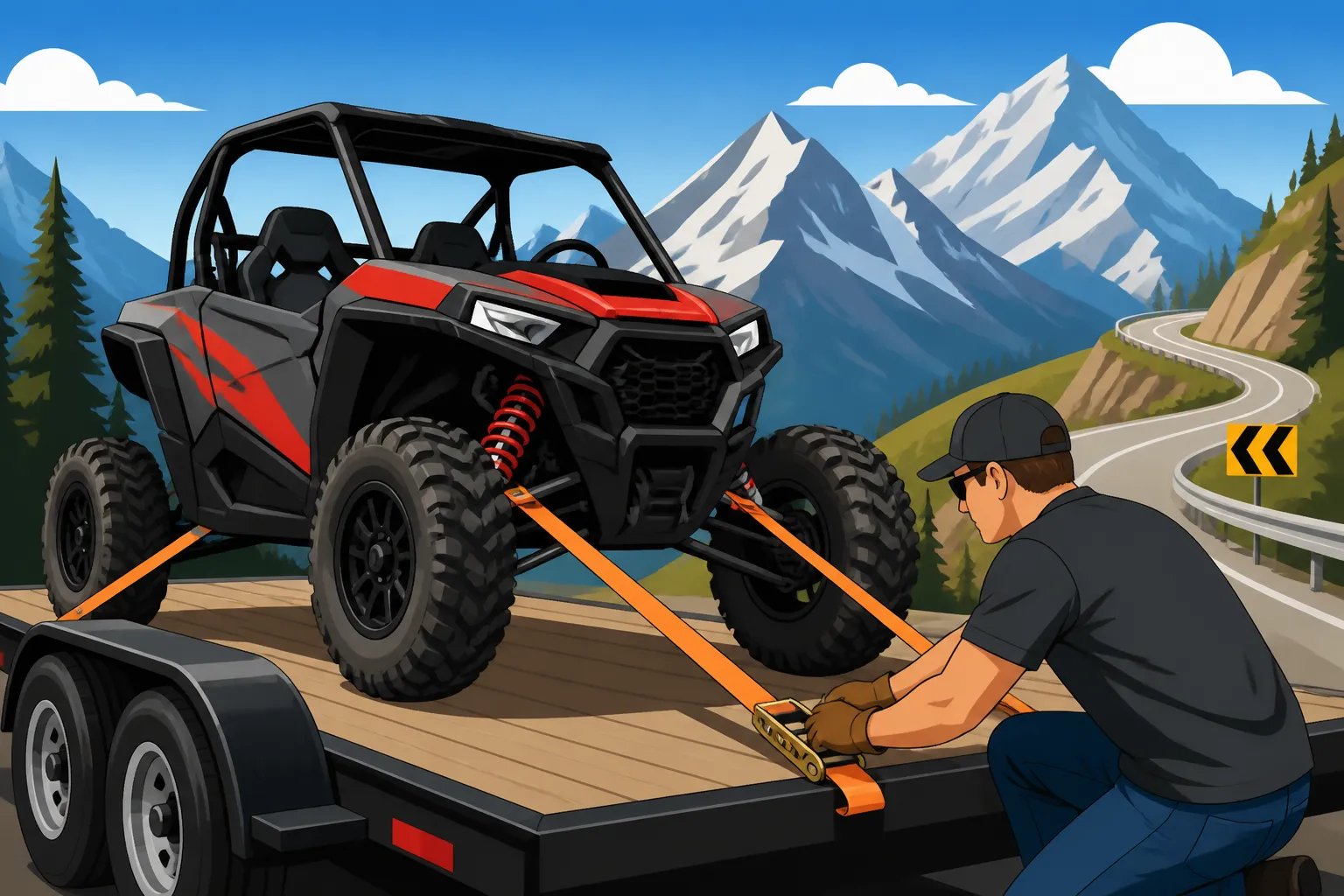
- Attach First Two Straps (Front): Connect two robust ratchet straps to strong, non-moving points on the front of your ATV or UTV's frame or axle/A-arms. Avoid connecting to plastic bodywork, control arms, or anything that might flex or break under pressure. Loop soft ties around these points if needed to protect the finish. Run these straps forward and outward to two secure tie-down points on the front corners of your trailer. Angle is key here: the straps should pull not just downward, but also slightly forward to counteract any rearward shift of weight on inclines.
- Attach Second Two Straps (Rear): Repeat the process for the rear of your machine. Connect two more straps to sturdy frame or axle points at the back of your OHV. Run these straps backward and outward to two secure tie-down points on the rear corners of your trailer. These straps should pull slightly backward to prevent forward surge on declines and during braking. The opposing angles of the front and rear straps create a web of tension that locks the machine into place.
- Tighten Evenly: Systematically tighten all four straps. Don't overtighten one strap completely before moving to the next. Instead, tighten each strap a few clicks, then move to the next, cycling through all four until they are all equally taut and the machine's suspension is slightly compressed. The machine should feel like it's part of the trailer, with no discernible wiggle or play. If you're using wheel nets, secure them over the tires according to their instructions, ensuring they are snug against the rubber and pulling directly down to the trailer deck.
Double-Checking and Road-Tripping
Before you pull out of the driveway, and especially before you hit that first mountain pass, a thorough inspection is crucial.
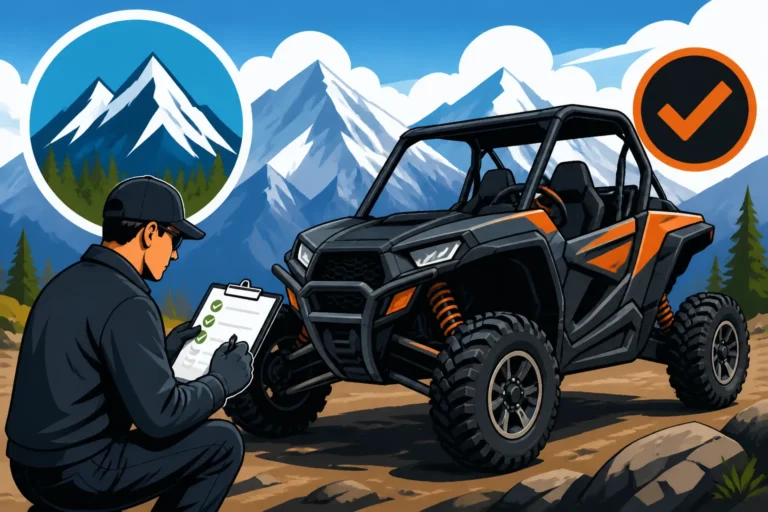
- The "Shake Test": Once everything is tightened, grab your OHV and try to shake it. It should not move independently of the trailer. If it wiggles or shifts, identify the loose point and re-tension.
- Strap Routing: Ensure all straps are routed clearly, not twisted, and not rubbing against sharp edges on your machine or trailer that could fray or cut them. Also, make sure no part of the strap is near the exhaust system or hot components that could melt it.
- Secure Excess Strap: Gather any excess strap length and tie it off or use bungee cords to secure it. Flapping straps can be distracting, get caught in moving parts, or even fray over time from wind buffeting.
- Pre-Trip Inspection: Beyond the OHV, quickly check your trailer hitch connection, safety chains, and trailer lights one last time. Make sure your tow vehicle's mirrors are properly adjusted to see around your trailer and OHV.
- Check After 10 Miles: Drive about 10-15 miles, then pull over at a safe spot (like a gas station or rest area) and re-check all your straps. Straps can sometimes settle, stretch slightly, or loosen up after the initial bumps and vibrations of the road. A quick re-tension here can prevent major problems down the line. This is particularly important when you're about to start a long climb or descent on a mountain pass. You'll also want to be aware of other mountain driving advice, such as avoiding [Blind Corners on a Colorado Mountain Road] and being prepared for [Brake Fade on a Long Colorado Descent].
Common Mistakes and How to Avoid Them
Even experienced riders can sometimes make mistakes when securing their machines. Knowing what pitfalls to avoid can save you a lot of headache and potential danger.
Overlooking Strap Condition
It's easy to throw straps in a toolbox and forget about them until the next trip. However, straps are consumables and need regular inspection.
- Frayed Edges and Cuts: Constantly inspect your straps for any signs of fraying, cuts, tears, or damage to the stitching. Even a small nick can significantly reduce a strap's working load limit, making it dangerously unreliable. The abrasive rubbing against metal edges on a trailer or machine, or even sun exposure, can degrade the fibers over time. If you see any significant damage, replace the strap immediately. Don't try to "make do" with a compromised strap; it's simply not worth the risk.
- Damaged Hardware: Check the hooks, ratchets, and cam buckles for bends, cracks, corrosion, or any signs of deformation. If a hook is bent open or a ratchet mechanism is sticky or not fully engaging, it's time for a new strap. The hardware is just as critical as the webbing itself in maintaining tension and security.
- Dirt and Grime: Keep your straps relatively clean. Dirt and grit can get into the ratchet mechanism, causing it to seize or malfunction. A quick rinse and drying after a dusty trip can prolong their life. Store them properly, away from direct sunlight and extreme temperatures, which can also degrade the material over time.
Trusting a Single Point of Failure
Relying too heavily on one strap or one type of connection is a recipe for disaster. Redundancy and proper technique are your best friends.
- Not Enough Straps: Many beginners only use two straps—one at the front and one at the back. This is insufficient for mountain travel. As discussed, a proper four-point tie-down system is the minimum, providing resistance against movement in all directions. If one strap were to fail, the others would still maintain some level of security, giving you a chance to pull over safely.
- Weak Tie-Down Points: Do not attach straps to thin railing, plastic bumpers, or flimsy cargo baskets on your trailer. These are not designed to withstand the immense forces of securing an OHV, especially on a rough road. Always use dedicated, heavy-duty D-rings, stake pockets, or structural cross-members on your trailer. Similarly, on your ATV or UTV, avoid hooking straps to steering components, brake lines, electrical wires, or anything that could be easily damaged or interfere with the machine's function. Stick to the main frame, axles, or sturdy suspension components.
- Loose Suspension: As mentioned, failing to compress the suspension slightly is a common error. If the suspension is allowed to fully articulate, the straps will constantly loosen and tighten as the trailer bounces, eventually becoming dangerously slack. A small amount of preload prevents this "pumping" action.
- Ignoring the Second Check: Skipping the 10-15 mile re-check is another frequent mistake. No matter how perfectly you think you've secured your machine, straps can and do settle. That quick stop can prevent a much bigger problem further down the road, especially before you hit a winding section of the highway or a steep descent. When you're [Planning a Colorado Riding Trip], build this check into your itinerary.
- Relying on Just the Parking Brake: While engaging the parking brake and putting the machine in gear is a good first step, it is absolutely not sufficient to secure an OHV for transport, especially over mountain passes. The vehicle's own internal braking mechanisms are not designed to withstand the external forces applied during towing; they are for parking, not for dynamic transport. You need external straps doing the work.
| Securing Method | Pros | Cons | Best For |
|---|---|---|---|
| Traditional Ratchet Straps | Versatile, cost-effective, high tension | Can damage finish, suspension can "pump" | ATVs, lighter UTVs, occasional hauling |
| Wheel Nets/Basket Straps | Ultimate security, no suspension "pump" | More expensive, can be slower to install | UTVs, frequent haulers, long distances, rough roads |
| Soft Ties/Axle Straps | Protects finish, flexible attachment | Requires an additional ratchet strap | Any OHV where frame protection is desired |
| Chocks | Extra layer of stability, prevents creep | Not a primary securing method | Any OHV, in conjunction with straps |
By being mindful of these common mistakes and adhering to best practices, you can ensure your ATV or UTV arrives safely, ready to hit the trails, even after traversing Colorado's most challenging mountain passes.
Disclaimer
This article is for general informational purposes only and does not constitute professional advice. Laws, prices and regulations vary by location and change over time. Consult a qualified professional for guidance on your specific situation.