Penalties for an Unregistered OHV in Colorado
Picture this: you've loaded up your side-by-side or ATV, driven hours to a beautiful Colorado trailhead, only to be stopped by a ranger before you even hit the dirt. Your heart sinks as you realize you totally forgot to renew your OHV registration, or worse, never registered it at all. The frustration and immediate worry about what comes next are very real. This guide is here to shed light on the all-too-common penalties for operating an unregistered off-highway vehicle in Colorado, helping you understand the risks and, more importantly, how to steer clear of trouble.
Why is Registration Even a Thing in Colorado?
It's easy to look at the process of registering your OHV as just another hoop to jump through, another fee to pay. Believe me, I get it. We just want to ride! But Colorado's OHV registration system isn't just about bureaucracy; it's a vital part of maintaining the incredible riding opportunities we have here in the Centennial State. Without it, our trails would rapidly deteriorate, and our access to them could disappear.
The Public Land Connection
Colorado is blessed with vast expanses of public land, from national forests to BLM acreage, offering some of the most scenic and challenging OHV trails in the country. This access, however, isn't a given. It's managed and maintained, and proper registration ensures that the state knows who is using these resources and can enforce rules to keep them sustainable for everyone. If you're out exploring the backcountry on a designated trail, that little sticker on your machine is your ticket to ride.
Think about it: every rider you see out on the trails, whether they're navigating the switchbacks of Engineer Pass or cruising through the vast meadows of Taylor Park, is benefiting from a shared resource. The state needs a way to account for these machines and their operators to ensure responsible use. It helps land managers understand the impact and plan for future trail development or maintenance.
Without a registration program, it would be much harder to differentiate between responsible riders and those who might disregard rules, leading to closures and restrictions for everyone. The system also helps with safety and emergency services. If an incident occurs on a trail, an unregistered machine can complicate identification and response efforts, adding another layer of risk to an already challenging situation.
Funding Our Trails
One of the most important aspects of Colorado's OHV registration is that the fees collected go directly back into the OHV program itself. This isn't just a tax that disappears into a general fund. A significant portion of these dollars is dedicated to the creation, maintenance, and improvement of OHV trails, as well as educational programs and law enforcement. When you pay that registration fee, you're investing in the very trails you love to ride.
Imagine what our trail system would look like without these funds. We'd quickly see overgrown paths, damaged bridges, unmaintained signs, and general disrepair. The very experience we seek when we head to the mountains would be compromised. These funds also support crucial initiatives like mapping, responsible riding education, and ensuring that our trails are well-marked and safe. It's a direct feedback loop: your registration helps keep the trails open and in great shape.
Furthermore, these funds play a critical role in addressing environmental concerns and mitigating the impact of OHV use. Trail crews, often funded by registration fees, work tirelessly to prevent erosion, protect sensitive habitats, and restore areas that might have been damaged. So, while it might feel like a burden, paying your [What Colorado OHV Registration Costs] is really contributing to the health and future of your favorite pastime. It's about preserving access and ensuring that future generations can enjoy the same incredible adventures we do.
The Immediate Consequences: Fines and Tickets
Alright, let's get down to brass tacks. You've been caught riding an unregistered OHV in Colorado. What's the immediate fallout? The most common and direct consequence is a citation, which typically carries a fine. This isn't just a slap on the wrist; it can be a significant hit to your wallet, especially when you consider how relatively inexpensive registration itself is.
The Standard Fine for No Registration
For a first offense of operating an unregistered OHV on public lands in Colorado, you're generally looking at a standard fine. While I can't give you exact dollar amounts, as these can change and vary depending on the jurisdiction (state land, county land, city limits), it's safe to say it's substantially more than the annual registration fee itself. You might think, "Oh, it's just a small ticket," but these are usually classified as a Class 2 or 3 petty offense.
Law enforcement officers, typically Colorado Parks and Wildlife (CPW) rangers, Forest Service rangers, or local sheriffs, are very familiar with the OHV registration requirements. They’re out there to protect the resource and ensure everyone is playing by the rules. The fine is designed to be a deterrent, making it clear that skipping registration is not a cost-saving measure. It’s also important to remember that this fine doesn't excuse you from registering your machine; you'll still need to get it registered to avoid further penalties.
This initial fine often doesn't just cover the lack of registration, but may also include court costs or administrative fees, adding to the total. It’s definitely one of those situations where an ounce of prevention (i.e., registering your machine) is worth a pound of cure (i.e., paying a hefty fine and still needing to register). The inconvenience of receiving a ticket, having to deal with the court system if you choose to contest it, and the financial burden can quickly turn a fun day on the trails into a stressful and expensive ordeal.
Aggravating Factors and Higher Penalties
While there's a standard fine, certain aggravating factors can lead to even higher penalties. If you're found to be unregistered and committing other infractions, the situation can escalate quickly. For example, if you're riding an unregistered OHV in a closed area, riding off-trail, displaying an expired or tampered registration, or if this isn't your first time being cited for an unregistered machine, you could face steeper fines.
Repeat offenses are often met with harsher penalties, reflecting a pattern of non-compliance. Law enforcement isn't typically looking to ruin anyone's day, but they are serious about enforcing the rules that protect our natural resources and maintain public safety. If you're caught breaking multiple rules simultaneously, the fines can quickly accumulate, and you might even face other legal repercussions beyond just a monetary penalty. These situations can sometimes lead to your machine being impounded, which we'll discuss next.
Imagine a scenario where you're not only riding an unregistered machine but also have an illegal exhaust system, causing excessive noise in a sensitive area. Or perhaps you're riding an OHV that doesn't meet [Youth Machine Size Rules Colorado Parents Ask About] while supervising a minor. Each additional infraction can layer on top of the original unregistered OHV penalty, making the total cost and hassle much, much greater. This is why understanding all the rules, not just registration, is so crucial for any OHV enthusiast in Colorado.
The "Oops, I Forgot" Defense (or lack thereof)
I've heard it a million times, and I'm sure the rangers have too: "Oops, I forgot to renew!" or "I just bought it, and I haven't had a chance to register it yet." While these might be genuine oversights, unfortunately, ignorance or forgetfulness is generally not a valid defense in the eyes of the law. The responsibility falls squarely on the OHV owner and operator to ensure their machine is properly registered before hitting public lands.
Colorado law expects you to be aware of and comply with registration requirements. The system is designed to be accessible, with options for [Colorado OHV Registration Renewal Online], by phone, or through various vendors. CPW even sends out reminders. So, claiming you forgot, or "didn't know," while perhaps emotionally understandable, typically won't get you out of a ticket. The moment you decide to operate your OHV on public land, you're implicitly agreeing to abide by the state's rules.
The best way to combat this "oops" moment is proactive planning. Set a calendar reminder for your renewal date, keep your registration card handy, and always check the sticker on your machine before you load up for a trip. It's a small step that can save you a large headache, and a lot of money. Remember, the rules are there for a reason, and they apply to everyone, regardless of intent.
Beyond the Fine: Impoundment and Further Trouble
A fine is certainly a pain, but what if the situation escalates? Under certain circumstances, law enforcement in Colorado has the authority to impound your off-highway vehicle. This is a far more serious consequence than just a ticket, as it involves significant logistical challenges and much higher costs to recover your machine. It can quickly turn an inconvenient day into a truly awful and expensive ordeal.
When Your Machine Gets Impounded
Impoundment isn't usually the first step for a simple unregistered OHV offense, but it can happen, especially if there are aggravating factors. Common scenarios where an OHV might be impounded include:
- Repeat Offenses: If you've been cited multiple times for operating an unregistered OHV, authorities might decide to impound the machine to prevent further illegal use.
- Other Serious Violations: If the lack of registration is combined with more severe infractions, such as reckless operation, riding under the influence, or significant environmental damage, impoundment becomes much more likely.
- Safety Concerns: If the machine itself is deemed unsafe for operation, or if the operator is unable to safely transport it, an officer might impound it.
- Lack of Proper Identification: If you can't provide proof of ownership, or if there's suspicion the machine is stolen (even if it's just a mistaken VIN issue), it could be impounded for investigation. [Checking a Used Machine Against Theft Records] is a good pre-purchase step for this reason.
The goal of impoundment isn't just punishment; it's often to prevent further illegal activity or ensure the safety of the public and the environment. It's a measure that underscores the seriousness with which Colorado views responsible OHV operation. Once impounded, your machine is typically towed to a secure lot, adding another layer of cost and hassle to the recovery process.
Retrieving an Impounded OHV
Getting your impounded OHV back is rarely a quick or simple process. First, you'll need to resolve the underlying issue that led to the impoundment. For an unregistered machine, this means you'll have to get it properly registered with Colorado Parks and Wildlife (CPW). You might also have to pay any outstanding fines or address any other legal issues before the impound lot will release your machine.
You'll need to prove ownership, which means having your title or proper bill of sale. [Using a Bill of Sale as Proof of Ownership] is crucial here. If you don't have these documents, or if they're not in order, this process can become significantly prolonged and complicated. LawDepot can be a helpful resource for creating legally sound documents like a bill of sale to prevent such issues down the line. You'll then typically be given a release form from the law enforcement agency that ordered the impoundment, which you'll take to the impound lot.
Keep in mind that some impound lots have specific operating hours, and you might need to arrange for a trailer or transportation to get your OHV home. It's not uncommon for people to have to travel a considerable distance to retrieve their machine, especially if it was impounded in a remote area. This entire process can be quite time-consuming and frustrating, requiring multiple trips and phone calls, on top of the financial burden.
The Cost of Recovery
This is where the financial pain really kicks in. Beyond the initial fine for being unregistered, you'll be on the hook for a range of fees associated with the impoundment itself. These typically include:
- Towing Fees: The cost to transport your OHV from the point of impoundment to the storage facility. This can vary greatly depending on the distance and the towing company.
- Storage Fees: Impound lots charge a daily storage fee for your machine. These fees can add up very quickly, especially if there's a delay in you being able to retrieve your OHV. Every day it sits there costs you more money.
- Administrative Fees: The impounding agency may charge an additional administrative fee for processing the impoundment and release paperwork.
These costs are separate from any fines you received from the original citation, and they can easily climb into hundreds, if not thousands, of dollars. It's not just the initial financial outlay; it's the cost of lost time, potential missed work, and the sheer aggravation of dealing with bureaucracy. When you tally it all up, impoundment is a far more severe financial hit than simply paying your annual registration fee. It's a powerful reminder that keeping your OHV properly registered is one of the easiest and most cost-effective ways to avoid significant financial and logistical headaches.
What About Riding on Private Land or Just Transporting?
One area of common confusion for OHV owners in Colorado revolves around private land use and simply transporting a machine. Many people mistakenly believe that if they're not riding on public trails, registration rules don't apply. While there are some nuances, it's crucial to understand where the line is drawn to avoid unintended penalties.
Riding on Your Own Land
If you own land in Colorado and are riding your OHV exclusively on your private property, you generally do not need to register your machine with Colorado Parks and Wildlife. This exemption is quite clear: the registration requirement applies specifically to operating an OHV on "public lands, roads, or trails of the state." So, if your machine never leaves your private parcel, you're usually in the clear regarding state registration.
However, there are still important considerations. Even on private land, you must adhere to local ordinances regarding noise, operating hours, and safety. Your OHV might still need a title, especially if you plan to sell it later, as the title is proof of ownership. While state registration isn't required, you should still consider carrying [Proof of Ownership for a Colorado OHV] if you ever transport it off your property, just in case you're stopped.
It's also worth noting that if your private land provides access to public lands, or if you regularly cross public land to get to another private parcel, then your machine would need to be registered for those sections of public travel. The moment your tires touch public dirt, the rules change. So, while [Colorado OHV Registration for Machines Kept on Private Land] is often not needed, the circumstances surrounding your riding area are paramount.
Transporting an OHV on a Trailer
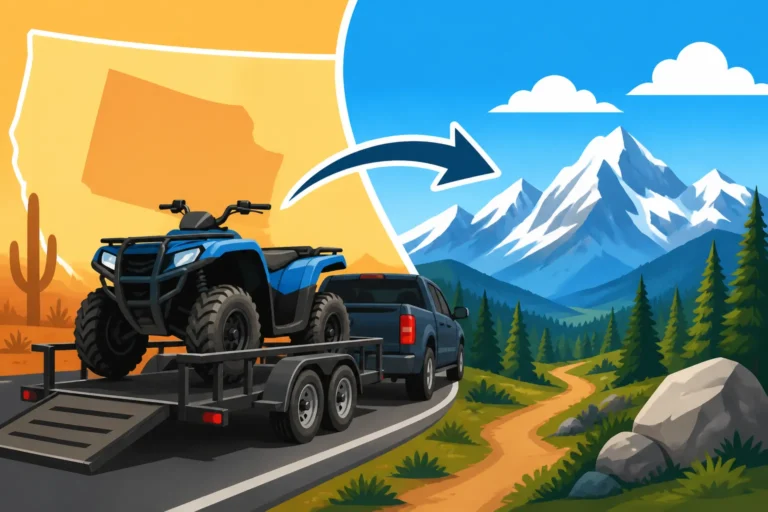
This is a frequently misunderstood area. You've loaded your unregistered ATV onto a trailer, you're driving down a paved highway, and you think you're perfectly safe because the OHV isn't being operated. And for the most part, you're right! An OHV simply being transported on a trailer on a public road does not need to be registered with CPW. The registration requirement is for operation on public lands.
However, your trailer itself must be properly registered and tagged, and your tow vehicle must be street-legal. While the OHV doesn't need its sticker for transport, you should still have proof of ownership for the machine, such as a title or bill of sale. If you're pulled over for another reason, or if there's any suspicion regarding the machine, being able to prove it's yours can prevent a lot of headaches.
The key distinction here is between operating the machine and transporting it. As long as the OHV is securely fastened to a trailer or inside the bed of a truck, it's considered cargo, not an operating vehicle. The same rules apply if you're transporting an OHV purchased out-of-state into Colorado; you'll register it once it's here, but not for the journey itself. Just make sure your trailer is in good standing, because that's what law enforcement will be checking on the highway.
Riding with a Temporary Permit or Waiting for Sticker
Sometimes, you've done everything right: you've applied for your [Registering an OHV in Colorado], paid the fees, and you're just waiting for that little green sticker to arrive in the mail. Can you ride during this limbo period? This is a really important question that many riders grapple with, and the answer is nuanced. Colorado Parks and Wildlife understands there's a processing time.
Generally, if you have proof of your application for registration, such as a temporary receipt from an online application or a vendor, you can often ride legally while you wait for the physical sticker. This proof acts as your temporary registration. However, it's absolutely critical to carry this paperwork with you whenever you ride. A ranger needs to see evidence that you've completed the registration process. Simply having paid online isn't enough if you can't show proof.
The specific wording on your temporary documentation is key. Make sure it clearly states that the registration has been applied for and is pending. If you're unsure, it's always best to call CPW or the vendor where you purchased it to confirm. Don't just assume. Ignoring this detail can lead to a citation for an unregistered OHV, even if you did technically apply. So, while [Riding While You Wait for Your Colorado Sticker] is often permissible with the right documentation, always keep that temporary proof accessible on your person or in a waterproof pouch on your machine.
The Domino Effect: Other Related Legal Headaches
The consequences of an unregistered OHV aren't always isolated to just a fine or impoundment. Sometimes, a single oversight can trigger a cascade of other legal and financial problems. It's a bit like pulling one thread in a sweater; suddenly, other parts start to unravel. Understanding these potential ripple effects can further emphasize the importance of proper registration.
Insurance Implications
One of the less obvious, but potentially devastating, consequences of operating an unregistered OHV involves your insurance. While Colorado does not mandate liability insurance for all OHVs (though some counties and designated riding areas might), many riders choose to carry it for peace of mind and protection against accidents. However, if you have an accident while operating an unregistered machine, your insurance company might deny your claim.
Many insurance policies have clauses that state the vehicle must be legally registered and operated to be covered. If your OHV is found to be unregistered at the time of an accident, your insurer could argue that you were operating it illegally, thereby voiding your coverage. This could leave you personally liable for damages to other vehicles, property, or, most critically, medical expenses if someone is injured. This is an enormous financial risk that far outweighs the cost of registration.
Even if your policy doesn't explicitly void coverage for an unregistered machine, you might face complications. It could delay the processing of your claim, lead to increased premiums in the future, or even cause your policy to be canceled. Always clarify with your insurance provider whether [Insuring an ATV in Colorado] covers an unregistered machine, but generally, it's a huge gamble. Don't give them a reason to deny a claim when you need it most.
Selling an Unregistered Machine
Trying to sell an OHV that isn't properly registered can be a significant hurdle, and sometimes even lead to legal issues. Buyers, especially those who are savvy, will be wary of purchasing a machine without proper documentation. A lack of current registration can raise red flags about the machine's history, whether it's stolen, or if there are other undisclosed problems.
While the seller isn't necessarily legally required to register an OHV before selling it (the buyer is often responsible for new registration), a missing or expired registration can complicate the transfer of ownership. You'll likely need to provide proof of title and a clear bill of sale for the buyer to be able to register it in their name. If you only have an old, unregistered machine, the process for the new owner to get it registered can be cumbersome, involving affidavits or even a bonded title process, making your machine less attractive to buyers.
To avoid these complications, it's often best to ensure your OHV's paperwork, including a clear title and a well-worded [ATV Bill of Sale Wording That Holds Up], is in order before listing it for sale. Using a template from a service like LawDepot can help ensure you have all the necessary legal language for a smooth transaction. Buyers want confidence, and proper documentation, even if unregistered, helps provide that. A smooth transfer starts with clear, unproblematic paperwork on the seller's end, and an unregistered status can definitely signal trouble.
Getting Caught with an Out-of-State Machine
Colorado has specific rules for out-of-state OHVs. If you're visiting from another state, you might think your home state's registration is sufficient, but that's not always the case. Colorado generally requires all OHVs operating on its public lands, regardless of where they're from, to have a valid Colorado OHV registration. There might be some limited reciprocity agreements, but it's not universal.
This means that even if your side-by-side has a current registration sticker from Utah or Arizona, you will still likely need to purchase a Colorado Non-Resident OHV Permit if you intend to ride on Colorado's public trails. Failing to do so can result in the same penalties for an unregistered OHV as a Colorado resident would face – fines and potential impoundment. It’s a common mistake made by visitors who aren't aware of Colorado's specific requirements.
Before you travel to Colorado with your OHV, always check the current non-resident permit rules with Colorado Parks and Wildlife. It's usually a straightforward and inexpensive process to purchase the required permit online or from a vendor. Don't let a fantastic riding vacation be ruined by an easily avoidable penalty. Knowing [Registering an Out-of-State Machine in Colorado] is a critical step for any visitor to the state.
How to Avoid These Penalties: Be Prepared, Be Compliant
Navigating the rules and regulations surrounding OHV use in Colorado can sometimes feel like a maze, but avoiding penalties for an unregistered machine is actually quite straightforward. It all comes down to being proactive, understanding the requirements, and keeping your paperwork in order. A little preparation goes a long way in ensuring your time on the trails is free of stress and legal trouble.
Timely Registration and Renewal
The most effective way to avoid penalties for an unregistered OHV is, quite simply, to register your machine and keep that registration current. Colorado's OHV registration year runs from April 1st to March 31st of the following year. This annual cycle means you'll need to renew your registration once a year to stay compliant.
It's a good practice to mark your calendar, set a reminder on your phone, or even sign up for renewal notifications from Colorado Parks and Wildlife. Don't wait until the last minute, especially if you plan to hit the trails right at the start of the season. Give yourself ample time to complete the [Colorado OHV Registration Renewal Online] or via mail, allowing for processing and shipping of your new sticker. Proactive renewal means you'll always have a valid sticker on your machine, ready for any adventure.
Remember, the cost of an annual registration is a small investment compared to the potential fines, impoundment fees, and legal headaches associated with being caught unregistered. Make it a routine part of your spring OHV prep, just like checking your oil and tires, and you'll save yourself a world of trouble.
Understanding the Rules for New Purchases
When you buy a new or used OHV, whether from a dealer or a private seller, the registration process can sometimes feel a bit confusing. However, it's crucial to get it right from the start. If you purchase from a licensed Colorado dealer, they will typically handle much of the initial paperwork and ensure the machine is properly titled and registered before you take possession, often rolling the [Colorado Sales Tax on an ATV Purchase] and registration fees into the purchase price.
For a private sale, the responsibility falls entirely on you, the buyer, to register the machine. You'll need a clear title (if applicable) and a completed bill of sale from the seller to take to Colorado Parks and Wildlife. Don't ride the machine on public land until you've successfully completed the registration process and have at least a temporary proof of registration. Ignoring this step, even for a quick spin, can land you with a ticket.
If you bring an OHV into Colorado from another state, you'll need to register it here to operate it on public land. This often involves paying [Use Tax on a Machine Brought Into Colorado] if you haven't already paid sales tax in your previous state that meets Colorado's rate. Always ensure you have a solid bill of sale and title from the previous owner, as these are essential documents for [Registering an OHV in Colorado] regardless of its origin. Getting this right from day one will prevent any issues with an "unregistered" status, allowing you to enjoy your new ride worry-free.
Carrying Your Paperwork
Having a valid registration sticker on your OHV is essential, but it's equally important to carry the corresponding physical registration card with you whenever you ride. Law enforcement officers at [Colorado Ranger Checks at a Trailhead] will often ask to see both your visible sticker and the registration card. This card serves as undeniable proof that the sticker on your machine is valid and belongs to that specific OHV.
I know, it's one more thing to remember, and who wants to worry about paper on the trail? But this little card is your best friend if you're ever stopped. It confirms the VIN, the owner's name, and the registration's validity. Keep it in a waterproof bag, perhaps tucked into a secure compartment on your machine, or in your riding pack. Just make sure it's accessible. For instance, [Do You Carry Paperwork on the Trail?] isn't just a rhetorical question; it's a critical piece of advice.
If you're caught without your physical registration card, even if your machine has a valid sticker, you could still face a minor citation. While it might not be as severe as an unregistered OHV ticket, it's an easily avoidable hassle. Think of it like your driver's license for your OHV – you wouldn't drive your car without that, would you? So, make it a habit to always carry your current OHV registration card.
Disclaimer
This article is for general informational purposes only and does not constitute professional advice. Laws, prices and regulations vary by location and change over time. Consult a qualified professional for guidance on your specific situation.