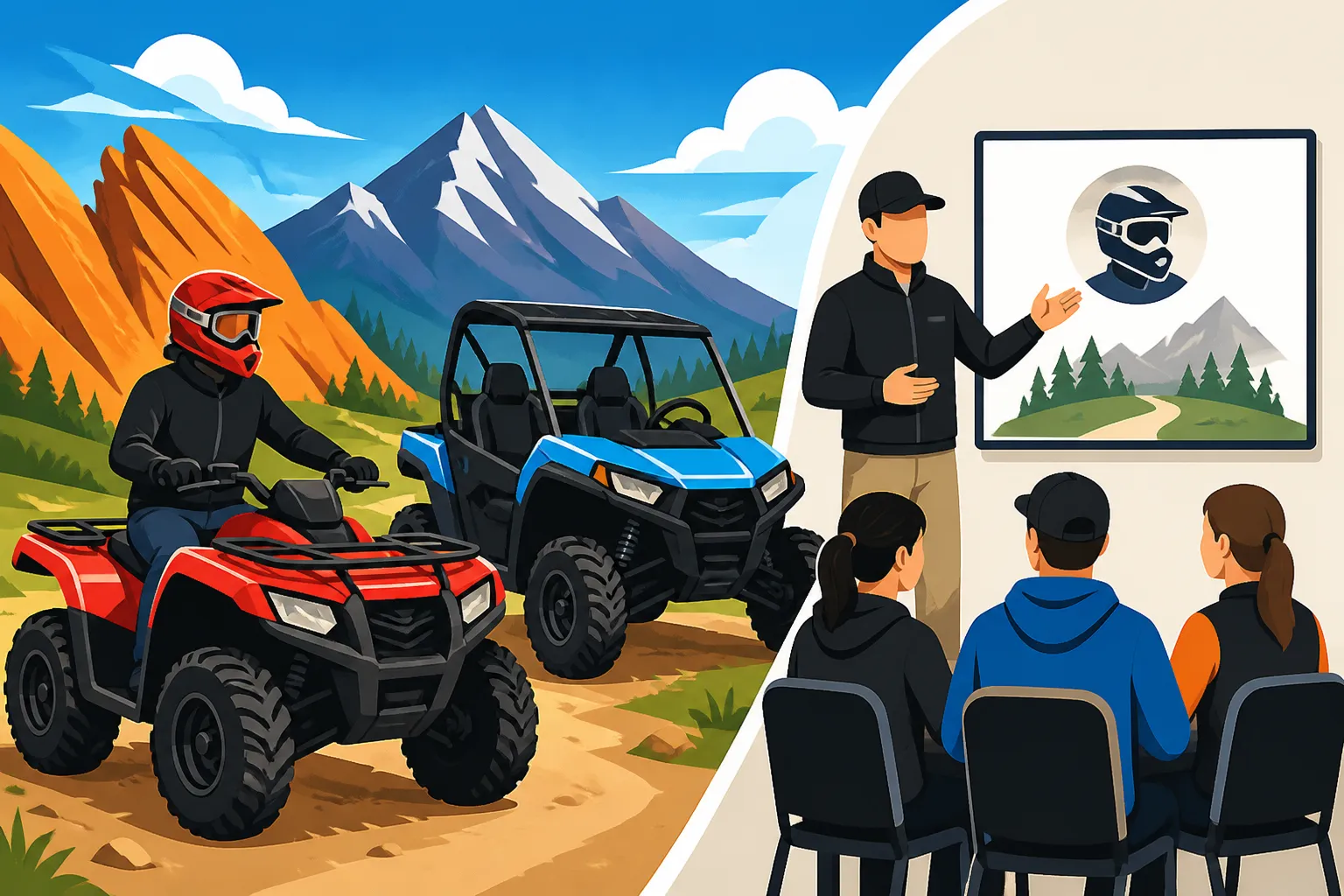
Safety Courses Taught in Person
Colorado riders looking for an in-person ATV or UTV safety course often want more than a video and a quiz: they want practical instruction they can use on the trail. Here’s what these courses may cover, how to choose one, and why a course card does not replace permits or age-related riding rules.
What an in-person OHV safety course can teach
An in-person course gives riders a chance to ask questions and practice skills with an instructor. Depending on the provider and course format, it may include a classroom session, demonstrations, supervised practice, or a combination of these. The exact curriculum, equipment, and amount of riding time can vary, so check the details before signing up.
A useful course should go beyond explaining how to start and steer a machine. It should help riders recognize hazards, make safer decisions, and understand how their choices affect other people and the land.
Common topics include:
- Pre-ride checks: inspecting tires, brakes, controls, lights, fluids, and safety equipment before setting out.
- Controls and basic operation: understanding throttle, brakes, shifting, steering, and any machine-specific features.
- Rider position and balance: adjusting posture and body movement for turns, slopes, and uneven ground.
- Speed and stopping distance: leaving enough room to react, especially on loose surfaces or when visibility is limited.
- Terrain awareness: spotting rocks, ruts, water, steep grades, drop-offs, and other features that can change a route’s difficulty.
- Group riding: keeping a safe following distance, communicating stops, and agreeing on what to do if someone falls behind.
- Responsible riding: staying on designated routes, avoiding sensitive ground, and respecting closures and other trail users.
ATVs and side-by-sides have different controls and handling characteristics. A course may focus on one machine type, so ask whether the instruction matches what you ride. If you’re choosing a course for a young rider, ask whether the lessons are suitable for that rider’s age, size, experience, and machine. The state’s age and supervision rules are a separate issue; a course does not change them. See Colorado’s Age Ten Rule for Riding an Opened Road and Colorado Supervision Rules for Riders 10 to 16 for related questions.
A course is also a good place to ask about situations you expect to face. For example, a beginner planning to ride forest roads may need different practice from someone preparing for narrow, rocky single-track. A rider who owns a side-by-side may want instruction on passenger restraints and vehicle width, while an ATV rider may need more attention to balance and body position.
Finding and choosing an in-person course
In-person availability can depend on location, season, instructor schedules, and how many people have enrolled. A course may be offered as a scheduled class, a special event, or an activity arranged through a local organization. Don’t assume that a nearby provider has a current date or offers hands-on machine practice; confirm before making plans.
For a starting point, see Where Colorado Riders Take a Voluntary Safety Course. Then contact the provider directly and ask what the course includes. The word “in-person” can mean a classroom session with no field practice, or it can mean a more practical format. Get the details rather than relying on the course title.
| What to check | Why it matters | Question to ask |
|---|---|---|
| Machine type | Lessons may be designed for ATVs, side-by-sides, or a broader OHV audience | Is the instruction specific to my machine? |
| Practical component | Classroom instruction and supervised riding are not the same | Is there hands-on practice, and what skills are covered? |
| Rider experience | A course that suits beginners may not address an experienced rider’s needs | Is this class appropriate for a first-time rider? |
| Youth participation | Age, size, and supervision affect safe instruction | What ages can attend, and must an adult be present? |
| Equipment | Providers may have different rules about machines and protective gear | Do I bring my own machine, helmet, and eye protection? |
| Location and terrain | A practice area should match the skills being taught | Where does the practical portion take place? |
| Completion record | Documentation may be useful, but it may not serve as a permit | What proof of completion do students receive, and what is it accepted for? |
| Schedule and cancellation | Weather, enrollment, and site conditions can affect a class | What happens if the session is postponed or canceled? |
If you bring your own machine, ask whether it must be in safe operating condition and whether there are restrictions on size or type. Confirm how the machine will be transported to the practice location and whether the course supplies fuel or other operating materials. If you don’t own an OHV, ask whether a machine is provided or whether you can participate in the classroom portion only.
Protective gear deserves the same attention. Ask what the course requires, rather than assuming equipment will be supplied. For a ride or practical session, a properly fitted helmet and eye protection are important; check Colorado Helmet and Eye Protection Requirements in Colorado for the rules relevant to riders. The right clothing, footwear, and gloves also make practice more comfortable and reduce the chance of minor scrapes or burns.
A clear answer from the instructor is a useful sign. If course details are vague, ask for the schedule, equipment requirements, and refund or rescheduling policy in writing before paying. Course costs and cancellation terms vary by provider, so check directly for current details.
What a course does and does not count for
A safety course can build skills, but it should not be treated as a substitute for a registration, permit, or legal requirement. Colorado’s OHV rules depend on where and how the machine is used, the rider’s age, and other circumstances. Check the current requirements for your specific ride rather than relying on a course certificate to answer every question.
In particular, course completion does not itself authorize a machine to ride on public land or a designated route. Permit rules are a separate matter. If you’re visiting from another state, don’t assume that a safety card or registration from home automatically satisfies Colorado’s requirements. Do Out-of-State Safety Cards Matter in Colorado? and Colorado OHV Permit Reciprocity With Other States address those separate questions.
The same distinction applies to age and supervision. A young rider may benefit greatly from instruction, but course attendance does not override age limits or supervision rules. Before planning a ride, check What Immediate Supervision Actually Means and confirm that the intended route is appropriate for the rider and machine.
Course records can still be worth keeping. Save any completion card, email, or receipt with your other riding documents. It may help you remember what training you completed or provide proof to an organization that asks for it. But ask the course provider what the document represents, and ask the relevant agency or land manager whether it is accepted for a specific purpose. Don’t infer that a certificate is an official permit or a substitute for required paperwork.
For broader context on the difference between training and legal requirements, see Why Colorado Requires No OHV Safety Certificate. Rules and course offerings can change, so verify details with the provider and official sources before relying on an old handout or an online discussion.
Getting the most from the class
Before enrolling, think about what you want to be able to do more safely. “Learn to ride” is a useful starting point, but a specific goal helps you choose the right class. You might want to practice controlled stops, learn how to approach a hill, understand side-by-side passenger safety, or get more comfortable reading terrain.
Prepare a short list of questions. For example:
- What should I inspect before a ride, and what problems mean I should not ride?
- How should I adjust my speed for loose gravel, ruts, or limited visibility?
- What should I do if I meet another rider on a narrow route?
- How do I plan for changing weather or a route that becomes more difficult?
- What is the safest response if a machine gets stuck or stops working?
- How do I confirm that a route is open to my type of machine?
Ask the instructor to explain a technique rather than simply demonstrate it. Understanding why a particular approach is safer makes it easier to apply the lesson on unfamiliar ground. If a maneuver feels uncomfortable, say so and ask for a slower demonstration or a simpler practice exercise. A good class should allow questions and should not pressure a rider into a skill beyond their ability.
After the course, practice gradually in a legal, appropriate setting. Start with the basic skills covered in class before attempting steep, narrow, or remote routes. Ride with a capable group when possible, tell someone where you’re going, and carry suitable supplies. Training improves judgment, but it cannot eliminate the risks of changing weather, mechanical problems, fatigue, or unfamiliar terrain.
Use the course as one part of preparation, not the whole plan. Check route access, closures, machine requirements, and permits before departure. For a first Colorado ride, Colorado OHV Rules for First-Time Visitors can help identify other questions to resolve. If you’re carrying documentation, keep it accessible and make sure it matches the machine and use case.
The best in-person course is one that fits the rider, machine, and intended riding. Confirm whether practical instruction is included, understand what the completion record means, and check the rules that apply to the ride itself. That way, classroom knowledge can support safer decisions without being mistaken for permission to ride.
Disclaimer
This article is for general informational purposes only and does not constitute professional advice. Laws, prices and regulations vary by location and change over time. Consult a qualified professional for guidance on your specific situation.