Taking an OHV Safety Course Online
Taking an OHV safety course online can be a convenient way to prepare for an ATV or UTV ride, especially if you are new to off-highway vehicles. But completing a course is not the same as meeting every riding requirement. Here’s what online training can teach, what it does not replace in Colorado, and how to choose a course that fits your plans.
What an online OHV safety course can and cannot do
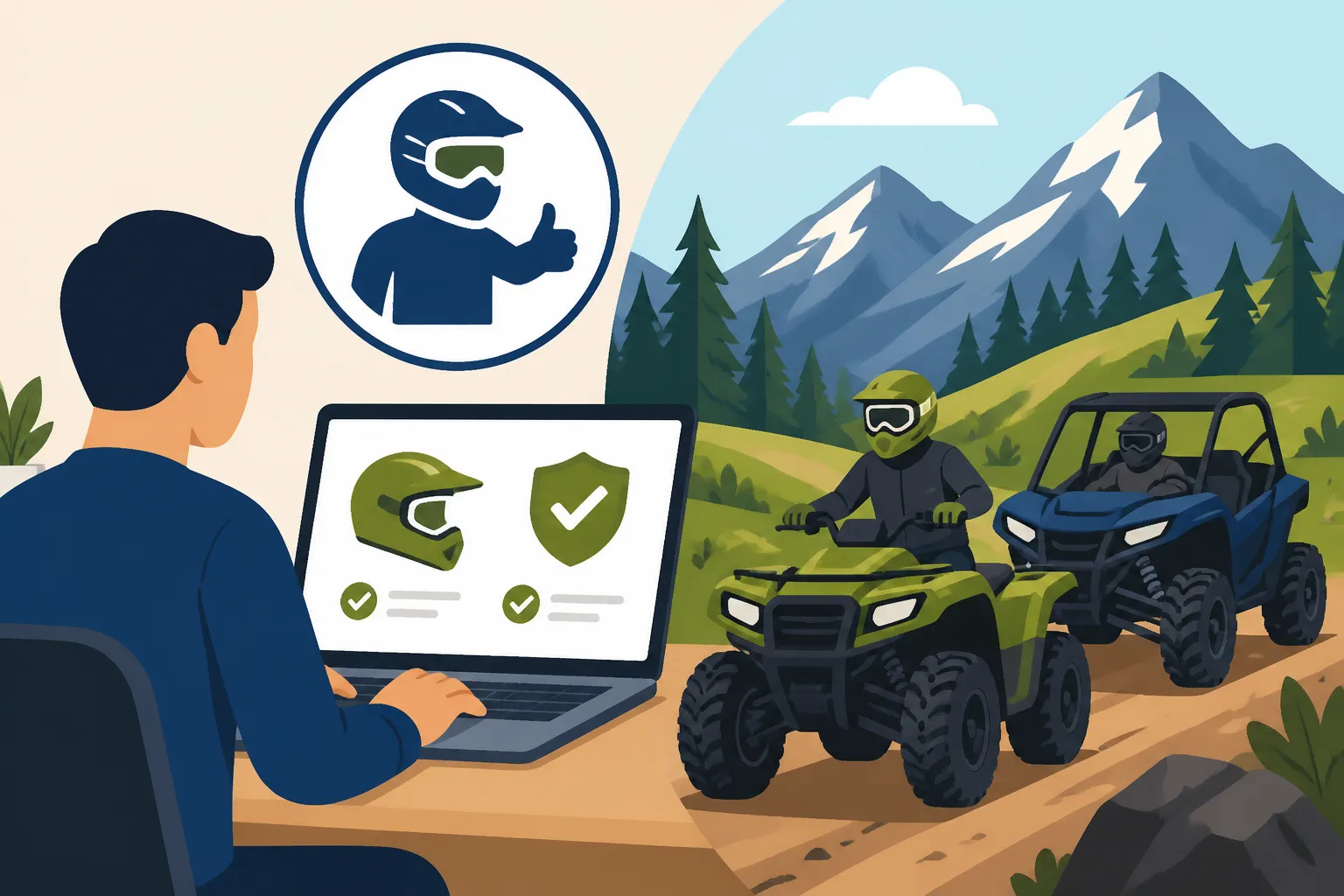
An online OHV safety course can introduce basic riding skills and help you think through common hazards before you reach a trail. Lessons may cover protective gear, starting and stopping, turning, hills, trail etiquette, loading, passenger safety and what to do after a breakdown or crash. The format is useful for learning at your own pace and revisiting topics that are unfamiliar.
That preparation matters, but a screen cannot show how your specific machine responds on loose gravel, a steep grade or a tight turn. It also cannot give an instructor a chance to correct your posture or help you practice braking and control. Treat online training as a foundation, not a substitute for supervised practice on a suitable, permitted riding area.
In Colorado, an OHV safety certificate is generally not required just to ride an OHV. A voluntary course can still be worthwhile, particularly for new riders and families. The distinction between a course certificate and a legal requirement is explained in Why Colorado Requires No OHV Safety Certificate. If you are taking a course because another state, organization or event asked for proof of training, check that requirement with the organization that will accept the certificate. A course provider’s own certificate does not automatically meet every outside requirement.
Most importantly, training does not replace the requirements that apply to the machine, the land and the rider. An online course does not register an ATV or UTV, supply a Colorado nonresident permit, authorize riding on a closed route or make an otherwise prohibited road ride legal. For a first trip, review Colorado OHV Rules for First-Time Visitors as well as the rules for the specific place you plan to ride.
| What you want to do | What an online course may help with | What you still need to check |
|---|---|---|
| Learn basic safety concepts | Gear, controls, hazards and riding decisions | Whether you need hands-on instruction or practice |
| Ride in Colorado | General preparation for trail situations | Registration or permit rules for your machine and trip |
| Ride with a young operator | Supervision, protective equipment and communication | Colorado age and supervision rules |
| Meet a course requirement elsewhere | A course completion record, if accepted | Whether the relevant agency or organization accepts that course |
| Prepare for a group ride | Courtesy, spacing and trail awareness | Route access, closures, equipment and event requirements |
The exact certificate you receive depends on the course. Some programs provide a completion record after online lessons or a quiz; others may include additional instruction or assessment. A completion record is evidence that you finished that program. It is not proof of riding experience, an endorsement of your ability to ride every machine, or a permit to use public land.
If the course is connected to an event, rental, club or employer, ask what they mean by “safety course.” They may require a particular provider, an in-person component, a current certificate or a course tailored to a specific type of vehicle. Get that answer before paying or spending time on lessons.
How to choose an online course
A useful course should make clear what it covers, what it does not cover and what documentation you will receive. Look for instruction that applies to the type of machine you plan to operate. ATV handling and passenger practices are not identical to UTV operation, where occupants may use seat belts and ride within a protective structure. A broad introduction can be helpful, but it should not imply that one short course prepares every rider for every machine or terrain.
Before enrolling, check these points:
- Who provides the course: Confirm the provider’s identity and whether the organization requesting training recognizes it.
- What vehicles it covers: Make sure the lessons address ATVs, UTVs or both, as appropriate.
- What the course teaches: Look for practical topics such as controls, protective gear, passenger limits, terrain, speed, stopping distance and emergency planning.
- How completion is recorded: Find out whether you receive a certificate or other record, and whether it identifies the course and completion date.
- Whether it is entirely online: Some courses use online lessons but require an additional skills assessment or in-person component.
- Who may take it: If the rider is a child or teenager, check age expectations and whether an adult should participate.
- What it costs: Course fees and materials vary. Check the provider’s current terms before enrolling.
Do not choose a course solely because it promises a certificate quickly. A certificate matters only if it satisfies the requirement you are trying to meet, and a fast completion does not necessarily mean the course provides enough practice for a new rider. If no outside organization requires a particular credential, prioritize useful instruction and follow it with conservative, supervised practice.
For a rider who is new to OHVs, a good learning plan combines online lessons with a machine-specific walkthrough. Before riding, review the owner’s manual, identify the controls, check the brakes and tires, and learn how to shut off the engine. Practice starting, stopping and turning at low speed in a legal, open area with suitable ground and no traffic. A qualified instructor or experienced supervisor can help spot unsafe habits that an online lesson cannot see.
The right learning plan also depends on age. A course certificate does not override Colorado’s youth rules or the limits on where a young person may ride. Review Colorado Age Rules for Young OHV Riders and Colorado Supervision Rules for Riders 10 to 16 before planning a ride with a child. The supervising adult should understand the route and the machine, not simply be present nearby.
A course should also explain that riding decisions depend on conditions. A skill that works on a broad, flat practice area may be unsafe on a narrow, rutted trail or a steep mountain road. Colorado’s terrain can include loose surfaces, sharp grades, limited visibility and changing weather. A course may introduce these hazards, but it cannot inspect the route you intend to ride or confirm that it is open.
Taking the course and turning lessons into safer habits
Online lessons work best when you treat them as preparation rather than background noise. Set aside time to concentrate, keep notes on unfamiliar controls or terms, and pause to compare the course material with your own machine’s manual. If you are learning with a child, go through the material together and discuss what you would do in specific situations, such as meeting another rider on a narrow trail.
A practical sequence is:
- Define the reason for taking the course. You may want basic knowledge, need to satisfy a club or event, or be preparing a young rider. The reason determines which course and certificate matter.
- Confirm acceptance before enrolling. If an organization requires a certificate, ask it to identify acceptable providers and whether an online-only course qualifies.
- Check the course scope. Verify that the material addresses the vehicle and rider you have in mind.
- Complete the lessons attentively. Read the explanations, answer knowledge checks honestly and note subjects that need further practice.
- Save the completion record. Keep a digital copy and, if practical, an offline copy with your trip documents. Do not assume a certificate will be accessible if you lose phone service.
- Practice before a demanding ride. Learn the controls and basic handling in a low-risk setting, with an appropriate supervisor when required.
- Review the actual route and rules. Confirm access, closures, permits, weather and the abilities of everyone in the group.
Use the course to build a personal pre-ride routine. Check that the machine is in working order, that everyone has protective equipment suited to the ride, and that the group has a plan if someone becomes separated. For a UTV, review seat belts and passenger seating. For an ATV, check that the rider can control the machine without carrying an unsafe passenger or load. Training should reinforce that passengers belong only on machines designed and equipped to carry them.
Online instruction can also help riders prepare for interactions on shared routes. Keep a manageable speed, leave space between machines, and slow down near other trail users, homes, livestock and blind corners. Stay on routes open to motorized use rather than relying on memory or another rider’s track. A course may discuss responsible riding generally, but route access and local restrictions need separate, current checks.
For mountain riding, build in extra caution. Altitude, loose rock, steep descents and changing weather can make a route more demanding than it appears on a map. Choose a route within the least experienced rider’s ability, leave time to turn around and avoid treating course completion as a reason to attempt a difficult trail. If the group is uncertain about conditions, choose an easier route or wait.
What Colorado riders should check after taking a course
Before an OHV trip in Colorado, separate your checklist into three questions: Is the machine properly covered by the applicable registration or permit? Is the route open and lawful for that machine? Is each rider allowed to operate there, with the required supervision and equipment? A course can help with the third question’s safety decisions, but it does not answer the registration or route-access questions for you.
Residents and visitors may have different paperwork obligations. Colorado residents generally deal with OHV registration, while nonresidents may need a Colorado OHV permit for eligible machines used on public land. The details depend on the machine and where it will be ridden. Start with Colorado Permit Rules on Public Land and, if you are coming from another state, Colorado OHV Permit Reciprocity With Other States. Do not assume that a course, a registration from another state or a street-legal plate settles every Colorado permit question.
Likewise, a machine’s paperwork does not automatically authorize every road ride. Local road access can depend on state law, county rules, town ordinances, signs and the exact route. Confirm the status of each road segment before setting out. A course may teach general road-crossing or group-riding techniques, but it cannot grant local access or replace route-specific rules.
Keep your course record with your trip paperwork if an event, rental provider or organization may ask for it. If you ride with a group, tell the leader what training you have completed and be candid about your experience. Riders who are new to OHVs should say so before the group leaves; that gives the leader a chance to choose a suitable pace and route.
If you are still deciding whether an online course is enough, use this rule of thumb: it can be a good first step for learning concepts, but it is not a measure of hands-on ability. New riders should pair it with machine familiarization and controlled practice. Young riders need an adult to check the applicable age and supervision rules. Riders taking a course for an outside requirement should confirm acceptance directly with the organization that set the requirement.
Disclaimer
This article is for general informational purposes only and does not constitute professional advice. Laws, prices and regulations vary by location and change over time. Consult a qualified professional for guidance on your specific situation.