Where Colorado Riders Take a Voluntary Safety Course
Taking a voluntary ATV or UTV safety course can help Colorado riders build good habits before they reach a crowded trail or steep mountain road. The challenge is knowing where to look—and what a course actually provides when it isn’t generally required for riding. This guide compares online and hands-on options, explains how to check a course, and helps you choose training that fits your machine and experience.
What a Voluntary Course Can Do for a Colorado Rider
Colorado riders generally do not need to complete a statewide OHV safety course simply to ride an ATV or UTV. That does not make training pointless. A course gives new and returning riders a chance to learn practical skills before a mistake happens on a narrow trail, near other users, or far from help. For the broader distinction between training and legal requirements, see Why Colorado Requires No OHV Safety Certificate.
A useful course should do more than describe controls. Look for instruction that addresses the machine you will operate and the conditions you expect to encounter. A quad, a side-by-side, and a dirt bike all have different handling and safety considerations. A classroom or online lesson can cover shared basics, but it cannot fully replace practice on your own type of vehicle.
Common subjects include:
- Pre-ride checks, including tires, brakes, steering, lights, and controls
- Safe starting, stopping, turning, and speed management
- Body position and weight shifts on uneven ground
- Choosing a safe line over rocks, ruts, and slopes
- Hill climbs and descents, including when to turn around
- Safe spacing, passing, and communication in a group
- Passenger and seat-belt practices for a side-by-side
- What to do after a rollover, breakdown, or injury
- Responsible riding around wildlife, property, and other trail users
A course can also help riders recognize when a machine or route is beyond their current skill. That judgment matters in Colorado, where altitude, loose surfaces, steep grades, weather changes, and limited cell service can make a familiar ride more demanding. Training does not make a difficult route safe for everyone, but it can help a rider make a more informed decision about whether to continue, slow down, or turn back.
Voluntary training is particularly useful for:
- First-time riders who have only learned informally from friends or family
- Adults returning to riding after a long break
- Parents introducing a young rider to a machine
- People moving from an ATV to a UTV, or vice versa
- Riders who expect to travel on unfamiliar public routes
- Groups where one person has more experience than the others
A course completion record may be useful for your own records, but do not assume it acts as a permit, registration, insurance policy, or permission to ride a particular route. Training and access rules are separate. Before a trip, check the machine’s permit needs and the rules for the specific land or road. Colorado OHV Rules for First-Time Visitors is a helpful companion if you are new to riding in the state.
Where to Look for Online and In-Person Training
Colorado riders usually find voluntary courses through a mix of national safety organizations, local powersports businesses, instructors, clubs, and community programs. Availability changes: some providers offer online instruction throughout the year, while practical sessions may be scheduled only when an instructor, training area, or suitable weather is available.
Start with a recognized safety organization or the official training page for the type of machine you ride. ATV and side-by-side courses are not always interchangeable. A course designed around ATV handling may not spend enough time on UTV-specific topics such as rollover protection, occupant restraints, passenger seating, and keeping arms and legs inside the vehicle.
| Where to look | What you may find | Best fit | What to confirm |
|---|---|---|---|
| Established ATV or UTV safety organizations | Online lessons, safety materials, and sometimes practical training | Riders who want structured instruction | Whether the class covers your machine type and includes hands-on practice |
| Local powersports dealers | Training announcements, demonstrations, or referrals to instructors | New owners who want machine-specific guidance | Whether the event is formal training or an informal orientation |
| Riding clubs and community groups | Safety talks, group demonstrations, or occasional skills days | Riders who want local trail context | Instructor qualifications, group size, and whether riding practice is supervised |
| Recreation programs or public-safety partners | Scheduled classes when available | Families and new riders seeking a local class | Age limits, registration process, equipment requirements, and cancellation plans |
| Online course providers | Self-paced safety lessons | Riders who need flexible timing or introductory knowledge | Provider recognition, final assessment, and whether hands-on learning is also needed |
For online and classroom options, Taking an OHV Safety Course Online and Safety Courses Taught in Person can help you compare the format. A web course is convenient, but it cannot observe your braking technique, help you adjust body position, or correct a risky habit in real time. A practical class can address those gaps, though it takes more planning and may not be offered close to home.
Start with a provider, then check local availability
A sensible search process is to identify the relevant safety organization first, then ask whether it has a current class or instructor in your part of Colorado. If it does not, call a local powersports dealer or riding club and ask whether they know of upcoming training. Dealers may host events or point riders toward instructors, but a sales walk-through is not automatically a safety course. Ask what is actually taught and whether the session includes supervised practice.
Local clubs can be a useful source of practical advice about terrain and group riding. Still, an experienced club member is not necessarily a qualified instructor. Ask who leads the session, what experience or credentials that person has, and how the practice area is managed. For a youth class, ask how riders are grouped by age, machine size, and experience.
Ask what the course covers before you sign up
A course description should be specific enough to tell you what you will learn. If it only promises a general “off-road experience,” ask whether it includes safety instruction, supervised skill practice, or both. Also confirm whether participants use their own machines or a training vehicle. Either setup can work, but you should know what to expect before arriving.
If you have a side-by-side, ask whether the instruction covers passengers and occupant restraints. If you ride an ATV, ask whether students practice turns, stops, and terrain changes rather than only sitting through a presentation. If you plan to ride at altitude, ask whether the course discusses how to make conservative decisions when a machine, rider, or route is affected by demanding conditions.
Choosing the Right Format for Your Machine and Experience
An online course is a practical place to learn common safety principles, especially if you are new to the subject or want to prepare before a trip. You can work through material at your own pace and revisit sections on topics such as protective equipment, trail etiquette, or safe group spacing. Online learning is also a reasonable first step for a rider who has not yet bought a machine.
Its main limitation is the lack of direct feedback. A lesson can explain how to brake or shift your weight, but it cannot tell whether you are gripping the controls too tightly, looking too close in front of the tires, or carrying too much speed into a turn. For a new rider, pair online instruction with supervised practice in a safe, permitted area. Avoid using a public trail as your first practice ground.
A hands-on course adds value when it includes a qualified instructor, a suitable practice area, and time for each participant to demonstrate basic skills. It is often the better choice for someone who has never ridden, has had a close call, or is moving to a different machine type. A practical class can also help a parent see how a young rider handles controls and follows directions before deciding whether that rider is ready for more challenging terrain.
For a UTV, choose instruction that treats the vehicle as a vehicle with passengers, not simply as a larger ATV. Training should address seat-belt use, doors or nets where fitted, safe passenger loading, and the importance of keeping occupants within the protected area. For an ATV, look for instruction on active riding position and the way body movement affects balance and control.
Match the class to the rider
The best course is not necessarily the longest or most technical one. It is the one that matches the rider’s current needs. A beginner may benefit most from basic control practice and decision-making. An experienced rider may need a refresher on risk management, group communication, or the differences between riding a familiar local loop and an unfamiliar mountain route.
For families, ask whether an adult can observe the class and how instructors handle different skill levels. A child may be comfortable on a small, familiar machine but still need help with stopping distance, hazard awareness, or following directions. Colorado has age-related rules that can affect where and how young riders may operate, so training should not be treated as a substitute for checking those requirements. See Colorado Age Rules for Young OHV Riders and Colorado Rules for Riders 10 to 16.
If your plans include riding on a road opened to OHVs, check the rules for that situation separately. A course certificate is not a universal permission slip, and the requirements that apply to a particular road can differ from those for an off-road trail. Colorado’s Age Ten Rule for Riding an Opened Road explains why it is important to distinguish general trail riding from riding on an opened road.
Use online learning as preparation, not proof of skill
A useful approach is to complete introductory learning before a hands-on class. You can arrive knowing the basic vocabulary and use the instructor’s time to practice. If no in-person course is available, work through the online material, then practice simple controls gradually in an appropriate area with an experienced adult or instructor. Keep practice separate from a high-consequence route: a narrow shelf road or steep pass is not a place to discover that a turn or descent feels unfamiliar.
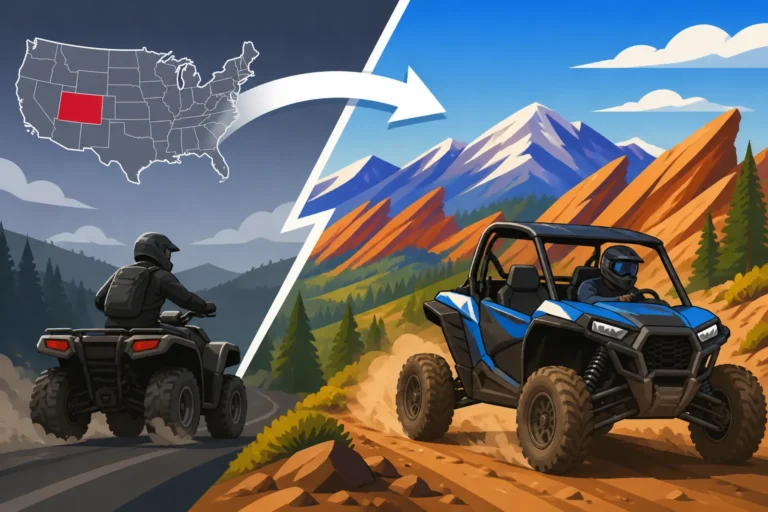
When selecting an online provider, check who created the course, what machine category it addresses, how the lesson verifies completion, and whether it offers practical follow-up. A certificate or completion screen only means what the issuing provider says it means. If you need training for a specific program, job, event, or out-of-state destination, confirm acceptance with that organization before enrolling. Colorado’s general approach may not match another state’s requirements; Where Colorado Riders Need a Certificate Elsewhere is useful if you travel across state lines.
How to Check a Course Before You Enroll
Before you commit, contact the provider and get clear answers to a few practical questions. A reliable course should explain its scope plainly and tell you whether it is designed for an ATV, UTV, or multiple machine types. If the description is vague, ask for a syllabus or a list of skills covered.
Use this checklist:
- Confirm the machine category. Ask whether the course is intended for your vehicle type and whether instruction changes for a passenger-carrying UTV.
- Ask who teaches it. Find out the instructor’s experience and training background. For a hands-on session, ask how many participants each instructor supervises.
- Clarify the format. Determine whether the session is online, classroom-based, hands-on, or a combination. Ask how much time is spent actually practicing.
- Check the equipment rules. Ask whether you must bring your own machine, helmet, eye protection, gloves, or other gear. Confirm that your machine is in safe operating condition.
- Ask about age and experience limits. Find out whether younger riders need an accompanying adult, whether students are separated by ability, and whether the course is suitable for a complete beginner.
- Understand the completion record. Ask what proof of completion is provided and what it does—and does not—qualify you to do.
- Check the location and conditions. For practical training, confirm the meeting point, practice surface, weather plan, and cancellation or rescheduling process.
- Review the total cost. Some learning may be free, while instructor-led or equipment-based sessions may have a charge. Confirm current fees and what is included directly with the provider. What a Voluntary Colorado Safety Course Costs and How Long the OHV Safety Course Takes offer related planning guidance.
Do not enroll solely because a website uses words such as “certified,” “approved,” or “official.” Ask who recognizes the credential and for what purpose. If a course is being required by an employer, organizer, insurer, rental company, or a jurisdiction outside Colorado, get confirmation from that specific party. A retailer or course provider cannot decide on behalf of another organization whether its training meets a particular requirement.
Think about accessibility and practical details
A useful course should be manageable for the rider attending it. Ask whether the material is available in a format the participant can understand, whether a support person may attend, and whether a rider with limited mobility can participate in the exercises. If the course includes machine practice, explain any relevant needs before booking so the instructor can say what is feasible.
For a young rider, check the stated age range and whether the provider expects the child to arrive with a parent or guardian. Bring the machine only if the provider asks you to. If you do bring it, make sure the controls, brakes, tires, and safety equipment are in good condition. A worn machine can distract from the lesson and may be turned away if it is unsafe to operate.
Course fees, schedules, and available formats can change, so verify them directly rather than relying on an old event listing or word of mouth. If you are comparing classes, weigh the instructor’s experience, the amount of hands-on time, and how well the course fits your machine—not just convenience.
Preparing for the Class and Using What You Learn
A little preparation helps you get more out of training. Before class, read the owner’s manual for your machine and learn where the key controls are. Check how the engine is stopped, how the parking brake works, and what the dashboard warnings mean. If you are attending with a family member, agree that the goal is learning—not showing off or keeping up with a faster rider.
For a practical session, arrive rested and dressed for the weather. Wear sturdy clothing and appropriate footwear, and bring the protective equipment the provider requires. If you are unsure whether a helmet or eye protection is suitable, ask before class. A product listing, label, or attractive appearance alone does not establish that a piece of equipment fits correctly or is appropriate for the activity.
Amazon may be one place to look for general ATV safety books or printed checklists, but a retail listing is not evidence that a course is recognized or that the material is current. Use any book as a supplement, and confirm training credentials with the organization that issues or accepts them.
Amazon may also carry helmets and goggles, but fit matters more than convenience. Try protective equipment on when possible, follow the manufacturer’s fitting instructions, and confirm it is suitable for your machine and the activity. A badly fitting helmet or goggles that shift while riding can undermine an otherwise careful safety plan.
After the lesson, write down the skills you need to practice and the situations that still feel uncomfortable. For example, you may need more work on low-speed turns or controlled stops before attempting uneven ground. Amazon can be a source for a simple notebook or gear organizer if you want a place to keep that practice list, but the important step is to revisit the skills gradually and safely.
Do not let a course completion record create false confidence. Training is a starting point. Terrain, weather, machine condition, fatigue, and the experience of the least-skilled person in the group all affect a ride. Begin with manageable routes, keep a conservative pace, and stop before conditions exceed your ability. Review local access rules and prepare for the possibility of a breakdown or injury, especially where cell service is limited.
If your next ride involves a public trail or road, remember that training does not replace the right permit, registration, permission, or route check. For travel planning, see Colorado OHV Rules for First-Time Visitors. If your trip crosses a state boundary, check the destination’s training and riding rules rather than assuming Colorado’s approach carries over.
Disclaimer
This article is for general informational purposes only and does not constitute professional advice. Laws, prices and regulations vary by location and change over time. Consult a qualified professional for guidance on your specific situation.