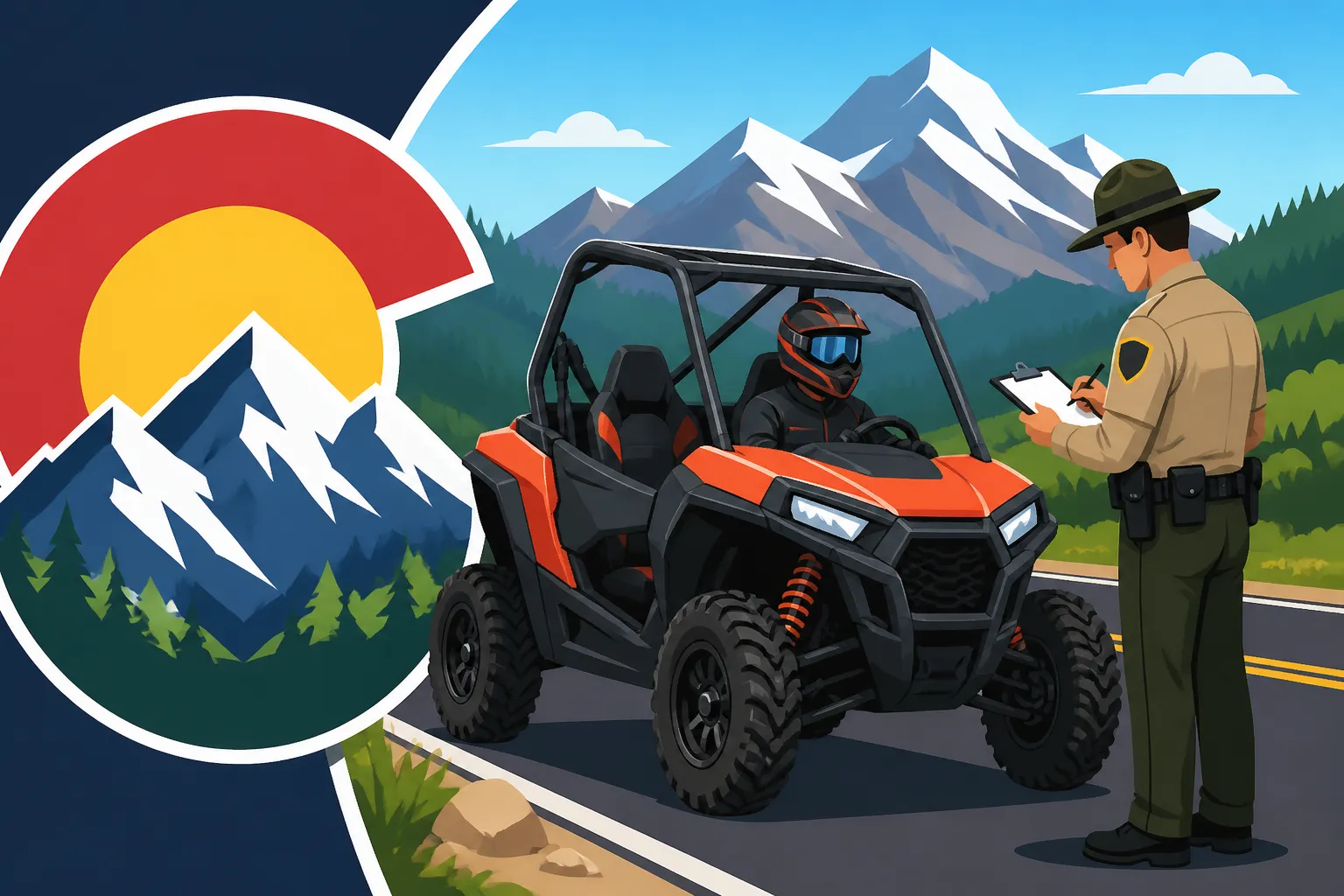
Colorado Citations for Road Riding
There's nothing quite like the freedom of exploring Colorado's breathtaking backcountry on your ATV or UTV. But that freedom often comes with a tricky challenge: what happens when your fantastic trail ends, and the next one starts just a mile or two down a paved road? Many riders, myself included, have felt that pull to 'just hop on the road for a minute.' Unfortunately, that 'minute' can quickly turn into a costly citation if you're not absolutely dialed into Colorado's complex road riding laws. This guide is here to untangle those rules and help you steer clear of those unwelcome tickets.
The Frustration of Mixed-Use Roads in Colorado
Colorado is a paradise for off-highway vehicle (OHV) enthusiasts, with thousands of miles of trails winding through incredible scenery. However, unlike some other states where OHV use on public roads is more broadly accepted, Colorado has a highly segmented and often confusing system. This can lead to genuine frustration for riders who just want to connect the dots between trails without breaking the law. It's a common scenario: you finish an epic ride and the next segment of your adventure is just across a state highway or a few miles down a county road. Making the wrong choice in that moment can put a serious damper on your trip and your wallet.
Why It Feels So Confusing
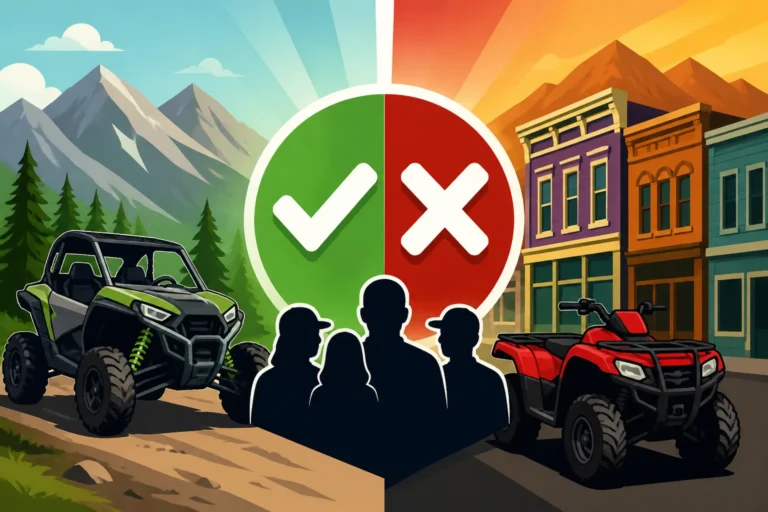
The biggest reason for this confusion stems from the patchwork nature of Colorado's OHV road laws. It's not a uniform statewide rule that applies everywhere. Instead, you're dealing with a combination of state statutes (which broadly restrict OHVs on state highways), county ordinances (which vary wildly from one county to the next regarding county roads), and even specific town or city regulations (which can be even more restrictive). What's perfectly legal in Lake City, for example, where you can often ride designated town streets to access trails, might be completely prohibited just a few miles down the road in another community. This variability means that what you think you know from one part of the state might not apply in another. It's enough to make anyone's head spin trying to keep track of it all. This lack of consistency is a constant headache for riders who simply want clear guidance.
Common Misconceptions That Lead to Tickets
Many OHV owners fall prey to common misunderstandings that land them a citation. One of the biggest misconceptions is believing that if your machine is "street legal" in another state – perhaps Utah, Arizona, or Montana – it automatically means you can ride it on Colorado roads. Unfortunately, this is almost never the case. Colorado has very specific and limited provisions for OHVs on public roads, and generally, an out-of-state "street legal" registration doesn't grant you free rein. You really need to understand [Colorado Rules for Out-of-State Street-Legal Machines] before relying on reciprocity.
Another common mistake is the "just a short connector" mentality. Riders often think that if they're only going a quarter-mile down a paved road to reach the next dirt trail, no one will notice or care. However, especially in popular riding areas or towns with high OHV traffic, local law enforcement (sheriffs, state patrol, or park rangers) are often highly attuned to these brief, illegal road uses. Resident complaints about noise, dust, or perceived safety issues can also lead to increased patrols and a zero-tolerance approach. Finally, simply having your Colorado OHV registration sticker – which is mandatory for riding on designated public trails – does not automatically grant you permission to ride on public roads. The sticker indicates your machine is registered for off-highway use, not on-highway use. This distinction is crucial, and it's a common area of confusion for new and experienced riders alike.
Understanding What Constitutes an Illegal Road Ride
To avoid a citation, it’s absolutely essential to grasp the nuances of what Colorado considers an illegal road ride for an OHV. This isn’t just about where you can ride, but also how your machine is equipped and who is operating it. The rules are designed to ensure safety for everyone on the road, but they often catch riders by surprise because they aren’t always intuitive or consistent from one locale to the next.
State Highways vs. County Roads: The Big Distinction
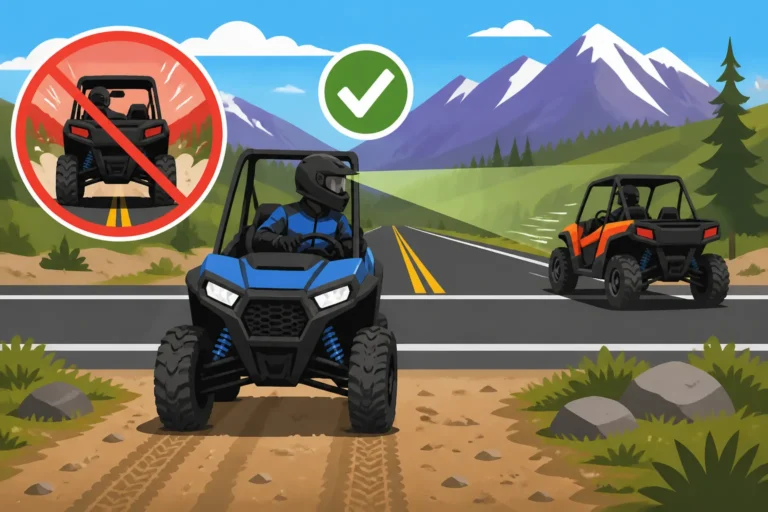
The first, and perhaps most critical, distinction to understand is between state highways and county roads. In Colorado, state highways – those routes designated by numbers like US-50, US-550, or CO-149 – are generally off-limits to OHVs. There are extremely few, highly specific, and often temporary exceptions, such as the designated 3.26-mile corridor on Highway 149 near Lake City, which explicitly allows OHVs during certain seasons. These exceptions are rare and always clearly marked. Trying to ride your side-by-side on a major state highway, even for a short stretch, is a surefire way to earn a ticket from the Colorado State Patrol. You can find more specific information about these restrictions in [Colorado OHV Rules on State Highways].
County roads, on the other hand, are where the rules become much more localized and varied. Many Colorado counties do have ordinances that permit OHV use on certain designated county roads, especially in mountain communities where OHVs are a significant part of the recreational economy. However, this is not universal. Some counties may prohibit OHVs entirely from their roads, while others may allow them only on specific unpaved routes, or only to connect trails. It's a truly complex web of regulations, and riders absolutely must check the specific ordinances for the county they plan to ride in. This means doing your homework before you ever unload your machine from the trailer.
What Colorado Requires on an OHV Road Ride
Even in areas where OHV road use is specifically permitted by a county or town ordinance, your machine isn't automatically good to go. Colorado mandates specific equipment requirements to make your OHV safer and more visible when sharing the road with other vehicles. Think of it like this: if you’re driving on a public road, even a gravel one, your vehicle needs to meet certain basic safety standards. For OHVs, this typically includes working headlights and taillights, brake lights, a horn, and at least one rearview mirror. A spark arrestor is also critical, especially in the dry Colorado environment, to prevent wildfires. In some areas, a whip flag might even be required for visibility. Companies like SuperATV offer a range of aftermarket parts, from turn signal kits to mirrors and windshields, that can help you equip your machine to meet these requirements for legal road crossings or short, designated stretches.
Beyond the machine itself, the operator must hold a valid driver's license. You can't just be any age to hop on an OHV on a road; there are distinct [Driver's License Rules for Colorado Road Riding] that apply. Furthermore, if you have young riders, there are strict age and supervision rules to consider. You need to know [Colorado Supervision Rules on a County Road] before letting a younger member of your party operate an OHV on a designated public road. And, of course, your OHV must display a current Colorado registration sticker, regardless of whether you're on a trail or a designated road section. [What Colorado Requires on an OHV Road Ride] covers these details comprehensively.
Local Ordinances and Their Impact
This is where the rubber meets the road, quite literally. Local ordinances are where the most specific and often restrictive rules come into play. Take Silverton, for example: this popular trail town has a very strict [Silverton's Ban on OHVs in Town] within its municipal limits, and attempting to ride your OHV on its streets can result in [The $300 Fine for Riding Into Silverton]. Ouray and Telluride also have their own distinct [Ouray and Telluride OHV Town Restrictions], often limiting or prohibiting OHV access on specific streets, even though both towns are major hubs for mountain recreation.
In contrast, towns like Lake City and areas within Hinsdale County are generally more accommodating, with designated routes that allow OHVs to navigate town streets to access services or connect to trails. However, even in these welcoming communities, you can't just ride anywhere; there are specific streets and routes marked for OHV use. [Lake City and Hinsdale County Road Access] can provide more details if you're planning a trip there. The key takeaway here is that you cannot assume. Each town and county has the authority to set its own rules, and what's permitted in one place might be strictly forbidden just a few miles down the road. Always verify the local ordinances for your specific riding destination before your tires hit the pavement.
The Consequences of an OHV Road Riding Citation
Receiving an OHV citation for illegal road riding in Colorado is more than just a minor inconvenience; it can carry significant financial penalties, legal hassles, and even impact your future ability to enjoy the trails you love. It’s important to understand the full scope of what you might face if you get caught violating the rules, so you can make informed decisions and prioritize staying legal.
What to Expect from a Citation
If you're pulled over for illegal OHV road use, the interaction will typically begin with a law enforcement officer – it could be a County Sheriff's Deputy, a Colorado State Patrol Trooper, a Forest Service Ranger, or a Colorado Parks and Wildlife (CPW) Officer. They will likely ask for your driver's license, your OHV registration, and potentially proof of insurance.
The immediate consequence will be a citation, which is essentially a ticket. The fines for these infractions can vary widely, but they are rarely cheap. It's not uncommon for them to be in the hundreds of dollars, sometimes even more, depending on the specific violation and whether other infractions (like an unregistered machine or lack of required safety equipment) are also noted. For example, a fine for riding an unregistered OHV on public land can be substantial, and illegal road riding often carries similar weight. See [Fines for an Unregistered OHV in Colorado] for an idea of typical penalties. In some cases, especially for repeat offenses or reckless behavior, you might even be required to appear in court. Beyond the immediate financial hit, certain OHV traffic infractions can lead to points being assessed against your driver's license, which could, in turn, affect your vehicle insurance rates. In rare, severe, or repeat cases, law enforcement also has the authority to impound your machine, adding storage fees and a major headache to your situation.
Beyond the Fines: Losing Trail Access After a Colorado Citation
The financial and legal burdens of an OHV citation are impactful enough, but there's another, often overlooked, consequence that can be even more disheartening for dedicated riders: the potential for losing future trail access. Local communities and land management agencies are constantly balancing the needs and desires of OHV riders with those of other user groups, residents, and environmental protection. When there's a pattern of illegal road riding, reckless behavior, or disregard for local ordinances, it creates a negative perception of the entire OHV community.
This negative perception can lead to land managers implementing stricter rules, closing off specific routes, or even shutting down entire trail systems. Nobody wants to see their favorite riding areas become off-limits because a few individuals couldn't follow the rules. Your individual actions, particularly regarding road use, directly contribute to this larger narrative. A history of citations can be a factor in future decisions made by local governments and land management agencies, potentially leading to a broader crackdown on OHV access. This is why groups like SuperATV, along with many rider associations, advocate for responsible riding – because protecting access is a collective effort. Understanding [Losing Trail Access After a Colorado Citation] highlights this critical long-term risk.
Fighting an OHV Ticket in Colorado
If you believe you've received an OHV citation unfairly or incorrectly, you do have the option to fight it. Simply paying the fine is an admission of guilt, but it’s not always the only path. The first step is to thoroughly review the citation itself, noting the specific charges, the issuing agency, and the required response time. Gather any evidence you might have, such as photos of signage (or lack thereof), GPS tracks showing your precise location, or a clear understanding of the specific ordinance you are accused of violating.
It can be incredibly helpful to consult with an attorney who specializes in traffic law or local ordinances in Colorado. They can guide you through the legal process, explain your rights, and help you understand the potential outcomes. Sometimes, an attorney can negotiate with the prosecutor for a reduced charge, a deferment, or even a dismissal, especially if there are ambiguities in the law or weaknesses in the prosecution's case. Be prepared to present a clear and factual account of the incident. While fighting a ticket can be time-consuming and may involve additional costs (like attorney fees), it might be worth it if you genuinely believe you're innocent or if the consequences of the citation are particularly severe. For a deeper dive into this process, check out [Fighting an OHV Ticket in Colorado].
Staying Legal and Avoiding Tickets
The best defense against an OHV road riding citation is a good offense—meaning proactive planning and a thorough understanding of the rules. Colorado's OHV trail network is immense and incredible, and there's no reason to risk a ticket when a little preparation can keep you on the right side of the law. Staying legal not only protects you from fines but also helps preserve access for all riders.
Planning Your Route to Avoid Prohibited Sections
The absolute most critical step to avoid a road riding citation is meticulous route planning before you even leave home. Don't rely on assumptions or vague memories of what might be allowed. Start by obtaining and studying current Motor Vehicle Use Maps (MVUMs) from the U.S. Forest Service and Bureau of Land Management (BLM) for the areas you plan to visit. These maps clearly designate which roads and trails are open to motorized use, and often specify vehicle types.
Beyond paper maps, modern GPS apps are invaluable. Applications like [onX Offroad for Colorado Trails] provide highly detailed, interactive maps that can show property boundaries, open trails, closed roads, and sometimes even local ordinances. These tools can be a game-changer for staying legal. Before your trip, trace your intended route, noting where trails end and where you might encounter public roads. Identify any designated OHV routes that do allow road use for connection, and mark the boundaries of prohibited sections. If you're unsure about a specific road or a town's rules, make a quick call to the local Sheriff's office (non-emergency line) or Colorado Parks and Wildlife office for clarification. They are often happy to provide guidance.
Equipping Your Machine for Legal Road Crossings and Short Stretches
Even in areas where OHV road use is permitted, your machine needs to meet specific equipment standards to be considered legal on the pavement. This isn't just a suggestion; it's a requirement to ensure your safety and the safety of other road users. As we discussed, you'll need functional headlights and taillights, brake lights, a horn, and at least one rearview mirror. A properly functioning spark arrestor is also mandatory for all public land use in Colorado to prevent wildfires.
Many aftermarket companies, like SuperATV, offer fantastic products designed to help OHV owners meet these requirements. You can find everything from universal turn signal kits and mirrors that easily attach to your roll cage, to DOT-approved windshields and horn kits. Installing these items might seem like an extra step, but they are essential for legal compliance on designated road sections. Beyond the legally required equipment, always consider additional safety gear like helmets and eye protection, even if an adult helmet law isn't strictly enforced on these road segments. [Colorado Helmet and Eye Protection: What Is Actually Required] details what riders of different ages need. The goal is to make your machine as visible and safe as possible when briefly sharing the road with other vehicles.
Knowing Your Local Rules Before You Go
This cannot be stressed enough: ignorance of the law is not an excuse for breaking it. The rules for OHV road riding in Colorado are complex and highly localized. What's allowed in Ouray might be very different from what's permitted in Kremmling, and totally opposite to the situation in Silverton. Before you embark on your adventure, dedicate time to researching the specific rules for every county and town you plan to traverse.
Check county government websites for current OHV ordinances. Many counties will have specific maps or lists of roads that are open or closed to OHVs. For towns, look up their municipal codes or contact their town clerk's office. Rules can change, and what was allowed last year might be prohibited this season, or vice versa. Always seek the most current information. By putting in this effort upfront, you're not only protecting yourself from a costly citation, but you're also demonstrating respect for the local communities and the intricate system that allows us to enjoy Colorado's incredible OHV opportunities.
| Road Type | General OHV Rule in Colorado | Common Exceptions/Considerations | Primary Enforcement Body |
|---|---|---|---|
| State Highways | Generally PROHIBITED | Very rare, specifically designated crossings or short corridors (e.g., Highway 149 near Lake City). Always look for official signage. | Colorado State Patrol |
| County Roads | Varies significantly by County Ordinance | Many counties allow OHVs on designated roads; check specific county maps and rules. Speed limits often apply. | County Sheriff |
| Town Streets | Varies significantly by Town/City Ordinance | Some towns (e.g., Lake City, Creede) allow OHVs on specific routes; others (e.g., Silverton) strictly prohibit. Look for explicit local signage. | Town Police / County Sheriff |
| Forest Service/BLM Roads | Generally ALLOWED on designated routes if OHV is registered and meets equipment standards | Check Motor Vehicle Use Maps (MVUMs) for seasonal closures, width restrictions, and specific route numbers. | Forest Service / BLM Ranger / County Sheriff |
Disclaimer
This article is for general informational purposes only and does not constitute professional advice. Laws, prices and regulations vary by location and change over time. Consult a qualified professional for guidance on your specific situation.