Colorado Rules on Forest Service Roads
It's incredibly frustrating when you're geared up for a fantastic ride through Colorado's stunning backcountry, only to find yourself second-guessing whether you're even allowed on that winding gravel road. The rules for off-highway vehicles (OHVs) on Forest Service Roads can feel like a tangled mess of regulations, local ordinances, and maps that are hard to decipher. This guide is here to clear up that confusion, helping you understand exactly what you need to know to legally and responsibly enjoy the vast network of Forest Service Roads across our beautiful state.
Understanding Forest Service Roads in Colorado
When you think of riding your ATV or UTV in Colorado, images of high-alpine passes, dense forests, and open meadows probably come to mind. Much of this incredible scenery is managed by the U.S. Forest Service, and it’s crisscrossed with what we commonly call “Forest Service Roads.” But what exactly are these roads, and why do they have their own set of rules?
What Constitutes a Forest Service Road?
Forest Service Roads are essentially public roads that are managed by the U.S. Forest Service within national forests and grasslands. They range from well-maintained gravel roads that might even be suitable for a passenger car, to rough, rocky two-tracks that demand a capable 4×4 or a beefy side-by-side. The key here is "managed by the U.S. Forest Service." This means that while they are public access, they operate under federal guidelines in addition to state and sometimes even local regulations.
It's easy to assume that if a road is in a forest, it's a Forest Service road, but that's not always the case. Some roads winding through national forest land might actually be county roads, state highways, or even private roads that allow public access. Each type of road can have different rules regarding OHV use, so it's vital to know the distinction. For instance, a well-built UTV from a brand like SuperATV can handle a lot, but understanding where you can legally take it is key.
The Role of Motor Vehicle Use Maps (MVUMs)
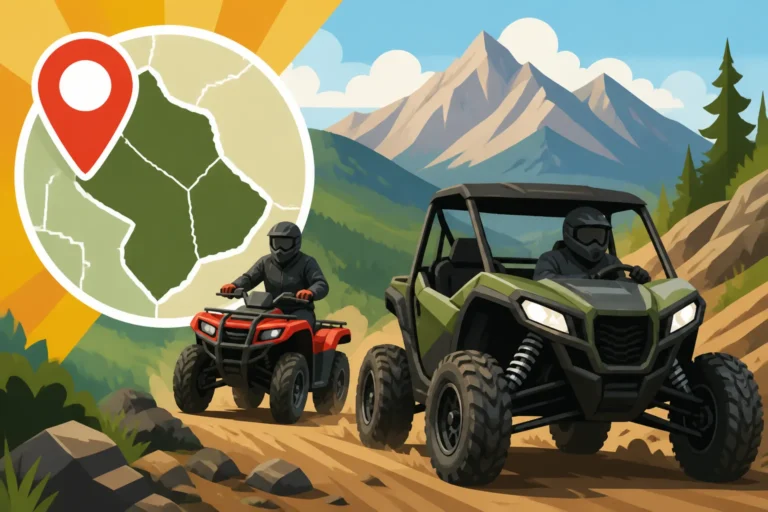
If there's one single piece of information you absolutely must carry and understand before riding on Forest Service land, it's the Motor Vehicle Use Map, or MVUM. These maps are the official designation of which roads, trails, and areas are open to motorized travel, and what types of vehicles are allowed. They are your golden ticket – or your stop sign – to legal riding.
MVUMs are black and white, often look a bit like blueprints, and can be downloaded from the respective National Forest's website. They specify whether a route is open to highway-legal vehicles only, vehicles 50 inches or less in width (ATVs), or all OHVs (including wider UTVs). They also show seasonal closures, which are incredibly important, especially during spring mud season or late fall. Relying on outdated maps or simply following other riders is a recipe for trouble. Always have the most current MVUM for the area you're riding. I can't stress enough how critical it is to know [Reading a Colorado Motor Vehicle Use Map]. Tools like [onX Offroad for Colorado Trails] can also be invaluable for navigating and understanding these routes digitally.
Differentiating Forest Service Roads from Other Public Roads
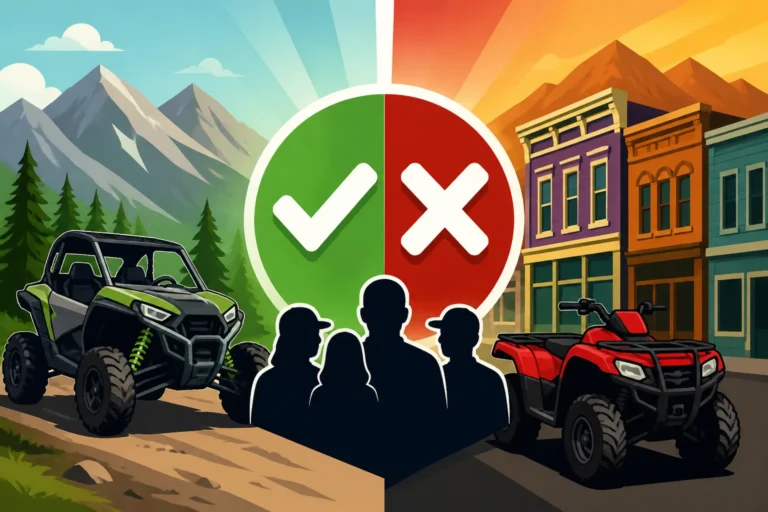
As mentioned, not all roads within a national forest are Forest Service Roads. You'll encounter county roads, state highways, and sometimes even privately maintained access roads. Each jurisdiction has its own rules for OHVs.
- County Roads: Many Colorado counties have passed ordinances allowing OHV use on specific county roads, often to connect trail segments or allow access to trailheads from town. These rules vary wildly from county to county, so what's legal in Hinsdale County might be strictly forbidden in Grand County.
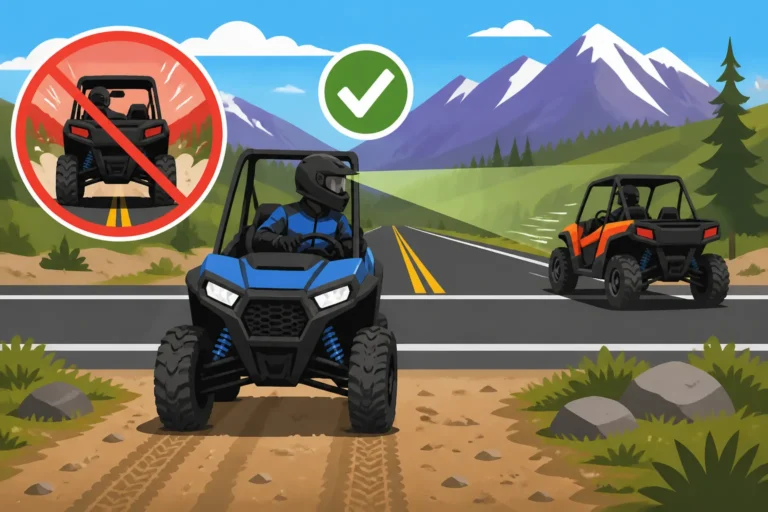
- State Highways: Generally, OHVs are not permitted on state highways in Colorado, except for crossing at designated points or on very specific, short segments that have received special authorization. [Crossing a Colorado Highway on an OHV] is usually a quick dash, not a scenic cruise.
- BLM Roads: Lands managed by the Bureau of Land Management (BLM) also have their own road networks and rules, often similar to Forest Service regulations but still requiring separate verification.
- Private Roads: Always assume a road is private if it's not clearly marked as public, and seek permission before venturing onto it.
It's a complex patchwork, which is why a thorough pre-ride check of your intended route, using the MVUM and any local county ordinances, is absolutely non-negotiable.
Essential Requirements for OHVs on Forest Service Roads
Alright, so you've got your MVUM in hand and you know which roads are Forest Service and which are county. Now, what does Colorado and the Forest Service expect from you and your machine to ensure a legal and enjoyable ride?
Colorado OHV Registration and Permits
This is non-negotiable for riding on any public land in Colorado, including Forest Service Roads. Every ATV, UTV, dirt bike, or any other vehicle meeting the definition of an off-highway vehicle needs a current Colorado OHV registration sticker. This applies whether you're a resident or just visiting from out of state.
- Colorado Residents: You'll need to [Registering an OHV in Colorado] through Colorado Parks and Wildlife (CPW). The fee contributes directly to trail maintenance and other OHV programs, so it's money well spent for the trails you love. You can find information on [What Colorado OHV Registration Costs] on the CPW website.
- Non-Residents: Visitors from out of state also need a Colorado OHV permit. Even if your machine is registered in your home state, you'll need the Colorado sticker to ride here. It's a small fee to pay for access to hundreds of miles of incredible trails.
Ensure your sticker is prominently displayed on your machine in the correct location. You might think, "Who cares where the sticker goes?" but rangers do. [Where the Colorado OHV Sticker Goes] is not just a suggestion, it’s a rule. And remember, trying to ride without it can lead to [Penalties for an Unregistered OHV in Colorado], which can quickly turn a fun day into an expensive one. Make sure you keep your registration card with you, perhaps in a waterproof pouch on your machine, because rangers at a [Colorado Ranger Checks at a Trailhead] will ask to see it.
Safety Gear and Machine Requirements
Beyond registration, there are specific requirements for your OHV and for you, the rider, to ensure safety and compliance.
- Helmets: While Colorado doesn't have a universal helmet law for adults on OHVs, it's always a smart idea, especially on challenging mountain roads. For riders under 18, helmets are generally required on public lands, and any passenger under 18 also needs one. Always opt for a DOT-compliant helmet for maximum protection.
- Spark Arresters: This is absolutely critical. All OHVs operating on Forest Service land (and other public lands) must be equipped with a U.S. Forest Service approved spark arrester that is in good working condition. This prevents embers from your exhaust system from starting devastating wildfires. [Mufflers and Spark Arresters in Colorado] are not just about noise, they're about fire safety.
- Mufflers: Your OHV must have a muffler that is in good working order and meets noise emission standards. Loud machines can disturb wildlife and other trail users, and some mountain towns have specific noise ordinances.
- Lights: If you plan to ride an OHV on an opened Forest Service Road from dusk till dawn, or if visibility is low, you need working headlights and taillights.
- Machine Width: Pay very close attention to your MVUM regarding machine width. Many Forest Service trails and roads are restricted to vehicles 50 inches or less in width. If you have a wider side-by-side, such as a 64-inch or 72-inch model, you must ensure the route is designated for "all OHVs" or wider vehicles. Attempting to squeeze a wide machine onto a 50-inch trail is illegal, dangerous, and causes resource damage. Quality aftermarket parts from companies like SuperATV can enhance your machine, but they won't change its legal width designation.
Rules of the Road and Trail Etiquette
Riding on Forest Service Roads isn't a free-for-all. These are shared spaces, and respecting others and the environment is paramount.
- Stay on Designated Routes: This is perhaps the most important rule. Never ride off-trail or create new trails. Stick to the marked roads and trails on your MVUM. This protects fragile ecosystems, prevents erosion, and respects private property. [Stay The Trail Ethics in Colorado] are about preserving access for everyone.
- Speed Limits: While many Forest Service Roads don't have explicit posted speed limits, you are expected to drive at a speed that is safe for conditions, visibility, and traffic. Slow down around blind corners, near campgrounds, or when passing other users.
- Yielding: Generally, uphill traffic has the right-of-way. Be courteous to hikers, mountain bikers, and horseback riders, giving them plenty of space. Reduce your speed and pull over if necessary.
- Passing: Pass only when safe, and be mindful of dust. If you're creating a huge dust cloud for the vehicle behind you, slow down or pull over to let the dust settle.
- Pack It In, Pack It Out: Leave no trace. Everything you bring with you – trash, broken parts, even food scraps – must leave with you.
- Camping: Dispersed camping (camping outside a designated campground) is often allowed on Forest Service land, but there are rules about how far you must be from roads, water sources, and developed areas. Always check local regulations.
Common Misconceptions and Prohibitions
Even experienced riders sometimes misunderstand certain aspects of OHV use on Forest Service Roads. Let's bust a few myths and clarify what's strictly off-limits.
The Myth of "Street Legal" OHVs
This is a big one. Many folks from other states come to Colorado with side-by-sides that are legally "street legal" in their home state, complete with a license plate. They often assume this means they can ride freely on all Colorado roads, including Forest Service Roads that are generally open to highway-legal vehicles. This is a dangerous assumption.
Colorado does not currently offer a statewide "street legal" license plate for ATVs or UTVs. While some individual towns and counties have ordinances allowing OHVs on their specific municipal or county roads, this does not translate to state highways or, crucially, to all Forest Service Roads designated for highway-legal vehicles. [Why Colorado Has No Street-Legal Plate for a UTV] is a common point of confusion for out-of-state riders. Even if your machine has a plate from Utah or Arizona, it typically only allows you to ride on designated OHV routes (which you still need a Colorado OHV permit for) or on specific county roads where local ordinances permit it. It doesn't magically make your UTV a car in Colorado's eyes for general road use.
Areas Where OHVs Are Not Allowed
Just because an area is within a National Forest doesn't mean it's open season for your OHV. There are several categories of areas where motorized travel is strictly prohibited:
- Wilderness Areas: These are federally designated lands where mechanized or motorized travel is forbidden to preserve their pristine nature. You'll often find wilderness boundaries adjacent to popular riding areas, and crossing into them can lead to significant fines. Always check your MVUM for [Colorado Wilderness Boundaries and OHVs].
- Closed Roads/Trails: Forest Service Roads are subject to seasonal closures (for snow, mud, or wildlife protection) and temporary closures (due to fire danger, logging operations, or trail damage). Always respect these closures, which will be indicated on your MVUM and often with physical gates or signs. Riding on a closed road can cause irreparable damage and will result in penalties. [Colorado Trail Closures and Where They Are Posted] is essential reading before you head out.
- Rehabilitation Areas: Sometimes, areas are closed for restoration after fires, floods, or heavy use. These closures are vital for environmental recovery.
- Private Inholdings: National Forests often contain pockets of private land within their boundaries. These are not open to public access without explicit permission from the landowner. Watch for "Private Property" signs.
The temptation to explore that tantalizing "unmarked" road can be strong, but resist it. If it's not on the MVUM as an open, designated route, assume it's closed or illegal to ride.
Penalties for Violating Forest Service Road Rules
Ignoring the rules can have serious consequences, from a polite warning to hefty fines and even impoundment of your machine. Forest Service rangers, county sheriffs, and CPW officers all have the authority to enforce these regulations.
Violations can include:
- Riding without a valid Colorado OHV registration.
- Operating an OHV in a closed area or off-trail.
- Exceeding width restrictions on a designated trail.
- Lacking proper safety equipment (like a spark arrester).
- Reckless operation or excessive speed.
- Littering or causing resource damage.
Fines can easily run into the hundreds of dollars, and repeated violations or severe damage to resources can lead to more serious legal action. Beyond the personal cost, such violations threaten access for all riders, potentially leading to further trail closures. It's truly a "one bad apple" situation, and none of us want to be that apple.
Planning Your Ride on Colorado Forest Service Roads
A successful and enjoyable ride on Colorado's Forest Service Roads starts long before you even load your machine onto the trailer. Thoughtful planning can make all the difference.
Checking Conditions and Seasonal Closures
Colorado's mountain environment is dynamic, and conditions can change rapidly. What was open yesterday might be closed today.
- Mud Season: Spring in Colorado often means "mud season." As snow melts, many Forest Service Roads become incredibly soft and prone to deep ruts. Riding them during this time causes significant environmental damage and can lead to long-term closures. Many roads are closed seasonally to protect them during this vulnerable period.
- Snow: High-elevation Forest Service Roads are often snowed in well into late spring or early summer, and they can see early snowfall in the fall. Always check the status of mountain passes and high-altitude roads before heading out.
- Fire Restrictions: Colorado is no stranger to wildfires. During dry periods, Forest Service lands may implement fire restrictions, which can include bans on campfires, chainsaws, or even all motorized vehicles in extreme cases. Always check the current fire danger level for the specific national forest you plan to visit.
- Weather: Mountain weather is notoriously unpredictable. A sunny morning can quickly turn into an afternoon thunderstorm, hail, or even snow, especially at higher elevations. Always carry layers, rain gear, and extra water.
The best places to check for current conditions and closures are the websites of the specific National Forests you plan to visit (e.g., San Juan National Forest, White River National Forest, etc.) or the Colorado Parks and Wildlife website.
Responsible Riding and "Stay The Trail" Ethics
Riding an OHV on Forest Service Roads is a privilege, not a right. Our continued access depends on every rider acting responsibly and adhering to the "Stay The Trail" principles. This means:
- Respecting Wildlife: Keep a safe distance from all animals. Do not harass or feed them. If you encounter wildlife on the trail, slow down and give them space.
- Protecting Water Resources: Avoid riding through streams or wet meadows. Cross streams only at designated crossings. OHVs can churn up sediment and spread invasive species, harming aquatic ecosystems.
- Minimizing Your Impact: Stay on the designated route. Avoid creating new ruts or widening trails. If you stop, pull your machine completely off the trail to allow others to pass.
- Sharing the Trail: Be courteous to all other users—hikers, mountain bikers, equestrians, and other motorized vehicles. A friendly wave and a slow pass go a long way in fostering good relationships between different user groups.
Ultimately, we all want to keep these incredible places open for generations to come. [Colorado OHV Grant Program and Trail Funding] are supported by our registration fees, which are then used to maintain and improve the trails we ride.
Preparing Your Machine for Mountain Conditions
Colorado's high country presents unique challenges for OHVs. Proper preparation of your machine is crucial for a safe and trouble-free ride.
- Altitude Tuning: If your machine is carbureted, you might experience a noticeable loss of power at higher altitudes (above 7,000-8,000 feet) unless it's properly jetted for altitude. [Altitude and Carburetor Tuning] can make a huge difference in performance. Fuel-injected machines generally adjust automatically, but it's still good to be aware of the effects of thinner air on engine performance.
- Brakes and Engine Braking: Mountain roads often involve long, steep descents. Ensure your brakes are in excellent condition. Utilize engine braking on descents to save your brakes from overheating and fading.
- Tires: Knobby tires suitable for off-road use are a must. Check tire pressure before you go, and consider carrying a patch kit and a small air compressor. The terrain can be rocky and unforgiving. Brands like SuperATV offer heavy-duty tires that can stand up to Colorado's rugged trails.
- Fluids and Maintenance: Check all fluid levels (oil, coolant, brake fluid) before each trip. Ensure your machine is well-maintained and in good working order. A breakdown far from a trailhead can quickly become a serious situation.
- Recovery Gear: Even the most capable machine can get stuck. Consider carrying a winch, tow strap, shovel, and basic tools, especially if you're venturing onto more challenging routes.
- Fuel Planning: Many Forest Service Roads are long and winding, and fuel stops can be few and far between. Plan your route and fuel consumption carefully, and consider carrying extra fuel in an approved container if your machine has a small tank or if your route is extensive.
By understanding these rules and preparing thoroughly, you're not just ensuring a legal ride; you're also ensuring a safer, more enjoyable, and more responsible adventure on Colorado's incredible Forest Service Roads.
| Road Type | Management Authority | General OHV Access | Key Requirements | Common Restrictions |
|---|---|---|---|---|
| Forest Service Road | U.S. Forest Service | Restricted to MVUM-listed | CO OHV Registration, Spark Arrester, Helmets (under 18) | Wilderness Areas, Width Limits, Seasonal Closures |
| County Road | County Government | Varies by local ordinance | CO OHV Registration, Spark Arrester, Lights (if allowed) | Designated Routes Only, Time of Day Limits, Speed |
| State Highway | Colorado Dept. of Trans. | Generally Prohibited | N/A (except for designated crossings/short segments) | No General Travel, Only Crossings |
| Private Road | Private Landowner | Permission Required | N/A (owner rules, if access granted) | No Trespassing Without Permission |
Disclaimer
This article is for general informational purposes only and does not constitute professional advice. Laws, prices and regulations vary by location and change over time. Consult a qualified professional for guidance on your specific situation.