Montana LLC Plates and Colorado Enforcement
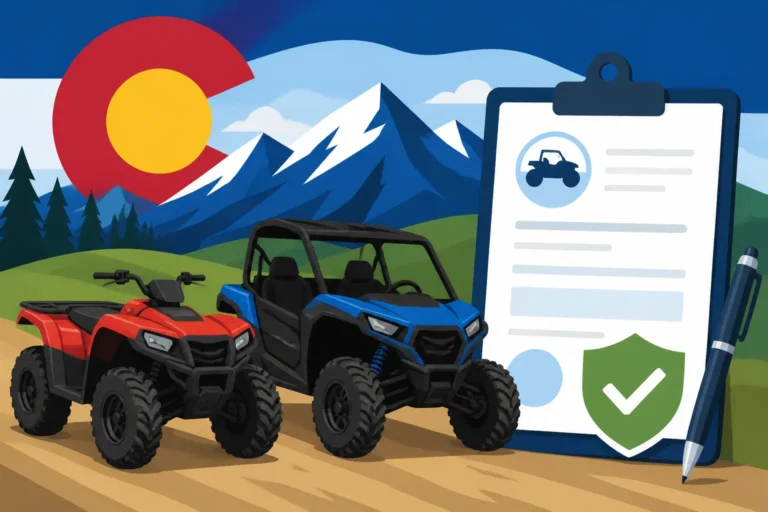
It’s a tale as old as time in the Colorado powersports community: the whispered secret, the clever workaround, the supposed loophole that promises to save you a bundle on taxes and keep your shiny new ATV or UTV off Colorado's tax rolls. We’re talking about the Montana LLC, a strategy many out-of-state residents eye to register their off-highway vehicles, hoping to avoid Colorado’s sales tax and annual registration fees. But here's the honest truth from someone who's seen it play out: what looks like a smart move on paper can quickly become a legal and financial headache when Colorado enforcement comes calling. This guide will peel back the layers on why the Montana LLC route is fraught with risk for Colorado residents and what the state truly cares about when it comes to your OHV.
The Allure of the Montana LLC: A Siren Song for OHV Owners
Let's be real, nobody wants to pay more taxes than they have to. Colorado has a sales tax that applies to vehicle purchases, and when you're looking at a brand-new side-by-side that costs tens of thousands, that tax bill can feel hefty. It's perfectly natural to look for ways to keep more of your hard-earned cash. This is where the idea of a Montana LLC often surfaces, promising a way to legally minimize your tax burden.
The Myth of Tax Savings and Privacy
The basic premise is simple: Montana doesn't have a statewide sales tax. So, the theory goes, if you form a limited liability company (LLC) in Montana, purchase your ATV or UTV through that LLC, and register it in Montana, you avoid paying Colorado's sales tax. Sounds compelling, right? It might even seem like a smart business move, leveraging a different state's tax laws to your advantage. There's also the perceived benefit of privacy, as the vehicle would be registered to the LLC rather than directly to you, the individual. For many, this offers a sense of anonymity or a streamlined way to manage multiple machines without tying them directly to personal assets.
How the Montana LLC Setup Appears to Work
Typically, the process involves a few steps. First, you'd engage with a service provider to establish an LLC in Montana. Then, using that LLC as the purchasing entity, you'd buy your off-highway vehicle. The OHV would then be titled and registered in Montana under the LLC's name. Often, these services even handle the Montana registration, mailing you the plates or decals. For many, the appeal lies in the hands-off nature, making it seem like a seamless way to bypass Colorado's requirements. Some even genuinely believe they are following all the rules by using a legitimate business entity. They might even rationalize that since they occasionally travel to Montana, or plan to, the registration is valid.
Why Colorado Sees Things Differently: The Residency Dilemma
Here’s where the rubber meets the trail, and the smooth ride of perceived savings hits some serious bumps. Colorado isn't oblivious to this strategy. The state has clear regulations designed to ensure that vehicles primarily operated or garaged within its borders contribute to the local infrastructure, including the very trails we all love to ride. The key issue isn't where your LLC is formed, but where your OHV actually resides and is used.
Colorado's Use Tax: The Big Gotcha
Even if you buy your ATV or UTV out-of-state through a Montana LLC, Colorado has a "use tax" that applies when the vehicle is brought into and primarily used or stored in the state. Think of the use tax as the sales tax's sibling – it kicks in when sales tax wasn't collected at the point of purchase. Colorado's Department of Revenue is quite clear on this: if you're a Colorado resident and you acquire a vehicle outside the state, you generally owe Colorado use tax on that purchase. This isn't just a minor technicality; it’s a fundamental aspect of Colorado's tax code. This applies whether you buy from a dealer or through a private sale. Even if your Montana LLC made the purchase, if you, a Colorado resident, are the primary operator and the vehicle's primary location is Colorado, you're on the hook. You can learn more about this by reading up on [Colorado Sales Tax on an ATV Purchase] and [Use Tax on a Machine Brought Into Colorado].
Establishing Domicile vs. Colorado Residency
Many people confuse the legal domicile of their LLC (Montana) with their own personal residency and the physical location of their machine. While your LLC might be a legal entity in Montana, Colorado cares about your residency as the individual operating and owning that vehicle for practical purposes. If your primary residence is in Colorado, you pay Colorado income taxes, you vote in Colorado, and your driver's license is from Colorado, then you are a Colorado resident. It doesn't matter if your machine is technically owned by an LLC in another state; if it's garaged and primarily used here, Colorado considers it a Colorado machine. This distinction is crucial and often overlooked by those pursuing the Montana LLC route.
The "Primary Location" Test for OHVs
Colorado isn't just looking at where your vehicle is titled on paper. Law enforcement and state agencies are interested in its physical location and operational use. If your side-by-side sits in your garage in Grand Junction, you trailer it to the San Juan Mountains every summer weekend, and you rarely, if ever, take it to Montana, then its "primary location" is clearly Colorado. This is how Colorado determines if an OHV should be titled and registered within its borders. State Parks rangers and local sheriffs are trained to recognize these patterns and know that many vehicles with out-of-state plates are actually resident machines attempting to circumvent local rules.
The Enforcement Reality in Colorado: When the Rubber Hits the Road
Colorado Parks and Wildlife (CPW) and local law enforcement are not sitting idly by. They are well aware of the Montana LLC strategy and have mechanisms in place to identify and address what they consider tax and registration evasion. It’s not a matter of if you might get caught, but when.
Trailhead Checks and Random Stops
Picture this: you're airing down your tires at a popular trailhead near Lake City, excited for a day on the Alpine Loop. Suddenly, a CPW ranger approaches, politely asking to see your registration and proof of ownership. This is a common occurrence. Rangers regularly conduct checks at trailheads, staging areas, and even on the trails themselves. If your OHV has Montana plates, and you, the operator, present a Colorado driver's license, it immediately raises a red flag. Rangers have access to databases that can link VINs to owners and quickly determine residency. A quick chat can reveal where the machine is truly garaged. You can expect to encounter [Colorado Ranger Checks at a Trailhead] in popular riding areas, and they're not just looking for valid permits, but also for compliance with state tax and titling laws.
How Colorado Identifies Montana LLC Machines
It's not rocket science for law enforcement. They look for patterns. A Montana LLC plate on an OHV being operated by a Colorado resident on Colorado trails is a strong indicator. Beyond that, a simple VIN check can often reveal prior ownership history, and while the LLC might technically own it, investigative work can easily trace the beneficial owner back to a Colorado address. The state's tax authorities can also cross-reference vehicle purchase records with residency information, looking for discrepancies that suggest an attempt to avoid local taxes. This isn't just about collecting a small registration fee; it's about significant sales and use tax revenue.
Potential Penalties and Legal Headaches
If you're caught, the perceived savings quickly evaporate. The penalties can include:
- Back Taxes: You'll likely be assessed the full amount of Colorado sales and use tax that was avoided, often with interest and significant penalties. This can easily run into thousands of dollars for a new UTV.
- Fines: Operating an unregistered OHV in Colorado can result in substantial fines. These aren't just a slap on the wrist; they are designed to deter non-compliance. Learn more about these by checking out [Penalties for an Unregistered OHV in Colorado].
- Forced Colorado Registration and Titling: You will be required to properly title your OHV through the Colorado Department of Revenue and register it with Colorado Parks and Wildlife, incurring all the associated fees. This means paying for Colorado registration on top of the penalties. It's essential to understand the distinction between [Colorado OHV Title Versus CPW Registration], as both will apply.
- Legal Fees: Should the state decide to pursue more serious action, you could be looking at legal fees to defend yourself.
Consider a hypothetical scenario: You bought a $30,000 side-by-side through a Montana LLC, avoiding Colorado's approximate 2.9% state sales tax (plus local taxes, which can vary widely but let's say an average of 5% total). That's $1,500 you thought you saved. If you're caught, you're looking at that $1,500, plus potentially 25% or more in penalties, and interest. Suddenly, that $1,500 "saving" has ballooned into a $2,000+ bill, not to mention the fines for unregistered operation, and the hassle of going through the Colorado titling and registration process anyway. It's just not worth the stress and the financial hit.
The Difficulty of Selling a Montana-Titled OHV in Colorado
Another often-overlooked consequence is the headache you'll face if you try to sell a Montana LLC-titled OHV to a Colorado resident. Most reputable Colorado buyers will be wary of purchasing a machine that hasn't properly paid its Colorado sales or use tax. They know they could inherit a tax liability, or face difficulties titling it in their own name in Colorado. You might find yourself having to pay the back taxes and penalties yourself just to make the machine marketable to a local buyer. This can significantly reduce your resale value or limit your pool of potential buyers to only those willing to jump through the extra hoops, which are few and far between. Using a proper [Colorado ATV Bill of Sale Template] is critical, and if the machine's tax history is murky, you'll struggle to complete a clean sale.
Safer, Legal Alternatives for Colorado Riders
The good news is that there are straightforward, legal ways to own and enjoy your OHV in Colorado without risking fines and penalties. Embracing Colorado's system means contributing to the trails you ride and ensuring your machine is properly recognized by the state.
Proper Colorado Titling and Registration
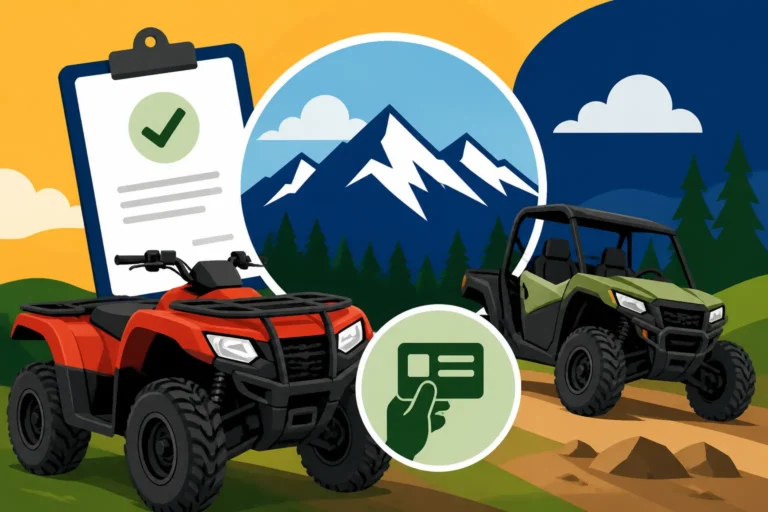
The most straightforward and stress-free path is to simply title and register your OHV in Colorado. When you purchase a new machine from a Colorado dealer, they handle most of the paperwork for you, including collecting sales tax and submitting titling documents. For private sales or out-of-state purchases, you'll need to visit your local county motor vehicle office for titling and Colorado Parks and Wildlife for registration. The process for [Titling an Off-Highway Vehicle in Colorado] involves submitting an application, proof of ownership (like a manufacturer’s certificate of origin or a bill of sale), and paying the title fee. Then, you'll need to secure a Colorado OHV registration sticker. This annual registration supports trail maintenance and administration. You can explore [What Colorado OHV Registration Costs] to understand the nominal fees involved, which are far less than the penalties you'd face for non-compliance.
Understanding Colorado's Sales and Use Tax
Yes, Colorado's sales and use tax applies to OHVs, and it might feel like a significant amount when you're buying an expensive machine. However, this revenue is vital for state and local services. When you pay your fair share, you're contributing to the very community and infrastructure that supports your passion for riding. The sales tax is collected at the point of purchase by dealers. If you buy from a private party or out of state, the use tax applies when you bring the machine into Colorado and apply for a title. Being upfront and compliant from the start will save you endless headaches down the line.
When an LLC Might Be Appropriate (and it's probably not for personal OHV use)
It's important to clarify that forming an LLC itself isn't illegal. There are legitimate business reasons for forming an LLC in Colorado or another state, even for OHV-related purposes. For example, if you operate a legitimate powersports rental business, a guide service, or a farm/ranch that uses multiple utility vehicles, forming a Colorado LLC to manage those assets makes perfect sense. In such cases, the LLC would legally own the machines, and they would be properly titled and registered in Colorado under the LLC's name, paying all applicable taxes. If you're ever considering forming any type of LLC for legitimate business purposes – perhaps you have a real ranching operation or a powersports rental business – resources like LawDepot offer templates and guides for drafting corporate documents, operating agreements, and other legal paperwork that ensures your entity is properly structured and compliant with state laws, whether in Colorado or elsewhere. However, using a Montana LLC purely as a shell to avoid Colorado taxes on a personally used OHV is not a legitimate business purpose in the eyes of Colorado law. You can explore the rules for [Registering an OHV Under an LLC in Colorado] for legitimate business purposes.
Here's a quick comparison of the perceived benefits versus the actual risks of using a Montana LLC for a Colorado resident's OHV:
| Feature | Perceived Benefit (Montana LLC) | Actual Risk/Reality (Colorado Resident) |
|---|---|---|
| Sales Tax | Avoid Colorado sales tax | Colorado use tax is still owed, plus potential penalties and interest. |
| Registration Fees | Avoid Colorado annual registration | Required to register in Colorado, plus fines for non-compliance. |
| Privacy | OHV registered to LLC, not personal name | Colorado authorities can link LLC to resident owner through VIN checks. |
| Legality | Believe it's a legal tax minimization strategy | Considered tax evasion by Colorado, leading to significant legal issues. |
| Enforcement Risk | Low, minimal chance of being caught | High, routine trailhead checks and database lookups. |
| Resale Value | Unaffected, or even enhanced by "savvy" purchase | Reduced, as Colorado buyers are wary of tax liabilities. Harder to sell. |
| Contribution to Trails | None in Colorado (taxes go to Montana) | Your Colorado registration fees directly fund local trails and programs. |
| Paperwork & Hassle | Simple setup by third-party services | Complex legal issues if caught, involving back taxes, fines, and re-titling. |
When it comes down to it, the temptation of saving a few thousand dollars through a Montana LLC for your ATV or UTV is understandable. However, for Colorado residents, the risks far outweigh any potential, and often illusory, benefits. Colorado is proactive in enforcing its tax and registration laws for OHVs, and the penalties for non-compliance can be substantial, both financially and legally. Your best bet for enjoying Colorado's incredible trails without worry is to follow the established rules, ensuring your machine is properly titled and registered in the state.
Disclaimer
This article is for general informational purposes only and does not constitute professional advice. Laws, prices and regulations vary by location and change over time. Consult a qualified professional for guidance on your specific situation.