Where to Find the VIN on a Polaris General
It’s a frustrating moment, isn't it? You’re trying to register your Polaris General, or maybe you’re looking to sell it, and suddenly you realize you have no idea where the Vehicle Identification Number (VIN) is hiding. It’s not always in the most obvious spot, and sometimes it feels like a secret handshake to even locate it. This guide is here to cut through that confusion, helping you confidently pinpoint the VIN on your Polaris General, understand why it's so important, and know what to do if it seems to have vanished.
Understanding Your Polaris General's VIN and Why It Matters So Much
That 17-character sequence known as your VIN isn’t just a random string of letters and numbers; it's practically the DNA of your Polaris General. It’s what uniquely identifies your machine among all others, containing vital information about its origin and characteristics. When you're dealing with an off-highway vehicle (OHV) in Colorado, getting familiar with your VIN is absolutely non-negotiable.
More Than Just a Number: What the VIN Tells You
Every digit and letter in your Polaris General's VIN carries specific data, organized into three main sections. The first three characters identify the world manufacturer, the next six characters tell you about the vehicle descriptor section (like model, engine type, and body style), and the final eight characters make up the vehicle identifier section, which includes the model year, the manufacturing plant, and a unique serial number for your specific machine. It's like a universally recognized code that allows authorities, insurers, and mechanics to instantly know exactly what vehicle they're looking at.
Knowing what your VIN means can be incredibly helpful. If you’re ever questioning the exact model year or origin of a Polaris General, especially if you’ve bought it used, decoding the VIN can often clear things up. There are plenty of online VIN decoders that can break down each character for you, giving you a comprehensive overview of your machine's factory specifications. It's a powerful tool for verification and understanding, far beyond simply having a number.
The Critical Role of Your VIN in Colorado OHV Life
In Colorado, your VIN is the cornerstone of almost every official interaction you'll have with your Polaris General. It's the primary identifier when you're going through the process of [Registering an OHV in Colorado] with Colorado Parks and Wildlife (CPW). Without that VIN, you simply cannot complete your registration, which means no legal trail riding on public lands. It's also absolutely essential for [Titling an Off-Highway Vehicle in Colorado] through the Department of Revenue, as the title acts as your official proof of ownership, legally tying you to that specific machine.
Beyond registration and titling, your VIN is crucial for insurance purposes. When you go to get [Insuring an ATV in Colorado], the insurance company will ask for your VIN to accurately identify the vehicle they are covering. It's how they track claims, verify coverage, and ensure they're insuring the correct asset. Imagine the headache if your Polaris General was stolen and you couldn't provide its VIN – the recovery process would be significantly more difficult, if not impossible. Furthermore, if you ever plan to sell your machine, a clear and accessible VIN is a must for the buyer to conduct their own background checks and ensure a smooth transfer of ownership. It protects both the buyer and the seller from potential legal entanglements.
Pinpointing the VIN: Where to Look on Your Polaris General
Alright, let's get down to brass tacks. You need to find that VIN on your Polaris General, and you're probably getting a little frustrated with all the nooks and crannies it seems to be avoiding. While Polaris Generals are generally consistent, there can be slight variations depending on the model year or specific trim package. Don't worry, we'll cover the most common places to ensure you find it without tearing your machine apart.
The Most Common Spots: Frame, Under the Hood, and Beyond
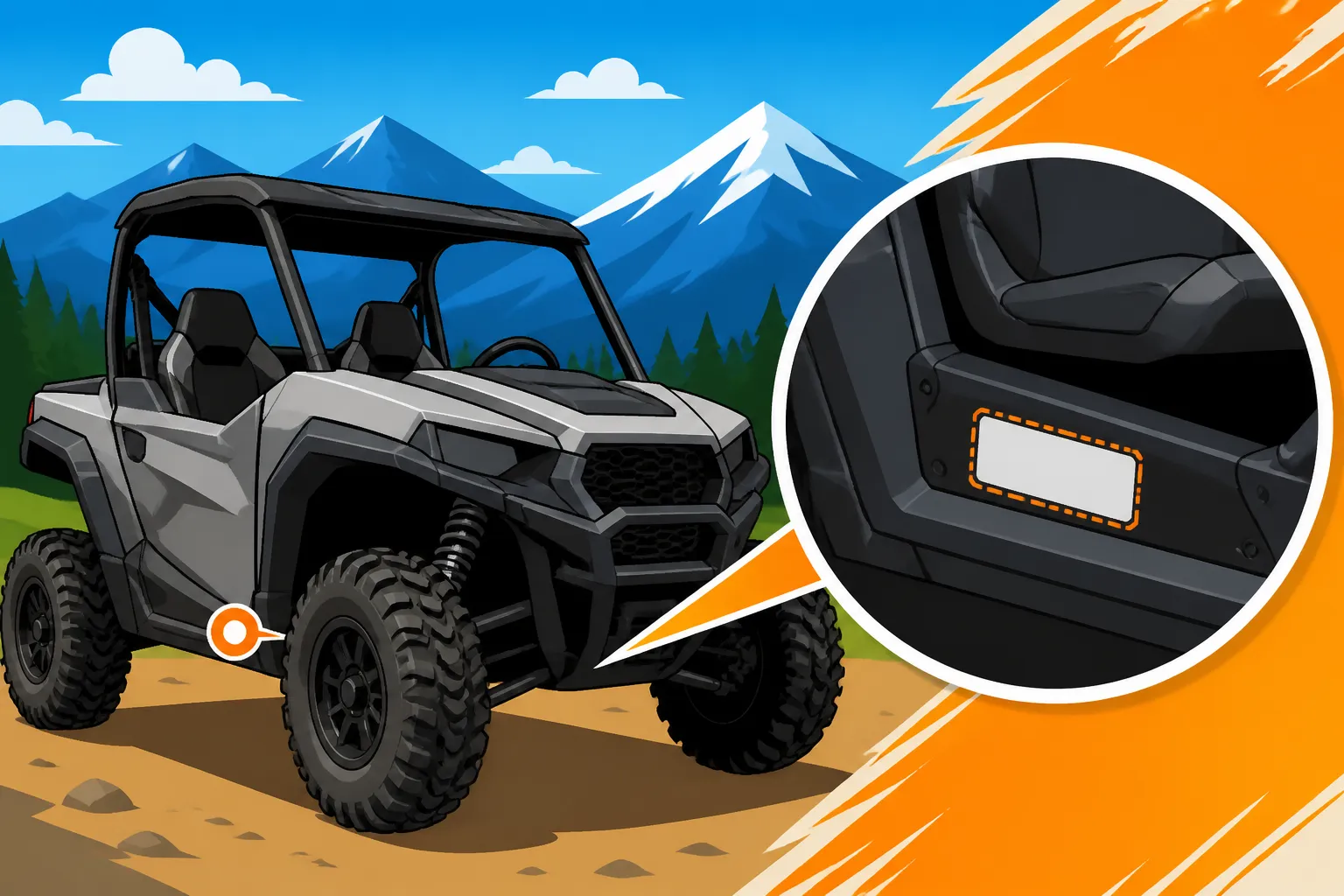
The absolute most common place to find the VIN on a Polaris General, or most side-by-sides for that matter, is stamped directly into the frame. Picture yourself kneeling down near the front driver's side wheel. Look along the main frame rail, specifically in the area around the front left A-arm mount or just behind the front wheel, near the footwell. It might be on a vertical or horizontal section of the frame. Sometimes, it’s closer to the front bumper, either on the main frame or on a crossmember. It's usually a series of characters stamped directly into the metal, which means it’s quite durable and hard to remove, thankfully.
Another frequent spot, though often less prominent, is under the hood or seat. Lift the hood (if your General has one that opens) and check the firewall, the frame crossbar, or sometimes even a sticker on the plastic shroud. For machines with a tilting bed, you might find it stamped on a frame component exposed when the bed is lifted. These are usually supplemental locations, often on a metal plate or a sturdy sticker, in addition to the primary frame stamping. If your machine has a glove box, it's worth checking inside the door or on the surrounding plastic. Polaris is usually quite good about making the VIN accessible, but Mother Nature (or rough riding) can certainly obscure it.
Troubleshooting a Hidden or Obscured VIN
So, you've looked in all the usual places, and still no VIN? Don't despair. It's a common problem, especially if your Polaris General sees a lot of action on Colorado's dusty or muddy trails. Mud, dirt, and grime are the most frequent culprits for hiding a VIN. Your first step should be to clean the suspected areas thoroughly. Grab a stiff brush, some degreaser, and a rag. You might be surprised what emerges from beneath a layer of trail residue. Pay extra attention to recessed areas where dirt can accumulate.
What if it’s more than just dirt? Sometimes, rust, chipped paint, or even minor frame damage can obscure parts of the VIN. If you suspect rust, you can carefully use a wire brush to gently remove surface rust, being extremely careful not to damage the underlying numbers. If it appears to be painted over, again, gentle scraping might reveal the characters, but be cautious not to remove too much. In rare cases, especially with very old machines or those with a questionable past, the VIN might be intentionally defaced. If you encounter this, it's a red flag, and you should consider consulting with law enforcement or the Colorado Department of Revenue before proceeding with any transaction or registration. A legitimate VIN should always be readable, even if it requires a little elbow grease to uncover.
What to Do If You Can't Find or Read Your Polaris General's VIN
You've cleaned, you've searched, you've practically done a full archaeological dig on your Polaris General, and that elusive VIN is still playing hard to get. It’s incredibly frustrating, and it can throw a wrench into everything from registration to selling your machine. But don't give up hope just yet; there are still several avenues you can explore to uncover your machine's identity.
Digging Deeper: Other Places to Check for the VIN
When the physical VIN is nowhere to be found, your best bet is to turn to your paperwork. Start with the most obvious: your Polaris General’s owner’s manual. Many manufacturers print the VIN inside the front cover or on a dedicated page. Next, pull out all your original purchase paperwork. This includes your bill of sale – a properly worded [ATV Bill of Sale Wording That Holds Up] will always include the VIN. If you used a service like LawDepot to create a legally sound bill of sale, the VIN would have been a mandatory field and should be clearly printed there.
Also, check your official title document or any prior registration cards for the machine. These are legal documents explicitly designed to track ownership and identity, so the VIN will be prominently displayed. Your insurance policy documents are another excellent source; insurers require the VIN to bind coverage, so it will be listed there. If you financed your Polaris General, the loan agreement or financing paperwork from the bank or credit union will also contain the VIN. These records serve as critical [Proof of Ownership for a Colorado OHV] and often hold the key when the physical VIN is playing hide-and-seek. Don't overlook any receipt or warranty documentation you might have kept.
Next Steps for a Missing or Illegible VIN in Colorado
If you’ve exhausted all paperwork avenues and still can't verify your VIN, it's time to reach out for help. Your first call should be to the dealership where the Polaris General was originally purchased. They often keep detailed records of sales, including VINs, especially if you bought it new or had it serviced there. Providing them with your name, the approximate purchase date, and any other identifying information (like a previous owner's name if you bought it used) can help them locate the VIN in their system.
If the dealership can't help, or if you bought it privately and have no dealer history, your next step might be to contact Polaris directly. They have customer service departments that can sometimes track a VIN using engine numbers or other unique identifiers if you provide enough detail about the machine. However, be prepared for this to be a more involved process.
In Colorado, dealing with a missing or illegible VIN can create significant hurdles, especially if you're trying to title the machine. If you're in a situation where you have [Titling a Machine With No Previous Owner on Hand] or the VIN is damaged beyond recognition, you might be facing the complex process of obtaining a [Bonded Title for an ATV in Colorado]. This involves proving ownership through other means and posting a bond, essentially guaranteeing ownership to the state. This can be a lengthy and expensive process.
It's also crucial to consider the possibility of a stolen vehicle. If a VIN is intentionally defaced or completely absent, it's a major red flag. In such cases, you should contact local law enforcement to report the issue. They can run any partial numbers or descriptions you have through national databases to check for theft records. Attempting to register or title a machine with a defaced VIN could lead to legal complications, so always proceed with caution and transparency. It's much better to clarify the situation upfront than to encounter serious problems down the road.
Protecting Your VIN and Its Importance in Buying and Selling
Your Polaris General's VIN isn't just a number you look up once for registration and then forget. It's a vital piece of information that needs to be protected, both physically on the machine and in your records. Especially if you plan on ever buying or selling an OHV, understanding the VIN's role is absolutely crucial for a smooth and legitimate transaction.
Keeping Your VIN Safe: Recording and Protection Tips
Once you've finally located that elusive VIN on your Polaris General, the first thing you should do is record it in multiple safe places. Take a clear, well-lit photograph of the stamped VIN on the frame. Store this photo on your phone, back it up to cloud storage, and even print a copy to keep with your important documents. Transcribe the full 17-character VIN accurately onto a notepad, a spreadsheet, or a dedicated document in your files. This redundancy ensures that if one record is lost or damaged, you have others to fall back on.
Beyond recording, consider ways to protect the physical VIN on your machine. While it’s stamped into the metal, exposure to the elements, road salt (if you happen to haul it on roads that use it), and harsh cleaning chemicals can, over many years, make it harder to read. A light coating of clear protectant or even a thin layer of grease in the immediate area can help shield it from rust and corrosion without obscuring the numbers. Regular cleaning of the area during washes will also prevent dirt and grime from building up and eventually hardening, making it difficult to read later. Treat it like a valuable serial number, because it truly is.
The VIN's Role in a Smooth Transaction
When it comes time to buy or sell a Polaris General, the VIN steps into the spotlight as the ultimate verification tool. For buyers, the VIN is paramount for [Buying a Used ATV in Colorado: The Paperwork]. It allows you to perform crucial due diligence, such as running a [Checking a Used Machine Against Theft Records] search through services that access national databases. This simple step can save you from inadvertently purchasing a stolen vehicle, which would lead to significant legal and financial woes. You can also use the VIN to verify the machine's model year and specifications, ensuring they match what the seller is claiming. Many buyers will want to see the physical VIN on the machine and compare it to the title or bill of sale before they even consider moving forward.
For sellers, having a clean, readable VIN that matches all your documentation is essential for demonstrating legitimate ownership. It instills confidence in potential buyers and streamlines the sale process. When you create a [Colorado ATV Bill of Sale Template], whether you use a generic form or a customized one from a legal document service like LawDepot, the VIN must be accurately recorded. This document serves as the legal transfer of ownership and is vital for the buyer to then complete their own registration and titling with the state. Trying to sell a machine without a clear VIN, or if your VIN doesn't match your paperwork, can make the sale incredibly difficult and raise serious red flags. It’s a sure way to find yourself dealing with [Buying From a Seller With No Registration] type problems, which no one wants. A transparent and verifiable VIN is the foundation of a trustworthy transaction.
| VIN Location | Description | Tips for Finding |
|---|---|---|
| Main Frame Rail | Stamped into the metal, usually near the front left wheel well. | Kneel down, look along the frame between the tire and the footwell. Use a flashlight and clean off any dirt. |
| Under the Hood/Firewall | On a sticker or plate on the firewall or a frame crossmember. | Lift the hood (if applicable), inspect the area between the engine bay and the passenger compartment. |
| Steering Column | Less common, but sometimes on a sticker or plate. | Follow the steering shaft down from the wheel; check for plates or stickers. |
| Owner's Manual | Often printed on the inside cover or a dedicated page. | Check your physical owner's manual for a sticker or printed number. |
| Title/Registration | Clearly listed on all official state ownership documents. | Review your vehicle title, previous registration cards, or insurance policies. |
| Bill of Sale/Loan Docs | Present on original purchase agreements and loan paperwork. | Dig out your initial purchase agreement, dealer invoice, or financing papers. If you used LawDepot for a bill of sale, it's there. |
Disclaimer
This article is for general informational purposes only and does not constitute professional advice. Laws, prices and regulations vary by location and change over time. Consult a qualified professional for guidance on your specific situation.